

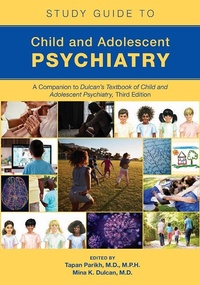
Study Guide to Child and Adolescent Psychiatry
Description

Study Guide to Child and Adolescent Psychiatry is a question-and-answer companion that allows you to evaluate your mastery of the subject matter as you progress through Dulcan's Textbook of Child and Adolescent Psychiatry, Third Edition. The Study Guide is made up of approximately 295 questions divided into 49 individual quizzes of 5-8 questions each that correspond to chapters in the textbook. Questions are followed by an answer guide that references relevant text (including page numbers) in the textbook to allow quick access to needed information. Each answer is accompanied by a brief discussion that not only addresses the correct response but also explains why other responses are not correct.
The Study Guide's companion, Dulcan's Textbook of Child and Adolescent Psychiatry, Third Edition, provides practitioners the depth and breadth of knowledge covering topics including neurodevelopmental and other psychiatric disorders and disorders affecting somatic function; multiple approaches to psychosocial treatments; the principles of pediatric psychopharmacology and use of the medications; and special topics, including cultural and religious considerations, youth suicide, legal and ethical issues, and gender and sexual diversity.
More details
Other editions
Additional editions
Persons
Content
- Cover
- Half Title
- Title
- Copyright
- Contents
- Contributors
- PART I: Questions
- CHAPTER 1 Process of Assessment and Diagnosis
- CHAPTER 2 Assessing Infants and Toddlers
- CHAPTER 3 Assessing the Preschool-Age Child
- CHAPTER 4 Assessing the Elementary School - Age Child
- CHAPTER 5 Assessing Adolescents
- CHAPTER 6 Neurological Examination, Electroencephalography, Neuroimaging, and Neuropsychological Testing
- CHAPTER 7 Intellectual Disability
- CHAPTER 8 Autism Spectrum Disorders
- CHAPTER 9 Communication Disorders, Specific Learning Disorder, and Motor Disorder
- CHAPTER 10 Attention-Deficit/Hyperactivity Disorder
- CHAPTER 11 Oppositional Defiant Disorder and Conduct Disorder
- CHAPTER 12 Substance Use Disorders and Addictions
- CHAPTER 13 Depressive and Disruptive Mood Dysregulation Disorders
- CHAPTER 14 Bipolar Disorder
- CHAPTER 15 Anxiety Disorders
- CHAPTER 16 Posttraumatic Stress Disorder and Persistent Complex Bereavement Disorder
- CHAPTER 17 Obsessive-Compulsive Disorder
- CHAPTER 18 Early-Onset Schizophrenia
- CHAPTER 19 Eating and Feeding Disorders
- CHAPTER 20 Tic Disorders
- CHAPTER 21 Elimination Disorders
- CHAPTER 22 Sleep-Wake Disorders
- CHAPTER 23 Evidence-Based Practice
- CHAPTER 24 Child Abuse and Neglect
- CHAPTER 25 Cultural and Religious Issues
- CHAPTER 26 Youth Suicide
- CHAPTER 27 Gender and Sexual Diversity in Childhood and Adolescence
- CHAPTER 28 Aggression and Violence
- CHAPTER 29 Psychiatric Emergencies
- CHAPTER 30 Family Transitions: Challenges and Resilience
- CHAPTER 31 Legal and Ethical Issues
- CHAPTER 32 Telemental Health and e-Mental Health Applications With Children and Adolescents
- CHAPTER 33 Principles of Psychopharmacology
- CHAPTER 34 Medications Used for ADHD
- CHAPTER 35 Antidepressants
- CHAPTER 36 Mood Stabilizers
- CHAPTER 37 Antipsychotic Medications
- CHAPTER 38 Individual Psychotherapy
- CHAPTER 39 Parent Counseling, Psychoeducation, and Parent Support Groups
- CHAPTER 40 Behavioral Parent Training
- CHAPTER 41 Family-Based Assessment and Treatment
- CHAPTER 42 Interpersonal Psychotherapy for Depressed Adolescents
- CHAPTER 43 Cognitive-Behavioral Treatment for Anxiety and Depression
- CHAPTER 44 Motivational Interviewing
- CHAPTER 45 Systems of Care, Wraparound Services, and Home-Based Services
- CHAPTER 46 Milieu Treatment: Inpatient, Partial Hospitalization, and Residential Programs
- CHAPTER 47 School-Based Interventions
- CHAPTER 48 Collaborating With Primary Care
- CHAPTER 49 Collaborating With Inpatient and Subspecialty Pediatrics
- Part II: Answer Guide
- CHAPTER 1 Process of Assessment and Diagnosis
- CHAPTER 2 Assessing Infants and Toddlers
- CHAPTER 3 Assessing the Preschool-Age Child
- CHAPTER 4 Assessing the Elementary School - Age Child
- CHAPTER 5 Assessing Adolescents
- CHAPTER 6 Neurological Examination, Electroencephalography, Neuroimaging, and Neuropsychological Testing
- CHAPTER 7 Intellectual Disability
- CHAPTER 8 Autism Spectrum Disorders
- CHAPTER 9 Communication Disorders, Specific Learning Disorder, and Motor Disorder
- CHAPTER 10 Attention-Deficit/Hyperactivity Disorder
- CHAPTER 11 Oppositional Defiant Disorder and Conduct Disorder
- CHAPTER 12 Substance Use Disorders and Addictions
- CHAPTER 13 Depressive and Disruptive Mood Dysregulation Disorders
- CHAPTER 14 Bipolar Disorder
- CHAPTER 15 Anxiety Disorders
- CHAPTER 16 Posttraumatic Stress Disorder and Persistent Complex Bereavement Disorder
- CHAPTER 17 Obsessive-Compulsive Disorder
- CHAPTER 18 Early-Onset Schizophrenia
- CHAPTER 19 Eating and Feeding Disorders
- CHAPTER 20 Tic Disorders
- CHAPTER 21 Elimination Disorders
- CHAPTER 22 Sleep-Wake Disorders
- CHAPTER 23 Evidence-Based Practice
- CHAPTER 24 Child Abuse and Neglect
- CHAPTER 25 Cultural and Religious Issues
- CHAPTER 26 Youth Suicide
- CHAPTER 27 Gender and Sexual Diversity in Childhood and Adolescence
- CHAPTER 28 Aggression and Violence
- CHAPTER 29 Psychiatric Emergencies
- CHAPTER 30 Family Transitions: Challenges and Resilience
- CHAPTER 31 Legal and Ethical Issues
- CHAPTER 32 Telemental Health and e-Mental Health Applications With Children and Adolescents
- CHAPTER 33 Principles of Psychopharmacology
- CHAPTER 34 Medications Used for ADHD
- CHAPTER 35 Antidepressants
- CHAPTER 36 Mood Stabilizers
- CHAPTER 37 Antipsychotic Medications
- CHAPTER 38 Individual Psychotherapy
- CHAPTER 39 Parent Counseling, Psychoeducation, and Parent Support Groups
- CHAPTER 40 Behavioral Parent Training
- CHAPTER 41 Family-Based Assessment and Treatment
- CHAPTER 42 Interpersonal Psychotherapy for Depressed Adolescents
- CHAPTER 43 Cognitive-Behavioral Treatment for Anxiety and Depression
- CHAPTER 44 Motivational Interviewing
- CHAPTER 45 Systems of Care, Wraparound Services, and Home-Based Services
- CHAPTER 46 Milieu Treatment: Inpatient, Partial Hospitalization, and Residential Programs
- CHAPTER 47 School-Based Interventions
- CHAPTER 48 Collaborating With Primary Care
- CHAPTER 49 Collaborating With Inpatient and Subspecialty Pediatrics
- Back Cover
