

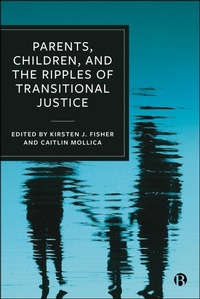
Parents, Children, and the Ripples of Transitional Justice
Bristol University Press
1st Edition
Published on 16. April 2026
256 pages
978-1-5292-4856-2 (ISBN)
Description

This pioneering collection breaks new ground by examining how post-atrocity justice affects and is informed by familial relationships, particularly between parents and children.
Moving beyond traditional discussions of victims and perpetrators, this volume centres the dynamics of care, responsibility, and identity in the aftermath of mass atrocity. It explores how attempts at addressing legacies of mass atrocity can undermine or strengthen families. Drawing on global case studies and innovative interdisciplinary insights, chapters reveal how socially constructed ideas about parenthood and childhood inform notions of responsibility with and for children within transitional justice frameworks.
Moving beyond traditional discussions of victims and perpetrators, this volume centres the dynamics of care, responsibility, and identity in the aftermath of mass atrocity. It explores how attempts at addressing legacies of mass atrocity can undermine or strengthen families. Drawing on global case studies and innovative interdisciplinary insights, chapters reveal how socially constructed ideas about parenthood and childhood inform notions of responsibility with and for children within transitional justice frameworks.
Reviews / Votes
'A necessary and truly global contribution to peacebuilding discussions by highlighting the family dimension and paternalist logics of transitional justice practices. A must read to reflect on effective sustainable peace.' Patricia Nabuco Martuscelli, University of SheffieldMore details
Edition
First Edition
Language
English
Place of publication
Bristol
United Kingdom
Target group
Professional and scholarly
Product notice
Reflowable
Illustrations
1 s/w Abbildung, 1 s/w Tabelle
Not illustrated
File size
0,72 MB
ISBN-13
978-1-5292-4856-2 (9781529248562)
Copyright in bibliographic data and cover images is held by Nielsen Book Services Limited or by the publishers or by their respective licensors: all rights reserved.
Schweitzer Classification
Other editions
Additional editions
Book
approx. 04/2026
1st Edition
Bristol University Press
€121.50
Not yet published
Persons
Kirsten J. Fisher is Associate Professor of Political Studies at the University of Saskatchewan, Canada.
Caitlin Mollica is Assistant Professor for the Business School at the University of Newcastle, Australia.
Caitlin Mollica is Assistant Professor for the Business School at the University of Newcastle, Australia.
Content
Introduction. Familial Care and Paternalism: The Parent-Child Relationship and Transitional Justice - Kirsten J. Fisher and Caitlin Mollica
?
Part I: Conceptualising Familial Transitional Justice Relationships?
1. Grown-Ups, Grown-Downs, and Pan Generationality - Mark A. Drumbl
2. Childhood and the Parent Subject: Encounters in Public Memory - J. Marshall Beier ?
3. Queering Childhood and Paternalism in Global Transitional Justice - Caitlin Biddolph
?
Part II: Governed and Governing Familial Transitional Justice Relationships??
4. Rights to Supported Families and Non-Discrimination: The Ugandan National Transitional Justice Response to Children Born of War - Kirsten J. Fisher and Jess Mugero??
5. Transitional Justice as an Illusion: The Guatemalan State as Parent- Leonzo Barreno (K'iche' Maya)
6. Children's Voices: The Implementation of An Act Respecting First Nations, Inuit and Metis Children, Youth, and Families as a Transitional Justice Tool in Saskatchewan Canada - Jamesy Patrick ?
7. Child- and Family-Sensitive Transitional Justice Policy Implementation in Africa - Bonny Ibhawoh and Adebisi Alade ?
8. Artisans of Peace: When Children Challenge the Parent/Child Dichotomy in Contexts of Transitional Justice - Cadhla O'Sullivan
?
Part III: Lived Experience of Familial Transitional Justice Relationships?
9. A Search for Belonging: Children Born of Conflict-Related Sexual Violence in Northern Uganda and Post-Conflict Reunification with Paternal Families - Myriam Denov, Nathaniel Mosseau, and Atim Angela Lakor ?
10. Parents, Children and Post-Genocide Justice in Rwanda: Intergenerational Echoes of Gacaca Trials - Barbora Hola, Veroni Eichelsheim, Lidewyde Berckmoes and Annemiek Richters
11. Undermining Family and Social Relationships in Iraqi Transitional Processes - Yousra Hasona?
12. The Return of Child Soldiers to Family: Social Dynamics Amidst the Absence of Justice in Nepal - Kate Macfarlane ?
13. Mothers' and Children's Resilience in the Context of the Years of Lead and their Involvement in the Transitional Justice Process in Morocco - Aziz Saidi
?
Concluding Reflections?
14. Reflections on the Parent-Child Relationship in International Relations, Childhood Studies, and Transitional Justice - Caitlin Mollica and Kirsten J. Fisher
15. Reappearing what Disappears: Children, Families, and Relationships in Justice, Transitions, and Transitional Justice - Mark Kersten
16. Relationalities and Temporalities Beyond Binaries - Helen Berents
?
Part I: Conceptualising Familial Transitional Justice Relationships?
1. Grown-Ups, Grown-Downs, and Pan Generationality - Mark A. Drumbl
2. Childhood and the Parent Subject: Encounters in Public Memory - J. Marshall Beier ?
3. Queering Childhood and Paternalism in Global Transitional Justice - Caitlin Biddolph
?
Part II: Governed and Governing Familial Transitional Justice Relationships??
4. Rights to Supported Families and Non-Discrimination: The Ugandan National Transitional Justice Response to Children Born of War - Kirsten J. Fisher and Jess Mugero??
5. Transitional Justice as an Illusion: The Guatemalan State as Parent- Leonzo Barreno (K'iche' Maya)
6. Children's Voices: The Implementation of An Act Respecting First Nations, Inuit and Metis Children, Youth, and Families as a Transitional Justice Tool in Saskatchewan Canada - Jamesy Patrick ?
7. Child- and Family-Sensitive Transitional Justice Policy Implementation in Africa - Bonny Ibhawoh and Adebisi Alade ?
8. Artisans of Peace: When Children Challenge the Parent/Child Dichotomy in Contexts of Transitional Justice - Cadhla O'Sullivan
?
Part III: Lived Experience of Familial Transitional Justice Relationships?
9. A Search for Belonging: Children Born of Conflict-Related Sexual Violence in Northern Uganda and Post-Conflict Reunification with Paternal Families - Myriam Denov, Nathaniel Mosseau, and Atim Angela Lakor ?
10. Parents, Children and Post-Genocide Justice in Rwanda: Intergenerational Echoes of Gacaca Trials - Barbora Hola, Veroni Eichelsheim, Lidewyde Berckmoes and Annemiek Richters
11. Undermining Family and Social Relationships in Iraqi Transitional Processes - Yousra Hasona?
12. The Return of Child Soldiers to Family: Social Dynamics Amidst the Absence of Justice in Nepal - Kate Macfarlane ?
13. Mothers' and Children's Resilience in the Context of the Years of Lead and their Involvement in the Transitional Justice Process in Morocco - Aziz Saidi
?
Concluding Reflections?
14. Reflections on the Parent-Child Relationship in International Relations, Childhood Studies, and Transitional Justice - Caitlin Mollica and Kirsten J. Fisher
15. Reappearing what Disappears: Children, Families, and Relationships in Justice, Transitions, and Transitional Justice - Mark Kersten
16. Relationalities and Temporalities Beyond Binaries - Helen Berents
