

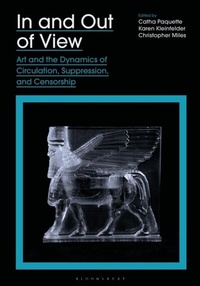
In and Out of View
Art and the Dynamics of Circulation, Suppression, and Censorship
1st Edition
Published on 9. September 2021
352 pages
978-1-5013-5870-8 (ISBN)
Description

In and Out of View models an expansion in how censorship is discursively framed. Contributors from diverse backgrounds, including artists, art historians, museum specialists, and students, address controversial instances of art production and reception from the mid-20th century to the present in the Americas, Africa, Asia, Europe, and the Middle East. Their essays, interviews, and statements invite consideration of the shifting contexts, values, and needs through which artwork moves in and out of view. At issue are governmental restrictions and discursive effects, including erasure and distortion resulting from institutional policies, canonical processes, and interpretive methods. Crucial considerations concerning death/violence, authoritarianism, (neo)colonialism, global capitalism, labor, immigration, race, religion, sexuality, activism/social justice, disability, campus speech, and cultural destruction are highlighted. The anthology-a thought-provoking resource for students and scholars in art history, museum and cultural studies, and creative practices-represents a timely and significant contribution to the literature on censorship.
More details
Edition
1. Auflage
Language
English
Place of publication
London
United Kingdom
Publishing group
Bloomsbury Publishing PLC
Target group
Professional and scholarly
Illustrations
28 colour and 43 bw illus
ISBN-13
978-1-5013-5870-8 (9781501358708)
Copyright in bibliographic data and cover images is held by Nielsen Book Services Limited or by the publishers or by their respective licensors: all rights reserved.
Schweitzer Classification
Other editions
Additional editions
Catha Paquette | Karen Kleinfelder | Christopher Miles
In and Out of View
Art and the Dynamics of Circulation, Suppression, and Censorship
Book
12/2022
Bloomsbury Visual Arts
€32.50
Shipment within 15-20 days
Persons
Catha Paquette is Professor of Art History at California State University, Long Beach, USA. She is the author of At the Crossroads: Diego Rivera and His Patrons at MoMA, Rockefeller Center, and the Palace of Fine Arts (2017). In essays published in and outside the US, she has investigated production and reception of Latin American art in Latin America and the US, including promotion, circulation, and acquisition by collectors, public agencies, and private institutions.
Karen L. Kleinfelder is Professor of Art History at California State University, Long Beach, USA. She is the author of The Artist, His Model, Her Image, His Gaze: Picasso's Pursuit of the Model (1993) and has been published in the exhibition catalogues Picasso: Inside the Image (1995) and Picasso and the Mediterranean (1996). As a specialist in modern and contemporary art and theory, her research interests focus on gender, psychoanalysis, and complexity theory.
Christopher Miles is Professor of Art and director of the Center for Contemporary Ceramics at California State University Long Beach, USA. Among the exhibitions he has co-curated are THING: New Sculpture from Los Angeles (Hammer Museum, 2005) and L.A. Invisible City (Instituto Cervantes, Madrid, 2010). His work has been shown at the ACME gallery, Pasadena Museum of California Art, and Patricia Sweetow Gallery. His writings have been extensively published in art journals and exhibition catalogs.
Karen L. Kleinfelder is Professor of Art History at California State University, Long Beach, USA. She is the author of The Artist, His Model, Her Image, His Gaze: Picasso's Pursuit of the Model (1993) and has been published in the exhibition catalogues Picasso: Inside the Image (1995) and Picasso and the Mediterranean (1996). As a specialist in modern and contemporary art and theory, her research interests focus on gender, psychoanalysis, and complexity theory.
Christopher Miles is Professor of Art and director of the Center for Contemporary Ceramics at California State University Long Beach, USA. Among the exhibitions he has co-curated are THING: New Sculpture from Los Angeles (Hammer Museum, 2005) and L.A. Invisible City (Instituto Cervantes, Madrid, 2010). His work has been shown at the ACME gallery, Pasadena Museum of California Art, and Patricia Sweetow Gallery. His writings have been extensively published in art journals and exhibition catalogs.
Content
List of Illustrations
Acknowledgments
Introduction, Catha Paquette (California State University Long Beach, USA), Karen Kleinfelder (California State University Long Beach, USA), and Christopher Miles (California State University Long Beach, USA)
PART I. Deadly Serious
1. Subjugated Knowledges, Revisionist Histories, and the Problem of Visibility: Carrie Mae Weems and Ken Gonzales-Day, Nizan Shaked (California State University Long Beach, USA)
2. Damage Control: Teresa Margolles, the Mexican Government, and the 2009 Venice Biennale Mexican Pavilion, Ana Garduño (National Institute of Fine Arts, Mexico)
3. Death Matters, Kerstin Mey (University of Limerick, Ireland)
PART II. The Sexual (In)Sight
4. Art/Obscenity/Underground Cinema in West Germany, 1968-72: Circulating through the Debates, Megan Hoetger (Performance and Media Historian and Curator, USA and Europe)
5. Impossible to Image: Art and Sexual Violence, 1975-79, Angelique Szymanek (Hobart and William Smith Colleges, USA)
6. De-Shaming Shame: A Conversation, John Fleck (Actor and Performance Artist, USA) and Kevin Duffy (Filmmaker and Actor, USA)
7. Only the Stupid Are Overt: Covert Censorship in the American Museum, Jonathan D. Katz (University of Pennyslvania, USA)
PART III. Under Deliberation: Artful Activism
8. Tucumán Arde and the Changing Face of Censorship, Fabián Cereijido (Artist and Independent Scholar, USA)
9. The Discursive Roots of Censorship: Neoliberalism's Rendering of Chican@ Art, Karen Mary Davalos (University of Minnesota, Twin Cities, USA)
10. Tools and Obstacles: A Conversation, Daniel Joseph Martínez (University of California, Irvine, USA), Carol A. Wells (Center for the Study of Political Graphics, USA), and Nizan Shaked (California State University Long Beach, USA)
11. Remaining in Sight: Andrea Bowers's Art Lessons from Activists, Peter R. Kalb (Brandeis University, USA)
PART IV. Framed: Institutional and Governmental Constraints
12. In and Out of Sites: Disability and Access in the Work of Park McArthur and Carmen Papalia, Elizabeth Guffey (State University of New York at Purchase, USA)
13. Culture, State, and Revolution: Arts Wars between Religious and Secular Autocracies in Post-Revolution Egypt, Sonali Pahwa (University of Minnesota, USA) and Jessica Winegar (Northwestern University, USA)
14 Knowing/Caring: A Conversation, Ai Weiwei (Artist, UK) and Alexandra Munroe (Solomon R. Guggenheim Museum, USA)
PART V. Contested Objects: (Re)Presenting Cultural Heritage
15. Re-Indigenizing Native Space in a University Context, Craig Stone (California State University Long Beach, USA)
16. African Cultural Heritage: Erasure, Restitution, and Digital Image Regimes, Sylvester Okwunodu Ogbechie (University of California, Santa Barbara, USA)
17. Censorship and Creative (Re)Production: A Conversation, Morehshin Allahyari (Artist and Activist, USA) and Brittany Ransom (California State University Long Beach, USA)
PART VI. Matters of Race: Campus (Un)Learning
18. Our Compliance: Provocation and Valuation, Ashley Powell (Artist, USA) and Kara Walker (Artist, USA)
19. Presenting/Canceling N*W*C*: Creative Expression, Speech Rights, and Pedagogy, Jane Conoley (California State University Long Beach, USA), Maulana Karenga(California State University Long Beach, USA, Karen Kleinfelder (California State University Long Beach, USA, Cyrus Parker-Jeannette (Dancer/Choreographer, USA), Michele Roberge (Performing Arts Specialist, USA), Elena Roznovan (Artist, USA) and Cintia Segovia (Photographer, USA), Griselda Suarez-Barajas (Long Beach Arts Council, USA), Andrew Vaca (CAlifaoria State University, Long Beach, USA), Jaye Austin Williams (Bucknell University, USA), and Teri Shaffer Yamada (California State University Long Beach, USA)
20. American Monument 25/2018: Students Respond, Andrea A. Guerrero (California State University Long Beach, USA) and CSULB School of Art Concerned Students of Color and Allies (California State University Long Beach, USA)
Afterwords, Svetlana Mintcheva (National Coalition Against Censorship, USA), and Laura Raicovich (Independent Scholar, USA)
Contributors
Index
Acknowledgments
Introduction, Catha Paquette (California State University Long Beach, USA), Karen Kleinfelder (California State University Long Beach, USA), and Christopher Miles (California State University Long Beach, USA)
PART I. Deadly Serious
1. Subjugated Knowledges, Revisionist Histories, and the Problem of Visibility: Carrie Mae Weems and Ken Gonzales-Day, Nizan Shaked (California State University Long Beach, USA)
2. Damage Control: Teresa Margolles, the Mexican Government, and the 2009 Venice Biennale Mexican Pavilion, Ana Garduño (National Institute of Fine Arts, Mexico)
3. Death Matters, Kerstin Mey (University of Limerick, Ireland)
PART II. The Sexual (In)Sight
4. Art/Obscenity/Underground Cinema in West Germany, 1968-72: Circulating through the Debates, Megan Hoetger (Performance and Media Historian and Curator, USA and Europe)
5. Impossible to Image: Art and Sexual Violence, 1975-79, Angelique Szymanek (Hobart and William Smith Colleges, USA)
6. De-Shaming Shame: A Conversation, John Fleck (Actor and Performance Artist, USA) and Kevin Duffy (Filmmaker and Actor, USA)
7. Only the Stupid Are Overt: Covert Censorship in the American Museum, Jonathan D. Katz (University of Pennyslvania, USA)
PART III. Under Deliberation: Artful Activism
8. Tucumán Arde and the Changing Face of Censorship, Fabián Cereijido (Artist and Independent Scholar, USA)
9. The Discursive Roots of Censorship: Neoliberalism's Rendering of Chican@ Art, Karen Mary Davalos (University of Minnesota, Twin Cities, USA)
10. Tools and Obstacles: A Conversation, Daniel Joseph Martínez (University of California, Irvine, USA), Carol A. Wells (Center for the Study of Political Graphics, USA), and Nizan Shaked (California State University Long Beach, USA)
11. Remaining in Sight: Andrea Bowers's Art Lessons from Activists, Peter R. Kalb (Brandeis University, USA)
PART IV. Framed: Institutional and Governmental Constraints
12. In and Out of Sites: Disability and Access in the Work of Park McArthur and Carmen Papalia, Elizabeth Guffey (State University of New York at Purchase, USA)
13. Culture, State, and Revolution: Arts Wars between Religious and Secular Autocracies in Post-Revolution Egypt, Sonali Pahwa (University of Minnesota, USA) and Jessica Winegar (Northwestern University, USA)
14 Knowing/Caring: A Conversation, Ai Weiwei (Artist, UK) and Alexandra Munroe (Solomon R. Guggenheim Museum, USA)
PART V. Contested Objects: (Re)Presenting Cultural Heritage
15. Re-Indigenizing Native Space in a University Context, Craig Stone (California State University Long Beach, USA)
16. African Cultural Heritage: Erasure, Restitution, and Digital Image Regimes, Sylvester Okwunodu Ogbechie (University of California, Santa Barbara, USA)
17. Censorship and Creative (Re)Production: A Conversation, Morehshin Allahyari (Artist and Activist, USA) and Brittany Ransom (California State University Long Beach, USA)
PART VI. Matters of Race: Campus (Un)Learning
18. Our Compliance: Provocation and Valuation, Ashley Powell (Artist, USA) and Kara Walker (Artist, USA)
19. Presenting/Canceling N*W*C*: Creative Expression, Speech Rights, and Pedagogy, Jane Conoley (California State University Long Beach, USA), Maulana Karenga(California State University Long Beach, USA, Karen Kleinfelder (California State University Long Beach, USA, Cyrus Parker-Jeannette (Dancer/Choreographer, USA), Michele Roberge (Performing Arts Specialist, USA), Elena Roznovan (Artist, USA) and Cintia Segovia (Photographer, USA), Griselda Suarez-Barajas (Long Beach Arts Council, USA), Andrew Vaca (CAlifaoria State University, Long Beach, USA), Jaye Austin Williams (Bucknell University, USA), and Teri Shaffer Yamada (California State University Long Beach, USA)
20. American Monument 25/2018: Students Respond, Andrea A. Guerrero (California State University Long Beach, USA) and CSULB School of Art Concerned Students of Color and Allies (California State University Long Beach, USA)
Afterwords, Svetlana Mintcheva (National Coalition Against Censorship, USA), and Laura Raicovich (Independent Scholar, USA)
Contributors
Index
