

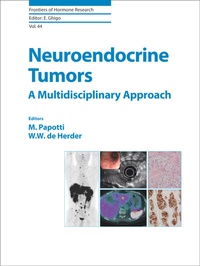
Neuroendocrine Tumors: A Multidisciplinary Approach
1st Edition
Published on 11. August 2015
270 pages
978-3-318-02773-0 (ISBN)
Available for download
Description

The term 'carcinoid' entered medical literature over 100 years ago to describe a peculiar intestinal epithelial neoplasm. Since then, a large body of literature has expanded the concept of carcinoid, later replaced by the term 'NeuroEndocrine Tumor' (NET), defining a wide spectrum of peculiar tumors, potentially affecting all organs and tissues, originating from neuroendocrine cells, sharing, but, at the same time, keeping, pathognomonic pathological, radiological and clinical features. This book provides an authoritative overview of the epidemiological, clinical, genetic, molecular and pathological characteristics of NETs and highlights the most relevant controversial issues in the classification, diagnosis and therapy. Furthermore the new frontiers in the field of medical therapies are presented, through a multidisciplinary and translational approach. Considering the fact that NETs have been recently demonstrated less rare as considered so far, 'Neuroendocrine Tumors: A Multidisciplinary Approach' is a must read for endocrinologists, gastroenterologists, endocrine surgeons, as well as pathologists, nuclear medicine physicians and radiologists focused on NET.
More details
Other editions
Additional editions
M. Papotti | W.W. de Herder
Neuroendocrine Tumors: A Multidisciplinary Approach
A Multidisciplinary Approach
Book
08/2015
1st Edition
S. Karger
€216.15
Article exhausted; check different version
Persons
Content
- Cover
- Front Matter
- Contents
- Preface
- General Design of the Current Volume
- References
- Epidemiology of Neuroendocrine Tumors
- Abstract
- Histologic Classification of Neuroendocrine Tumors
- Coding Systems of Neuroendocrine Tumors
- Anatomic Sites of Neuroendocrine Neoplasia
- Limitations in the Interpretation of Data on Neuroendocrine Neoplasia Epidemiology
- Sources of Information on Neuroendocrine Tumor Epidemiology
- Stomach
- Small Intestine
- Pancreas
- Colorectum
- Colon (Rectum Excluded)
- Rectum
- Appendix
- Bronchopulmonary Tree
- References
- Biochemical Testing in Patients with Neuroendocrine Tumors
- Abstract
- General Markers
- Specific Markers
- Tumor Markers in Neuroendocrine Tumors
- Conclusion
- References
- Clinical Syndromes Related to Gastrointestinal Neuroendocrine Neoplasms
- Abstract
- Clinical Syndromes Secondary to Gastrointestinal Neuroendocrine Neoplasms
- Clinical Syndromes of Gastrointestinal Neuroendocrine Neoplasms According to the Tissue of Origin
- Treatment of the Carcinoid Syndrome and Related Syndromes
- Clinical Syndromes of Gastrointestinal Neuroendocrine Neoplasms According to the Tissue of Origin
- Treatment of the Carcinoid Syndrome and Related Syndromes
- Paraneoplastic Syndromes Secondary to Neuroendocrine Tumors
- Treatment of Clinical Syndromes Related to Pancreatic Neuroendocrine Neoplasms
- Conclusion
- References
- Radiological Imaging: Computed Tomography, Magnetic Resonance Imaging and Ultrasonography
- Abstract
- Imaging Techniques
- Imaging Findings
- Image Surveillance and Monitoring of Neuroendocrine Tumor Therapy
- References
- Nuclear Medicine Imaging of Neuroendocrine Tumors
- Abstract
- Imaging of Neuroendocrine Tumors
- Somatostatin Receptor-Based Imaging
- Somatostatin Receptor PET/CT
- Other Imaging Modalities
- Imaging Response after Therapy
- Conclusion
- References
- Endoscopy and Endoscopic Ultrasound in Assessing and Managing Neuroendocrine Neoplasms
- Abstract
- Gastrointestinal Neuroendocrine Neoplasms
- Pancreatic Neuroendocrine Neoplasms
- EUS-Guided Fine-Needle Aspiration and Biopsy, and Newer Techniques
- References
- Pathology: Classification and Immunoprofile
- Abstract
- Classification of Neuroendocrine Neoplasms in the Gastroenteropancreatic System
- Classification in the Lung, Thymus and Genitourinary Tract
- Immunohistochemistry
- Important Organ-Specific Features
- References
- Genetics and Epigenetics of Pancreatic Neuroendocrine Tumors and Pulmonary Carcinoids
- Abstract
- Inherited Neuroendocrine Tumor Predisposition Syndromes
- Genetic and Epigenetic Studies in Sporadic Neuroendocrine Tumors
- Therapeutic Consequences of Genetic and Epigenetic Studies in Neuroendocrine Tumors
- References
- Pancreatic Surgery
- Abstract
- Surgical Approaches for Primary Tumor with Clinical Endocrine Syndrome
- Localized Nonfunctioning Pancreatic Neuroendocrine Tumors
- Locally Advanced Pancreatic Neuroendocrine Tumors
- Metastatic Disease
- Surgical Techniques
- Open or Laparoscopic Approach?
- References
- Gastrointestinal Surgery of Neuroendocrine Neoplasms
- Abstract
- Esophageal Neuroendocrine Neoplasms
- Gastric Neuroendocrine Neoplasms
- Duodenal Neuroendocrine Neoplasms
- Pancreatic Neuroendocrine Neoplasms
- Small Intestinal Neuroendocrine Neoplasms
- Appendiceal Neuroendocrine Neoplasms
- Colonic Neuroendocrine Neoplasms
- Rectal Neuroendocrine Neoplasms
- Neuroendocrine Carcinomas
- Mixed Adenocarcinomas and Neuroendocrine Carcinomas
- Neuroendocrine Liver Metastases
- Peritoneal Metastases
- Follow-Up
- Conclusion
- References
- Transplantation and Debulking Procedures for Neuroendocrine Tumors
- Abstract
- Debulking
- Transplantation
- References
- A 25-Year Experience of Gastroenteropancreatic Neuroendocrine Tumors and Somatostatin (Congeners) Analogs: From Symptom Control to Antineoplastic Therapy
- Abstract
- Carcinoid Tumors Subjects
- Pancreatic Neuroendocrine Tumor Subjects
- Somatostatin Congener Depot Formulations
- Future Considerations
- References
- Medical Therapy of Pulmonary Neuroendocrine Neoplasms: Targeted,Symptomatic and Chemotherapy
- Abstract
- Control of Associated (Neuro) Endocrine Hypersecretions
- Control of Tumor Growth in the Metastatic Setting or in Patients Not Candidates for Surgery
- Somatostatin Analogs
- Target Therapies
- Chemotherapy
- Conclusions
- References
- Peptide Receptor Radionuclide Therapy of Neuroendocrine Tumors
- Abstract
- Historical Overview
- Technique
- Peptide Receptor Radionuclide Therapy Results
- References
- Hormone and Receptor Candidates for Target and Biotherapy of Neuroendocrine Tumors
- Abstract
- Hormone Receptors in Neuroendocrine Tumors
- Mechanisms Influencing Treatment Response and Uptake of Radiolabeled Somatostatin Analogs
- Role of Hormone Receptors in the Diagnosis of Neuroendocrine Tumors
- Clinical Experience of Targeting Hormone Receptors in Neuroendocrine Tumors
- References
- The Role of Chemotherapy in Well-Differentiated Gastroenteropancreatic Neuroendocrine Tumors
- Abstract
- Streptozocin Combinations
- Dacarbazine and Temozolomide
- Temozolomide Combinations
- Oxaliplatin-Based Regimens
- Predictors of Response to Chemotherapy
- Choice of Chemotherapy in Intermediate- to High-Grade Tumors
- References
- Other Novel Therapies: Biomarkers, microRNAs and microRNA Inhibitors, DNA Methylation, Epigenetics, Immunotherapy and Virotherapy
- Abstract
- Novel Biomarkers
- microRNAs and microRNA Inhibitors
- Epigenetics of Neuroendocrine Tumors - DNA Methylation and Histone Modifications
- Recent Advancements in Cancer Immunotherapy
- Immune Checkpoint Antibodies
- Adoptive Transfer of Genetically Engineered T Cells
- Cancer Vaccination
- Other Forms of Immunotherapy
- Oncolytic Viruses as Immunotherapy
- Combination Treatments
- Immune Scoring of Tumors to Predict Clinical Outcome
- Future Perspectives
- References
- Author Index
- Subject Index
- Back Cover

