

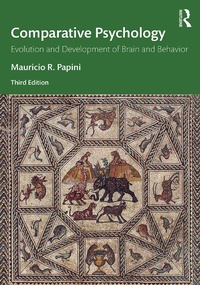
Comparative Psychology
Evolution and Development of Brain and Behavior, 3rd Edition
3rd Edition
Published on 20. October 2020
558 pages
978-1-000-17756-5 (ISBN)
Description

This revised third edition provides an up to date, comprehensive overview of the field of comparative psychology, integrating both evolutionary and developmental studies of brain and behavior. This book provides a unique combination of areas normally covered independently to satisfy the requirements of comparative psychology courses.
Papini ensures thorough coverage of topics like the fundamentals of neural function, the cognitive and associative capacities of animals, the development of the central nervous system and behavior, and the fossil record of animals including human ancestors. This text includes many examples drawn from the study of human behavior, highlighting general and basic principles that apply broadly to the animal kingdom. New topics introduced in this edition include genetics, epigenetics, neurobiological, and cognitive advances made in recent years into this evolutionary-developmental framework.
An essential textbook for upper level undergraduate and graduate courses in comparative psychology, animal behavior, and evolutionary psychology, developmental psychology, neuroscience and behavioral biology.
Papini ensures thorough coverage of topics like the fundamentals of neural function, the cognitive and associative capacities of animals, the development of the central nervous system and behavior, and the fossil record of animals including human ancestors. This text includes many examples drawn from the study of human behavior, highlighting general and basic principles that apply broadly to the animal kingdom. New topics introduced in this edition include genetics, epigenetics, neurobiological, and cognitive advances made in recent years into this evolutionary-developmental framework.
An essential textbook for upper level undergraduate and graduate courses in comparative psychology, animal behavior, and evolutionary psychology, developmental psychology, neuroscience and behavioral biology.
More details
Edition
3rd edition
Language
English
Place of publication
London
United Kingdom
Publishing group
Taylor & Francis Ltd
Target group
College/higher education
Illustrations
76 Tables, black and white; 144 Line drawings, black and white; 64 Halftones, black and white; 208 Illustrations, black and white
ISBN-13
978-1-000-17756-5 (9781000177565)
Copyright in bibliographic data and cover images is held by Nielsen Book Services Limited or by the publishers or by their respective licensors: all rights reserved.
Schweitzer Classification
Other editions
Additional editions
Book
10/2020
3rd Edition
Routledge
€107.40
Shipment within 10-20 days

Book
10/2020
3rd Edition
Routledge
€204.60
Shipment within 10-20 days
Person
Mauricio R. Papini is Professor of Psychology at Texas Christian University, USA. His work has centered on brain-behavior relationships in the area of incentive learning, but broader interests in the evolution and development of behavior led to the creation of this book.
Content
1. Biological Evolution
1.1 Evidence for Evolution
1.2 Logic of Natural Selection
1.3 Origin and Preservation of Genetic Variability
1.4 Natural Selection
1.5 Glossary
1.6 References
2. Origin and Evolution of Animals
2.1 Diversity of Life
2.2 Geological Background
2.3 Origin and Evolution of Animals
2.4 Speciation
2.5 Grades and Clades
2.6 Glossary
2.7 References
3. Evo-devo, Brain, and Behavior
3.1 Definitions
3.2 Early Development
3.3 Development of the Vertebrate Nervous System
3.4 Development and evolution
3.5 Terminology
3.6 Behavior
3.7 Glossary
3.8 References
4. Simple Nervous Systems and Behavior
4.1 Invertebrate Phyla
4.2 Behavior and Simple Neural Networks
4.3 Behavioral and Neural Plasticity in Nonassociative Learning
4.4 Evolution of Learning Mechanisms in Mollusks
4.5 Glossary
4.6 References
5. Evolution of the Vertebrate Brain and Behavior
5.1 Key Innovations of Vertebrates
5.2 Comparative Neurology
5.3 Telencephalon
5.4 Brain Size
5.5 Glossary
5.6 References
Chapter 6: Fundamentals of Learning and Cognition
6.1 Definitions
6.2 Forms of Conditioning
6.3 Classical Conditioning
6.4 Instrumental Conditioning
6.5 Situational Generality of Associative Learning
6.6 Brain Mechanisms of Learning and Cognition: An Overview
6.7 Glossary
6.8 References
7. Comparative Analysis of Learning and Cognition
7.1 Comparative Methodology
7.2 Learning and Cognition in Invertebrates
7.3 Learning and Cognition as Adaptations
7.4 Learning, Cognition, and Phylogenetic History
7.5 Glossary
7.6 References
8. Higher Cognitive Processes
8.1 From Associative Learning to Cognition
8.2 From Concepts to Social Cognition
8.3 Mental Continuity and Discontinuity
8.4 Glossary
8.5 References
9. Early Learning and Behavior
9.1 Ontogenetic Transitions
9.2 Prenatal and Prehatching Behavior
9.3 Infant Behavior
9.4 Infant Learning
9.5 Development of Complex Behavior
9.6 Glossary
9.7 References
10. Early Social Learning and Behavior
10.1 From Individual to Social Behavior
10.2 Imprinting
10.3 Reproductive and Social Behavior
10.4 Development of Vocal Behavior
10.5 Glossary
10.6 References
11. Reproductive and Social Behavior
11.1 Reproductive Biology and Social Behavior
11.2 Mechanisms Underlying Social Behavior
11.3 Mating Systems
11.4 Patterns of Reproductive Behavior
11.5 Infant Care
11.6 Complex Animal Societies
11.7 Glossary
11.8 References
12. Brain, Behavior, and Evolution of Primates
12.1 What is a Primate?
12.2 The Primate Brain
12.3 Evolution of Language
12.4 Origin of Primates
12.5 Hominids
12.6 From Archaic to Modern Humans
12.7 Conclusion: From Oldowan Tools to Climate Change
12.8 Glossary
12.9 References
1.1 Evidence for Evolution
1.2 Logic of Natural Selection
1.3 Origin and Preservation of Genetic Variability
1.4 Natural Selection
1.5 Glossary
1.6 References
2. Origin and Evolution of Animals
2.1 Diversity of Life
2.2 Geological Background
2.3 Origin and Evolution of Animals
2.4 Speciation
2.5 Grades and Clades
2.6 Glossary
2.7 References
3. Evo-devo, Brain, and Behavior
3.1 Definitions
3.2 Early Development
3.3 Development of the Vertebrate Nervous System
3.4 Development and evolution
3.5 Terminology
3.6 Behavior
3.7 Glossary
3.8 References
4. Simple Nervous Systems and Behavior
4.1 Invertebrate Phyla
4.2 Behavior and Simple Neural Networks
4.3 Behavioral and Neural Plasticity in Nonassociative Learning
4.4 Evolution of Learning Mechanisms in Mollusks
4.5 Glossary
4.6 References
5. Evolution of the Vertebrate Brain and Behavior
5.1 Key Innovations of Vertebrates
5.2 Comparative Neurology
5.3 Telencephalon
5.4 Brain Size
5.5 Glossary
5.6 References
Chapter 6: Fundamentals of Learning and Cognition
6.1 Definitions
6.2 Forms of Conditioning
6.3 Classical Conditioning
6.4 Instrumental Conditioning
6.5 Situational Generality of Associative Learning
6.6 Brain Mechanisms of Learning and Cognition: An Overview
6.7 Glossary
6.8 References
7. Comparative Analysis of Learning and Cognition
7.1 Comparative Methodology
7.2 Learning and Cognition in Invertebrates
7.3 Learning and Cognition as Adaptations
7.4 Learning, Cognition, and Phylogenetic History
7.5 Glossary
7.6 References
8. Higher Cognitive Processes
8.1 From Associative Learning to Cognition
8.2 From Concepts to Social Cognition
8.3 Mental Continuity and Discontinuity
8.4 Glossary
8.5 References
9. Early Learning and Behavior
9.1 Ontogenetic Transitions
9.2 Prenatal and Prehatching Behavior
9.3 Infant Behavior
9.4 Infant Learning
9.5 Development of Complex Behavior
9.6 Glossary
9.7 References
10. Early Social Learning and Behavior
10.1 From Individual to Social Behavior
10.2 Imprinting
10.3 Reproductive and Social Behavior
10.4 Development of Vocal Behavior
10.5 Glossary
10.6 References
11. Reproductive and Social Behavior
11.1 Reproductive Biology and Social Behavior
11.2 Mechanisms Underlying Social Behavior
11.3 Mating Systems
11.4 Patterns of Reproductive Behavior
11.5 Infant Care
11.6 Complex Animal Societies
11.7 Glossary
11.8 References
12. Brain, Behavior, and Evolution of Primates
12.1 What is a Primate?
12.2 The Primate Brain
12.3 Evolution of Language
12.4 Origin of Primates
12.5 Hominids
12.6 From Archaic to Modern Humans
12.7 Conclusion: From Oldowan Tools to Climate Change
12.8 Glossary
12.9 References
