


Ecological Reparation
Repair, Remediation and Resurgence in Social and Environmental Conflict
1st Edition
Published on 1. December 2023
462 pages
978-1-5292-3957-7 (ISBN)
Description

How do we engage with the threat of social and environmental degradation while creating and maintaining liveable and just worlds? Researchers from diverse backgrounds unpack this question through a series of original and committed contributions to this wide-ranging volume. The authors explore practices of repairing damaged ecologies across different locations and geographies and offer innovative insights for the conservation, mending, care and empowerment of human and nonhuman ecologies. This ground-breaking collection establishes ecological reparation as an urgent and essential topic of public and scholarly debate.
Reviews / Votes
"This is an inspiring call for creative and careful experimentation to reimagine and recraft possibilities for shared life in difficult times." Thom van Dooren, University of Sydney "As fossil capitalism ravages the planet, foregrounding resistant acts of ecological reparation is critical in imagining and realizing system change - to which this book contributes with global reach and interdisciplinary scope." T.J. Demos, University of California, Santa Cruz "... an expansive and compelling collection, by world-leading and emergent scholars, of the critical importance of ecology and relationality in both theorizing reparative justice and detailing practices of hopeful care." Mark Jackson, University of BristolMore details
Series
Edition
First Edition
Language
English
Place of publication
Bristol
United Kingdom
Target group
Professional and scholarly
Product notice
Reflowable
Illustrations
91 s/w Abbildungen
91 Illustrations, black and white
File size
23,34 MB
ISBN-13
978-1-5292-3957-7 (9781529239577)
Copyright in bibliographic data and cover images is held by Nielsen Book Services Limited or by the publishers or by their respective licensors: all rights reserved.
Schweitzer Classification
Other editions
Additional editions
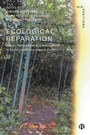
Dimitris Papadopoulos | Maria Puig de la Bellacasa | Maddalena Tacchetti
Ecological Reparation
Repair, Remediation and Resurgence in Social and Environmental Conflict
Book
12/2023
1st Edition
Bristol University Press
€46.00
Shipment within 3-4 weeks
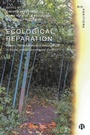
Dimitris Papadopoulos | Maria Puig de la Bellacasa | Maddalena Tacchetti
Ecological Reparation
Repair, Remediation and Resurgence in Social and Environmental Conflict
Book
12/2023
1st Edition
Bristol University Press
€153.50
Shipment within 3-4 weeks
Persons
Dimitris Papadopoulos is Professor of History of Consciousness at the History of Consciousness Department, University of California, Santa Cruz
Maria Puig de la Bellacasa is Professor of History of Consciousness at the History of Consciousness Department, University of California, Santa Cruz
Maddalena Tacchetti is Lecturer at the School of Business and Creative Industries, University of the West of Scotland
Maria Puig de la Bellacasa is Professor of History of Consciousness at the History of Consciousness Department, University of California, Santa Cruz
Maddalena Tacchetti is Lecturer at the School of Business and Creative Industries, University of the West of Scotland
Content
Introduction: No justice, no ecological peace: The groundings of ecological reparation (Dimitris Papadopoulos, Maria Puig de la Bellacasa, Maddalena Tacchetti)
Acknowledgements
PART I Depletion: Resurgence
1. Experiments in situ: Soil repair practices as part of place-based action for change in El Salvador (Naomi Millner)
2. Hesitant: three theses on ecological reparation (otherwise) (Manuel Tironi)
3. The False Bay Coast of Cape Town: A Critical Zone (Lesley Green and Vanessa Farr)
PART II Deskilling: Experimenting
4. Reflections on a mending ecology through pastures for life (Claire Waterton)
5. Fab Cities as Infrastructures for Ecological Reparation: Maker Activism, Vernacular Skills, and Prototypes for Self-Grounding Collective Life (Atsuro Morita and Kazutoshi Tsuda)
6. The Cosmoecological Workshop: Or, How to Philosophise with a Hammer (Martin Savransky)
PART III Contaminating: Cohabiting
7. Multispecies mending from micro to macro: Biome restoration, carbon recycling, and ecologies of participation (Eleanor Hadley Kershaw)
8. Involvement as an ethics for more than human interdependencies (Nerea Calvillo)
9. From Museum to MOB (Timothy Choy)
PART IV Enclosing: Reclaiming Land
10. Land in Our Names: Building an Anti-Racist Food Movement (Sam Siva)
11. Land reparations and ecological justice - an Interview with Sam Siva (Maria Puig de la Bellacasa and Dimitris Papadopoulos)
12. Waste, improvement and repair on Ireland's Peat Bogs (Patrick Bresnihan and Patrick Brodie)
13. New Peasantries in Italy: Eco-commons, Agroecology and Food Communities (Andrea Ghelfi)
14. "Obedecer a la Vida": Environmental Citizenship Otherwise? (Juan Camilo Cajigas)
PART V Loss: Recollecting
15. Travelling Memories: Repairing the past and imagining the future in medium-secure forensic psychiatric care (Steven D. Brown, Paula Reavey, Donna Ciarlo and Abisola Balogun-Katung)
16. Conversations on benches (Leila Dawney and Linda Brothwell)
17. Curating reparation and recrafting solidarity in post-accord Colombia (Fredy Mora-Gamez)
PART VI Representing: Self-governing
18. Commons-based mending ecologies (Doina Petrescu and Constantin Petcou)
19. Ri-Maflow: des-pair, resistance and re-pair in an urban industrial ecology (Marco Checchi)
20. Chilean streets: An archive against the grain of History (Cristobal Bonelli and Marisol de la Cadena)
PART VII Isolating: Embodying
21. (Un)crafting ecologies: actions involving special skills at (un)making things humans with your hands (Eliana Sanchez-Aldana)
22. Cultivating Attention to Fragility: The Sensible Encounters of Maintenance (Jerome Denis and David Pontille)
23. Technological black boxing versus ecological reparation: From encased-industrial to open-renewable wind energy (Aristotle Tympas)
PART VIII Growth: Flourishing
24. Algorithmic Food Justice (Lara Houston, Sara Heitlinger, Ruth Catlow and Alex Taylor)
25. Being affected by paramo: Maps, landscape drawings, and a risky science (Alejandra Osejo and Santiago Martinez Medina)
26. Ordinary Hope (Steven J. Jackson)
Acknowledgements
PART I Depletion: Resurgence
1. Experiments in situ: Soil repair practices as part of place-based action for change in El Salvador (Naomi Millner)
2. Hesitant: three theses on ecological reparation (otherwise) (Manuel Tironi)
3. The False Bay Coast of Cape Town: A Critical Zone (Lesley Green and Vanessa Farr)
PART II Deskilling: Experimenting
4. Reflections on a mending ecology through pastures for life (Claire Waterton)
5. Fab Cities as Infrastructures for Ecological Reparation: Maker Activism, Vernacular Skills, and Prototypes for Self-Grounding Collective Life (Atsuro Morita and Kazutoshi Tsuda)
6. The Cosmoecological Workshop: Or, How to Philosophise with a Hammer (Martin Savransky)
PART III Contaminating: Cohabiting
7. Multispecies mending from micro to macro: Biome restoration, carbon recycling, and ecologies of participation (Eleanor Hadley Kershaw)
8. Involvement as an ethics for more than human interdependencies (Nerea Calvillo)
9. From Museum to MOB (Timothy Choy)
PART IV Enclosing: Reclaiming Land
10. Land in Our Names: Building an Anti-Racist Food Movement (Sam Siva)
11. Land reparations and ecological justice - an Interview with Sam Siva (Maria Puig de la Bellacasa and Dimitris Papadopoulos)
12. Waste, improvement and repair on Ireland's Peat Bogs (Patrick Bresnihan and Patrick Brodie)
13. New Peasantries in Italy: Eco-commons, Agroecology and Food Communities (Andrea Ghelfi)
14. "Obedecer a la Vida": Environmental Citizenship Otherwise? (Juan Camilo Cajigas)
PART V Loss: Recollecting
15. Travelling Memories: Repairing the past and imagining the future in medium-secure forensic psychiatric care (Steven D. Brown, Paula Reavey, Donna Ciarlo and Abisola Balogun-Katung)
16. Conversations on benches (Leila Dawney and Linda Brothwell)
17. Curating reparation and recrafting solidarity in post-accord Colombia (Fredy Mora-Gamez)
PART VI Representing: Self-governing
18. Commons-based mending ecologies (Doina Petrescu and Constantin Petcou)
19. Ri-Maflow: des-pair, resistance and re-pair in an urban industrial ecology (Marco Checchi)
20. Chilean streets: An archive against the grain of History (Cristobal Bonelli and Marisol de la Cadena)
PART VII Isolating: Embodying
21. (Un)crafting ecologies: actions involving special skills at (un)making things humans with your hands (Eliana Sanchez-Aldana)
22. Cultivating Attention to Fragility: The Sensible Encounters of Maintenance (Jerome Denis and David Pontille)
23. Technological black boxing versus ecological reparation: From encased-industrial to open-renewable wind energy (Aristotle Tympas)
PART VIII Growth: Flourishing
24. Algorithmic Food Justice (Lara Houston, Sara Heitlinger, Ruth Catlow and Alex Taylor)
25. Being affected by paramo: Maps, landscape drawings, and a risky science (Alejandra Osejo and Santiago Martinez Medina)
26. Ordinary Hope (Steven J. Jackson)
