

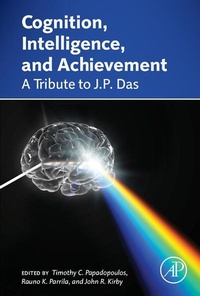
Cognition, Intelligence, and Achievement
A Tribute to J.P. Das
Published on 29. October 2014
530 pages
978-0-12-410444-0 (ISBN)
Description

Cognition, Intelligence, and Achievement is motivated by the work of the renowned Professor J. P. Das on the PASS (Planning, Attention, Simultaneous and Successive Processing) theory of intelligence and CAS measures (Cognitive Assessment System) of cognitive processes. This book reviews current research using this and other frameworks in understanding the relationships among cognition, intelligence, and achievement. The assessment and diagnosis of learning disabilities, mental retardation, and ADHD are addressed, and the interrelationships among cognition, culture, neuropsychology, academic achievement, instruction, and remediation are examined. No other book has presented such an integrated view across these domains, from such a diverse array of internationally known and respected experts from psychology, education, and neuroscience.
- Summarizes decades of research on PASS theory and use of CAS
- Discusses how findings in the neuropsychology of intelligence speak to PASS theory use and application
- Covers use of PASS and CAS for assessing and treating a variety of learning disabilities
- Outlines use of PASS and CAS for enhancing learning and cognitive processes
More details
Language
English
Place of publication
San Diego
United States
Publishing group
Elsevier Science & Techn.
ISBN-13
978-0-12-410444-0 (9780124104440)
Copyright in bibliographic data and cover images is held by Nielsen Book Services Limited or by the publishers or by their respective licensors: all rights reserved.
Schweitzer Classification
Other editions
Additional editions
Timothy Papadopoulos | Rauno K. Parrila | John R. Kirby
Cognition, Intelligence, and Achievement
A Tribute to J. P. Das
Book
07/2014
Academic Press
€92.50
Shipment within 15-20 days
Content
1. Cognition, Intelligence, and Achievement: A Tribute to J. P. Das2. Glimpses into the Personal Life of J. P. Das3. Three Faces of Cognitive Processes: Theory, Assessment, and Intervention4. A Janus View: J. P. Das' Ideas in Retrospect and Prospect5. Cognitive Processes and Academic Achievement: Multiple Systems Model of Reading6. Culture and Cognition: A Forty Year Overview7. Reading Comprehension and PASS Theory8. Establishing Measurement Invariance of Cognitive Assessment System Across Cultures9. Functional Components of Reading with Reference to Reading Chinese10. Intelligence, Working Memory, and Learning Disabilities11. Cognitive Constructs and Individual Differences Underlying AD/HD and Dyslexia: A Cognitive Mosaic Approach12. Is Intelligence Relevant in Reading "¿¿¿¿ and in Calculating "3 + 5?13. PASS Theory and Special Educational Needs: A European Perspective14. Cognitive Processes in Children with Developmental Coordination Disorder15. Equitable Assessment for Hearing and Deaf English Language Learners: An Investigation of the Impact of Verbal Load on PASS Processes16. Cognitive and Linguistic Dynamics of Reading Remediation17. The Effects of the Seria-Think Program (STP) on Planning, Self- Regulation and Math Performance among Grade 3 Children with Attention Deficit Hyperactivity Disorder (ADHD)18. Concerns About the Quality and Quantity of Students' Knowledge about Learning19. Understanding Developmental and Learning Disabilities within Functional-Systems Frameworks: Building on the Contributions of J.P. Das20. Intelligent Behavior and Neuroscience: What We Know-and Don't Know-About How We Think21. Retrospect and Prospect
AppendixA. J. P. Das: VitaB. Das' Ph.D. Students
