

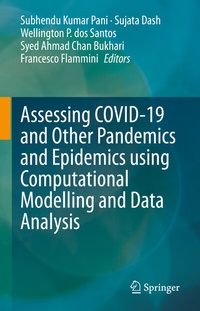
Assessing COVID-19 and Other Pandemics and Epidemics using Computational Modelling and Data Analysis
Description

This book comprehensively covers the topic of COVID-19 and other pandemics and epidemics data analytics using computational modelling. Biomedical and Health Informatics is an emerging field of research at the intersection of information science, computer science, and health care. The new era of pandemics and epidemics bring tremendous opportunities and challenges due to the plentiful and easily available medical data allowing for further analysis. The aim of pandemics and epidemics research is to ensure high-quality, efficient healthcare, better treatment and quality of life by efficiently analyzing the abundant medical, and healthcare data including patient's data, electronic health records (EHRs) and lifestyle. In the past, it was a common requirement to have domain experts for developing models for biomedical or healthcare. However, recent advances in representation learning algorithms allow us to automatically learn the pattern and representation of the given data for the development of such models. Medical Image Mining, a novel research area (due to its large amount of medical images) are increasingly generated and stored digitally. These images are mainly in the form of: computed tomography (CT), X-ray, nuclear medicine imaging (PET, SPECT), magnetic resonance imaging (MRI) and ultrasound. Patients' biomedical images can be digitized using data mining techniques and may help in answering several important and critical questions related to health care. Image mining in medicine can help to uncover new relationships between data and reveal new and useful information that can be helpful for scientists and biomedical practitioners.
Assessing COVID-19 and Other Pandemics and Epidemics using Computational Modelling and Data Analysis will play a vital role in improving human life in response to pandemics and epidemics. The state-of-the-art approaches for data mining-based medical and health related applications will be of great value to researchers and practitioners working in biomedical, health informatics, and artificial intelligence..
Reviews / Votes
"The book, nonetheless, is written clearly and easy to follow. Rather than deep into the methodology, it leans toward analytical applications with several real data analyses and case studies . which should facilitate engaging a broader audience and sparking interest. . this book provides a good introduction and overview of the computational approaches in COVID- 19-related research . which may be of particular value to those interested in applying ML/AI solutions to public health and medicine." (Yen-Chen Anne Feng, Biometrics, Vol. 78 (4), December, 2022)More details
Other editions
Additional editions
Persons
Sujata Dash is Associate Professor of Computer Science at North Orissa University in the Department of Computer Application, Baripada, India. She is a recipient of Titular Fellowship from Association of Commonwealth Universities, UK. She has worked as a visiting professor of Computer Science Department of University of Manitoba, Canada. She has published more than 170 technical papers.
Wellington P. dos Santos
is Associate Professor, Department of Biomedical Engineering, Federal University of Pernambuco (UFPE), Recife, Brazil. PhD in Electrical Engineering from the Federal University of Campina Grande (UFCG), Campina Grande, Master in Electrical Engineering and Graduated in Electronic Electrical Engineering from UFPE, Recife, Brazil. His main research interests are: diagnostic support systems, digital epidemiology, applied neuroscience, serious games in health, and artificial intelligence applied to health.
Syed Ahmad Chan Bukhari
is Assistant Professor and Director of Healthcare Informatics at St. John's University, New York. He received his Ph.D. in Computer Science from the University of New Brunswick, Canada, and then went on to complete his postdoctoral fellowship at Yale School of Medicine, where he worked with Stanford University, Centre of Expanded Data Annotation and Retrieval (CEDAR) to develop data submission pipelines to improve scientific experimental reproducibility.
Francesco Flammini
is Professor of Computer Science at Mälardalen University, Sweden. He has been an Associate Professor leading the Cyber-Physical Systems environment at Linnaeus University, Sweden. He has worked for fifteen years in private and public companies, including Ansaldo STS (now Hitachi Rail) and IPZS (Italian State Mint and Polygraphic Institute), leading international projects addressing intelligent transportation and infrastructure security.
