

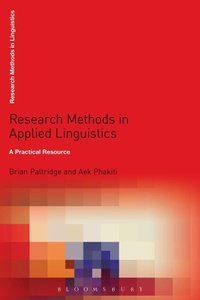
Research Methods in Applied Linguistics
A Practical Resource
2nd Edition
Published on 27. August 2015
528 pages
978-1-4725-3424-8 (ISBN)
Description

Research Methods in Applied Linguistics is designed to be the essential one-volume resource for students. The book includes:
* qualitative, quantitative and mixed methods
* research techniques and approaches
* ethical considerations
* sample studies
* a glossary of key terms
* resources for students
As well as covering a range of methodological issues, it looks at numerous areas in depth, including language learning strategies, motivation, teacher beliefs, language and identity, pragmatics, vocabulary, and grammar. Comprehensive and accessible, this is the essential guide to research methods for undergraduate and postgraduate students in applied linguistics and language studies.
* qualitative, quantitative and mixed methods
* research techniques and approaches
* ethical considerations
* sample studies
* a glossary of key terms
* resources for students
As well as covering a range of methodological issues, it looks at numerous areas in depth, including language learning strategies, motivation, teacher beliefs, language and identity, pragmatics, vocabulary, and grammar. Comprehensive and accessible, this is the essential guide to research methods for undergraduate and postgraduate students in applied linguistics and language studies.
More details
Series
Edition
2nd edition
Language
English
Place of publication
London
United Kingdom
Publishing group
Bloomsbury Publishing PLC
Target group
College/higher education
ISBN-13
978-1-4725-3424-8 (9781472534248)
Copyright in bibliographic data and cover images is held by Nielsen Book Services Limited or by the publishers or by their respective licensors: all rights reserved.
Schweitzer Classification
Other editions
Additional editions
Book
08/2015
2nd Edition
Bloomsbury Academic
€63.32
Shipment within 15-20 days
Book
08/2015
2nd Edition
Bloomsbury Academic
€207.20
Shipment within 15-20 days
Persons
Brian Paltridge is Professor of TESOL at the University of Sydney, Australia.
Aek Phakiti is Senior Lecturer in TESOL at the University of Sydney, Australia.
Aek Phakiti is Senior Lecturer in TESOL at the University of Sydney, Australia.
Content
Part I: Research methods and approaches
1. Approaches and methods in applied linguistics research, Brian Paltridge and Aek Phakiti (University of Sydney, Australia)
2. Quantitative research and analysis, Aek Phakiti (University of Sydney, Australia)
3. Qualitative research and analysis, Adrian Holliday (Christ Church University, UK)
4. Mixed methods research and analysis, Nataliya Ivankova and Jennifer Greer (University of Alabama at Birmingham, USA)
5. Survey research, Elvis Wagner (Temple University, USA)
6. Experimental research, Susan Gass (Michigan State University, USA)
7. Case studies, Christine Casanave (Temple University, Tokyo)
8. Ethnographic research, Sue Starfield (University of New South Wales, Australia)
9. Critical research in applied linguistics, Steven Talmy (University of British Columbia, Canada)
10. Narrative inquiry, Gary Barkhuizen (University of Auckland, New Zealand)
11. Action research, Anne Burns (University of New South Wales, Australia)
12. Discourse analysis, Brian Paltridge and Wei Wang (University of Sydney, Australia)
13. Research syntheses, Lourdes Ortega (Georgetown University, USA)
14. Ethics and applied linguistics research, Peter De Costa (Michigan State University, USA)
15. Developing a research proposal, Brian Paltridge and Aek Phakiti (University of Sydney, Australia)
Part II: Areas of research
16. Researching speaking, Rebecca Hughes (University of Sheffield, UK)
17. Researching listening, Larry Vandergrift (University of Ottawa, Canada)
18. Researching reading, Marie Stevenson (University of Sydney, Australia)
19. Researching writing, Ken Hyland (University of Hong Kong)
20. Researching grammar, Neomy Storch (University of Melbourne, Australia)
21. Researching vocabulary, David Hirsh (University of Sydney, Australia)
22. Researching pragmatics, Carsten Roever (University of Melbourne, Australia)
23. Researching motivation, Lindy Woodrow (University of Sydney, Australia)
24. Researching language learning strategies, Heath Rose (Trinity College, Ireland)
25. Researching young learners, Annamaria Pinter (University of Warwick, UK)
26. Researching language classrooms, Lesley Harbon and Huizhong Shen (University of Sydney, Australia)
27. Researching language testing and assessment, John Read (University of Auckland, New Zealand)
28. Researching teacher beliefs, Simon Borg (University of Leeds, UK)
29. Researching language and gender, Jane Sunderland (Lancaster University, UK)
30. Researching language and identity, David Block (Universitat de Lleida, Spain)
31. Researching language teacher education, Simon Borg (University of Leeds, UK)
Glossary of key research terms
Index
1. Approaches and methods in applied linguistics research, Brian Paltridge and Aek Phakiti (University of Sydney, Australia)
2. Quantitative research and analysis, Aek Phakiti (University of Sydney, Australia)
3. Qualitative research and analysis, Adrian Holliday (Christ Church University, UK)
4. Mixed methods research and analysis, Nataliya Ivankova and Jennifer Greer (University of Alabama at Birmingham, USA)
5. Survey research, Elvis Wagner (Temple University, USA)
6. Experimental research, Susan Gass (Michigan State University, USA)
7. Case studies, Christine Casanave (Temple University, Tokyo)
8. Ethnographic research, Sue Starfield (University of New South Wales, Australia)
9. Critical research in applied linguistics, Steven Talmy (University of British Columbia, Canada)
10. Narrative inquiry, Gary Barkhuizen (University of Auckland, New Zealand)
11. Action research, Anne Burns (University of New South Wales, Australia)
12. Discourse analysis, Brian Paltridge and Wei Wang (University of Sydney, Australia)
13. Research syntheses, Lourdes Ortega (Georgetown University, USA)
14. Ethics and applied linguistics research, Peter De Costa (Michigan State University, USA)
15. Developing a research proposal, Brian Paltridge and Aek Phakiti (University of Sydney, Australia)
Part II: Areas of research
16. Researching speaking, Rebecca Hughes (University of Sheffield, UK)
17. Researching listening, Larry Vandergrift (University of Ottawa, Canada)
18. Researching reading, Marie Stevenson (University of Sydney, Australia)
19. Researching writing, Ken Hyland (University of Hong Kong)
20. Researching grammar, Neomy Storch (University of Melbourne, Australia)
21. Researching vocabulary, David Hirsh (University of Sydney, Australia)
22. Researching pragmatics, Carsten Roever (University of Melbourne, Australia)
23. Researching motivation, Lindy Woodrow (University of Sydney, Australia)
24. Researching language learning strategies, Heath Rose (Trinity College, Ireland)
25. Researching young learners, Annamaria Pinter (University of Warwick, UK)
26. Researching language classrooms, Lesley Harbon and Huizhong Shen (University of Sydney, Australia)
27. Researching language testing and assessment, John Read (University of Auckland, New Zealand)
28. Researching teacher beliefs, Simon Borg (University of Leeds, UK)
29. Researching language and gender, Jane Sunderland (Lancaster University, UK)
30. Researching language and identity, David Block (Universitat de Lleida, Spain)
31. Researching language teacher education, Simon Borg (University of Leeds, UK)
Glossary of key research terms
Index
