

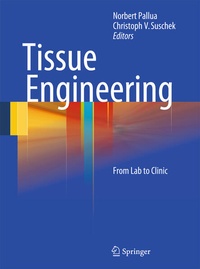
Tissue Engineering
Description

Tissue engineering is a multidisciplinary field incorporating the principles of biology, chemistry, engineering, and medicine to create biological substitutes of native tissues for scientific research or clinical use. Specific applications of this technology include studies of tissue development and function, investigating drug response, and tissue repair and replacement. This area is rapidly becoming one of the most promising treatment options for patients suffering from tissue failure. This abundantly illustrated and well-structured guide serves as a reference for all clinicians and researchers dealing with tissue engineering issues in their daily practice.
Reviews / Votes
From the book reviews:
"This monograph concerns mesenchymal, bone marrow, neural, embryonic, osteochondral, cartilaginous derived stem cells and partially differentiated cells. . This is a good review book, especially given the rapid advances of cellular and molecular biology. I recommend this book for all audiences." (Joseph J. Grenier, Amazon.com, August, 2014)
More details
Other editions
Additional editions
Persons
Content
BASICS AND PRINCIPLES: Scaffolds: Micro and Nano Technology.- Biomimetic Materials.- Natural and Synthetic Scaffolds: Adhesion, ECM, Structure, Function, Modification.- Cells: Sources, Growth, Differentiation, Trans-Differentiation.- Embryonic Stem Cells: Sources and Characterization.- Adult Stem Cells: Sources and Characterization.- Isolation and Growth.- Differentiation and Plasticity.- Regulation Mechanisms: Key Signaling Molecules.- Cell and Organ preservation.- Engineering Technologies: Animal Models for Evaluation of Tissue Engineering Constructs.- Biomedical Imaging and Image Processing.- Bioreactors for Tissue Engineering.- Drug delivery.- Gene Therapy.- OROGANS: Liver.- Musculoskeletal Tissues.- Lung.- CNS.- Peripheral Nervous System.- Nephrons.- Biohybrid organs.- Heart and Cardiovascular Engineering.- Eye/Retina.- Respiratory Systems Engineering.- Ear.- Skin.- TISSUE TYPES: Adipose Tissue.- Blood Substitutes.- Angiogenesis and Vascularization.- Bone Tissue.- Brain Tissues.- Cartilage Tissue.- Pancreatic Tissues.- Tendons.- Tissue Engineering in Reproductive Medicine, of Heart Valves, in Oral and Maxillofacial Surgery.- Uro-Gital System/Bladder Tissue.
