


Interop
The Promise and Perils of Highly Interconnected Systems
1st Edition
Published on 5. June 2012
304 pages
978-0-465-02933-4 (ISBN)
Description

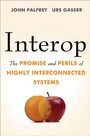
In Interop, technology experts John Palfrey and Urs Gasser explore the immense importance of interoperability -- the standardization and integration of technology -- and show how this simple principle will hold the key to our success in the coming decades and beyond.
The practice of standardization has been facilitating innovation and economic growth for centuries. The standardization of the railroad gauge revolutionized the flow of commodities, the standardization of money revolutionized debt markets and simplified trade, and the standardization of credit networks has allowed for the purchase of goods using money deposited in a bank half a world away. These advancements did not eradicate the different systems they affected; instead, each system has been transformed so that it can interoperate with systems all over the world, while still preserving local diversity.
As Palfrey and Gasser show, interoperability is a critical aspect of any successful system -- and now it is more important than ever. Today we are confronted with challenges that affect us on a global scale: the financial crisis, the quest for sustainable energy, and the need to reform health care systems and improve global disaster response systems. The successful flow of information across systems is crucial if we are to solve these problems, but we must also learn to manage the vast degree of interconnection inherent in each system involved. Interoperability offers a number of solutions to these global challenges, but Palfrey and Gasser also consider its potential negative effects, especially with respect to privacy, security, and co-dependence of states; indeed, interoperability has already sparked debates about document data formats, digital music, and how to create successful yet safe cloud computing. Interop demonstrates that, in order to get the most out of interoperability while minimizing its risks, we will need to fundamentally revisit our understanding of how it works, and how it can allow for improvements in each of its constituent parts.
In Interop, Palfrey and Gasser argue that there needs to be a nuanced, stable theory of interoperability -- one that still generates efficiencies, but which also ensures a sustainable mode of interconnection. Pointing the way forward for the new information economy, Interop provides valuable insights into how technological integration and innovation can flourish in the twenty-first century.
The practice of standardization has been facilitating innovation and economic growth for centuries. The standardization of the railroad gauge revolutionized the flow of commodities, the standardization of money revolutionized debt markets and simplified trade, and the standardization of credit networks has allowed for the purchase of goods using money deposited in a bank half a world away. These advancements did not eradicate the different systems they affected; instead, each system has been transformed so that it can interoperate with systems all over the world, while still preserving local diversity.
As Palfrey and Gasser show, interoperability is a critical aspect of any successful system -- and now it is more important than ever. Today we are confronted with challenges that affect us on a global scale: the financial crisis, the quest for sustainable energy, and the need to reform health care systems and improve global disaster response systems. The successful flow of information across systems is crucial if we are to solve these problems, but we must also learn to manage the vast degree of interconnection inherent in each system involved. Interoperability offers a number of solutions to these global challenges, but Palfrey and Gasser also consider its potential negative effects, especially with respect to privacy, security, and co-dependence of states; indeed, interoperability has already sparked debates about document data formats, digital music, and how to create successful yet safe cloud computing. Interop demonstrates that, in order to get the most out of interoperability while minimizing its risks, we will need to fundamentally revisit our understanding of how it works, and how it can allow for improvements in each of its constituent parts.
In Interop, Palfrey and Gasser argue that there needs to be a nuanced, stable theory of interoperability -- one that still generates efficiencies, but which also ensures a sustainable mode of interconnection. Pointing the way forward for the new information economy, Interop provides valuable insights into how technological integration and innovation can flourish in the twenty-first century.
More details
Other editions
Additional editions
Book
06/2012
Basic Books
€43.50
Shipment within 10-15 days
Persons
John Palfrey is president of the John D. and Catherine T. MacArthur Foundation and a former faculty director of the Berkman Klein Center for Internet and Society at Harvard University. He previously served as head of school at Phillips Academy in Andover, Massachusetts. He lives in Chicago, Illinois.
Urs Gasser is the Executive Director of the Berkman Center for Internet & Society at Harvard Law School. He has written and edited several books and has published over 100 articles in books, law reviews, and professional journals. He's also an advisor to international technology companies on information law matters.
Urs Gasser is the Executive Director of the Berkman Center for Internet & Society at Harvard Law School. He has written and edited several books and has published over 100 articles in books, law reviews, and professional journals. He's also an advisor to international technology companies on information law matters.
