

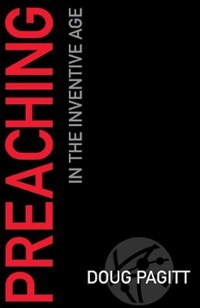
Preaching in the Inventive Age
Published on 19. August 2014
145 pages
978-1-63088-080-4 (ISBN)
Description

What kind of communities are we forming? What story are we telling? How
can we tell it more effectively? Pagitt takes on these questions and
investigates the goals and roles of preaching in the Inventive Age.
From the book: "I find myself wanting to live with the people of my
community, where I can preach ... but not allow that to become an act of
speech making. Instead, I want it to be a living interaction of the
story of God and the story of our community being connected by our truth
telling, our vulnerability, and our open minds, ears, and eyes - all
brought together by the active work of the Spirit of God...."
can we tell it more effectively? Pagitt takes on these questions and
investigates the goals and roles of preaching in the Inventive Age.
From the book: "I find myself wanting to live with the people of my
community, where I can preach ... but not allow that to become an act of
speech making. Instead, I want it to be a living interaction of the
story of God and the story of our community being connected by our truth
telling, our vulnerability, and our open minds, ears, and eyes - all
brought together by the active work of the Spirit of God...."
More details
Other editions
Additional editions
Doug Pagitt
Preaching in the Inventive Age
Book
08/2014
Abingdon Press
€16.40
Article exhausted; check different version
Person
Doug Pagitt
Content
- Cover
- Half title
- Title
- Copyright
- Contents
- The Inventive Age
- Section 1: Preaching Beyond Speaching
- Section 2: A Move to Something New
- 1. Speaching vs. Preaching
- 2. Understanding Progressional Dialogue
- 3. Peter and Cornelius
- 4. The Roots of Speaching
- 5. How I Became a Speacher
- 6. My Wake-Up Call
- 7. A Low-Grade Fever
- 8. Generic Messages
- 9. Preaching from a Stranger
- 10. Preaching to Strangers
- 11. Implication vs. Application
- Section 3: Why We're Reluctant to Change
- 12. Holding on to Speaching
- 13. Those for Whom This Conversation Will Seem Unnecessary
- 14. Fear of Being Wrong
- 15. Centralized Control
- 16. Fear of Heresy
- 17. Truth
- 18. The Power of Control
- 19. Pastoral Authority
- 20. Transmitting the Message
- Section 4: Why We Need to Change
- 21. The Priesthood of All Believers
- 22. Trusting the People
- 23. The Role of the Pastor
- 24. Prophetic Function
- Section 5: How to Make the Move
- 25. New Outcomes
- 26. A Deep Ecclesiology
- 27. The Need for New Skills
- 28. Too Much Input
- 29. Dissension
- 30. Improvisation
- 31. Preparation
- 32. Relationship with the Bible
- 33. The Bible in Speaching
- 34. The Bible as Community Member
- 35. Provisional Statements and Authenticity
- 36. Tone of Voice
- 37. Physical Setup
- 38. Microphones and Power
- 39. Listening as the Primary Skill
- 40. The Voice of the Church
- 41. A Few Final Thoughts
- Works Cited
