

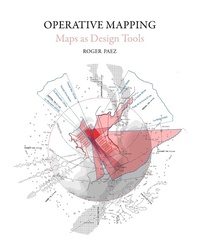
Operative Mapping
The Use of Maps as a Design Tool
Published on 22. January 2024
324 pages
978-1-63840-139-1 (ISBN)
Description

Operative Mapping investigates the use of maps as a design tool, providing insight with the potential to benefit education and practice in the design disciplines.
The book's fundamental aim is to offer a methodological contribution to the design disciplines, both in conceptual and instrumental terms. When added to the resources of contemporary design, operative mapping overcomes the analytical and strictly instrumental approaches of maps, opening up the possibility of working both pragmatically and critically by acknowledging the need for an effective transformation of the milieu based on an understanding of pre-existing conditions.
The approach is pragmatic, not only discussing the present but, above all, generating a toolbox to help expand on the objectives, methodologies and formats of design in the immediate future. The book joins together a review of the theoretical body of work on mapping from the social sciences with case studies from the past 30 years in architecture, planning and landscape design in the interest of linking past practices with future ones.
The book's fundamental aim is to offer a methodological contribution to the design disciplines, both in conceptual and instrumental terms. When added to the resources of contemporary design, operative mapping overcomes the analytical and strictly instrumental approaches of maps, opening up the possibility of working both pragmatically and critically by acknowledging the need for an effective transformation of the milieu based on an understanding of pre-existing conditions.
The approach is pragmatic, not only discussing the present but, above all, generating a toolbox to help expand on the objectives, methodologies and formats of design in the immediate future. The book joins together a review of the theoretical body of work on mapping from the social sciences with case studies from the past 30 years in architecture, planning and landscape design in the interest of linking past practices with future ones.
More details
Other editions
Additional editions
Book
04/2019
Actar Publishers
€65.81
Article not available at the moment
Person
Roger Paez is an architect, professor and researcher. He holds a Master's degree from Columbia University and a PhD from the UPC, Barcelona. Following professional experience with Alison+Peter Smithson and Enric Miralles, he founded A i B estudi d'arquitectes in Barcelona (www.aib.cat). He is a professor of Architectural Design at ETSALS and director of the Master's Degree in Ephemeral Architecture and Temporary Spaces at ELISAVA.
Content
- Intro
- Foreword
- Introduction
- Concept: The Operative Potential of Mapping
- Operative Mapping
- Two Maps
- The Concept of Operative Mapping
- Operative Maps and Diagrammatic Practices
- Positivity, Expressivity and Operativity
- The Map as a Mediation System
- Mapping the Map
- Mapping Begets Further Mappings
- Structure, Process, Performance
- Critical Cartography
- Urban Dérives: Critical Mapping Practices
- Post-Representational Cartography
- Augmented Mapping
- Scope: Re-envisioning Maps
- Toward a Contemporary Imaginary
- EIDETIC ATLAS
- Appropriation: Constructing Reality by Claiming It
- Measure: Knowledge is Measuring
- Narrative: Map as Text
- Geogram: Inscribable Earth
- Dynamis: Addressing Time
- mptiness: Activating Empty Space
- Flight: Beyond Dominant Representations
- Coda
- Practice: Mapping Agency in Design
- Chronological Scope
- Pioneers of Operative Mapping
- MAPPING AS A DESIGN TOOL
- Modes of Operative Mapping
- Visions
- Constructions
- Protocols
- Instruments
- Epilogue
- Works Cited
- Aknowledgments
- Credits
