


Women of Will
Following the Feminine in Shakespeare's Plays
Published on 7. April 2015
336 pages
978-0-385-35326-7 (ISBN)
Description

From one of the country's foremost experts on Shakespeare and theatre arts, actor, director, and master teacher Tina Packer offers an exploration-fierce, funny, fearless-of the women of Shakespeare's plays. A profound, and profoundly illuminating, book that gives us the playwright's changing understanding of the feminine and reveals some of his deepest insights. Packer, with expert grasp and perception, constructs a radically different understanding of power, sexuality, and redemption.
Beginning with the early comedies (The Taming of the Shrew, Two Gentlemen of Verona, The Comedy of Errors), Packer shows that Shakespeare wrote the women of these plays as shrews to be tamed or as sweet little things with no definable independent thought, virgins on the pedestal. The women of the histories (the three parts of Henry VI; Richard III) are, Packer shows, much more interesting, beginning with Joan of Arc, possibly the first woman character Shakespeare ever created. In her opening scene, she's wonderfully alive-a virgin, true, sent from heaven, a country girl going to lead men bravely into battle, the kind of girl Shakespeare could have known and loved in Stratford. Her independent resolution collapses within a few scenes, as Shakespeare himself suddenly turns against her, and she yields to the common caricature of his culture and becomes Joan the Enemy, the Warrior Woman, the witch; a woman to be feared and destroyed . . .
As Packer turns her attention to the extraordinary Juliet, the author perceives a large shift. Suddenly Shakespeare's women have depth of character, motivation, understanding of life more than equal to that of the men; once Juliet has led the way, the plays are never the same again. As Shakespeare ceases to write about women as predictable caricatures and starts writing them from the inside, embodying their voices, his women become as dimensional, spirited, spiritual, active, and sexual as any of his male characters. Juliet is just as passionately in love as Romeo-risking everything, initiating marriage, getting into bed, fighting courageously when her parents threaten to disown her-and just as brave in facing death when she discovers Romeo is dead. And, wondering if Shakespeare himself fell in love (Packer considers with whom, and what she may have been like), the author observes that from Juliet on, Shakespeare writes the women as if he were a woman, giving them desires, needs, ambition, insight.
Women of Will follows Shakespeare's development as a human being, from youth to enlightened maturity, exploring the spiritual journey he undertook. Packer shows that Shakespeare's imagination, mirrored and revealed in his female characters, develops and deepens until finally the women, his creative knowledge, and a sense of a larger spiritual good come together in the late plays, making clear that when women and men are equal in status and sexual passion, they can-and do-change the world.
Part master class, part brilliant analysis-Women of Will is all inspiring discovery.
Beginning with the early comedies (The Taming of the Shrew, Two Gentlemen of Verona, The Comedy of Errors), Packer shows that Shakespeare wrote the women of these plays as shrews to be tamed or as sweet little things with no definable independent thought, virgins on the pedestal. The women of the histories (the three parts of Henry VI; Richard III) are, Packer shows, much more interesting, beginning with Joan of Arc, possibly the first woman character Shakespeare ever created. In her opening scene, she's wonderfully alive-a virgin, true, sent from heaven, a country girl going to lead men bravely into battle, the kind of girl Shakespeare could have known and loved in Stratford. Her independent resolution collapses within a few scenes, as Shakespeare himself suddenly turns against her, and she yields to the common caricature of his culture and becomes Joan the Enemy, the Warrior Woman, the witch; a woman to be feared and destroyed . . .
As Packer turns her attention to the extraordinary Juliet, the author perceives a large shift. Suddenly Shakespeare's women have depth of character, motivation, understanding of life more than equal to that of the men; once Juliet has led the way, the plays are never the same again. As Shakespeare ceases to write about women as predictable caricatures and starts writing them from the inside, embodying their voices, his women become as dimensional, spirited, spiritual, active, and sexual as any of his male characters. Juliet is just as passionately in love as Romeo-risking everything, initiating marriage, getting into bed, fighting courageously when her parents threaten to disown her-and just as brave in facing death when she discovers Romeo is dead. And, wondering if Shakespeare himself fell in love (Packer considers with whom, and what she may have been like), the author observes that from Juliet on, Shakespeare writes the women as if he were a woman, giving them desires, needs, ambition, insight.
Women of Will follows Shakespeare's development as a human being, from youth to enlightened maturity, exploring the spiritual journey he undertook. Packer shows that Shakespeare's imagination, mirrored and revealed in his female characters, develops and deepens until finally the women, his creative knowledge, and a sense of a larger spiritual good come together in the late plays, making clear that when women and men are equal in status and sexual passion, they can-and do-change the world.
Part master class, part brilliant analysis-Women of Will is all inspiring discovery.
More details
Other editions
Additional editions
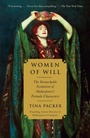
Book
03/2016
Vintage Books
€17.50
Shipment within 10-20 days
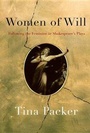
Book
04/2015
Knopf Publishing Group
€45.72
Article exhausted; check different version
Person
TINA PACKER is the founding artistic director of Shakespeare & Company in Lenox, Massachusetts. She has directed most of Shakespeare's plays, acted in seven, and taught the entire canon at multiple colleges and universities, among them Harvard, MIT, and Columbia. Packer was an Associate Artist with the Royal Shakespeare Company in England, and worked at the Royal Court and Aldwych theatres in London, Leicester, Glasgow, Edinburgh, and other regional theatres, as well as for BBC and ITV television. The performance piece Women of Will has traveled across America as well as internationally. She lives in Stockbridge, Massachusetts.
Content
- Intro
- About the Author
- Others Titles
- Title Page
- Copyright
- Dedication
- Contents
- Prologue
- [Act 1] The Warrior Women: Violence to Negotiation
- Scene 1: Understanding the Structure-Form and Content
- Scene 2: Which Came First
- Scene 3: The Comedies
- Scene 4: Joan
- Scene 5: Margaret
- Scene 6: Elizabeth
- Scene 7: The Drive to Make Plays
- An Interlude: The Plague Years
- [Act 2] The Sexual Merges with the Spiritual: New Knowledge
- Scene 1: Romeo and Juliet
- An Interlude: Meditations on Shakespeare's Use of the Soul
- Scene 2: Troilus and Cressida
- Scene 3: Antony and Cleopatra
- Scene 4: The Women Who Follow Juliet
- Scene 5: Benedick's Choice-Beatrice
- An Interlude: Dealing with Loss-Lamentation Versus Honor
- [Act 3] Living Underground or Dying to Tell the Truth
- An Interlude: Switching Genders
- Scene 1: Overview of the Progression of the Cross-Dressers
- Scene 2: Rosalind and 1599
- Scene 3: Dying to Tell the Truth: Ophelia, Desdemona, Cordelia
- Scene 4: Measure for Measure
- Scene 5: Twelfth Night
- Scene 6: Descent of Shakespeare's Psyche: All's Well That Ends Well
- An Interlude: Language in the Body
- [Act 4] Chaos Is Come Again: The Lion Eats the Wolf
- Scene 1: Overview: Hamlet Leading into Macbeth
- Scene 2: Goneril and Regan
- Scene 3: Volumnia
- Scene 4: Timon of Athens
- An Interlude: Creativity
- [Act 5] The Maiden Phoenix: The Daughter Redeems the Father
- Scene 1: Coming Full-Circle
- Scene 2: Pericles
- Scene 3: Cymbeline
- Scene 4: The Winter's Tale
- Scene 5: The Tempest
- Scene 6: All Is True-Henry VIII
- Epilogue
- Acknowledgments
- Sources
- Bibliography
