


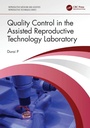
Quality Control in the Assisted Reproductive Technology Laboratory
1st Edition
Published on 1. March 2024
192 pages
978-1-003-85300-8 (ISBN)
Description

This guide provides an overview of quality control in ART laboratories. It explores frameworks and essential tools necessary for effective quality management. The fields of monitoring, equipment maintenance, and the intricate aspects of embryo care and cryopreservation are thoroughly examined. The significance of the ART lab witnessing system is highlighted, demonstrating the seamless integration of both manual and electronic witnessing tools. Readers will gain insights into the roles played by KPIs and SOPs. For aspiring embryologists, this guide offers an exploration of training techniques, addressing the inherent challenges of the field. Practical coping strategies are provided to help navigate these stressors successfully.
With real-world case studies and discussions on laboratory design, this resource serves as a guide to achieving excellence in ART. It emphasizes the importance of balancing patient care, procedural accuracy, and practitioner well-being.
With real-world case studies and discussions on laboratory design, this resource serves as a guide to achieving excellence in ART. It emphasizes the importance of balancing patient care, procedural accuracy, and practitioner well-being.
More details
Series
Edition
1. Auflage
Language
English
Place of publication
London
United Kingdom
Publishing group
Taylor & Francis Ebooks
Target group
Professional and scholarly
Illustrations
10 Tables, black and white; 9 Line drawings, color; 12 Line drawings, black and white; 6 Halftones, color; 1 Halftones, black and white; 15 Illustrations, color; 13 Illustrations, black and white
ISBN-13
978-1-003-85300-8 (9781003853008)
Copyright in bibliographic data and cover images is held by Nielsen Book Services Limited or by the publishers or by their respective licensors: all rights reserved.
Schweitzer Classification
Other editions
Additional editions
Book
03/2024
1st Edition
CRC Press
€92.90
Shipment within 10-20 days

Book
03/2024
1st Edition
CRC Press
€178.80
Shipment within 10-20 days
Person
Durai Palaniyandi is Senior Embryologist at KIMS Hospital Hyderabad, India.
Content
Preface
1. Introduction to QC in ART labs
Definition and importance of quality control (QC). Overview of regulatory requirements for ART labs around the world.
2. Internal quality control (IQC) & External Quality Control (EQC)
External quality control (EQC). Case studies and process of troubleshoot in ART lab.
3. Quality Control Tools
Risk management. Control charts and Quality indicators.
4. Environmental monitoring
Sources of contamination. Air, Water and Surface quality management and control.
5. Equipment Maintenance
Types of equipment. Equipment logs and preventive maintenance schedule.
6. QC of ART Media and Disposables
Overview of ART media. Maintaining an open pack of ART media in a QC view.
7. IVF Process and QC- QC Andrology
Overview of standard andrology lab procedures. Troubleshooting standard andrology procedure problems.
8. Quality control in embryo culture
Monitoring embryo development. Troubleshooting embryo culture problem.
9. Quality control in Cryopreservation
Overview of cryopreservation. Troubleshooting cryopreservation problems. Preventing embryos or gametes from falling under Liquid nitrogen.
10. Record-keeping and documentation
Types of records and documents required in ART clinic. Standard operating procedures (SOPs).
11. QC of IVF Labs personnel
Importance of personnel QC. Train the nascent embryologist.
12. Key performance indicators (KPIs)
An overview of the Vienna consensus guidelines. Measurement and tracking of KPIs.
13. AR lab witnessing system
Manual Witnessing System. Electronic witnessing.
14. Case Studies
Examples of successful quality control practices. Real-world examples.
15. Emerging trends and best practices
New technologies and future directions. Best practices for quality control.
16. Safety, Recommendations, and Infrastructure
Safety and Possible recommendations for ART professionals. Proper ART laboratory design. TQMS for a chain of fertility clinics.
Further Reading
Index
1. Introduction to QC in ART labs
Definition and importance of quality control (QC). Overview of regulatory requirements for ART labs around the world.
2. Internal quality control (IQC) & External Quality Control (EQC)
External quality control (EQC). Case studies and process of troubleshoot in ART lab.
3. Quality Control Tools
Risk management. Control charts and Quality indicators.
4. Environmental monitoring
Sources of contamination. Air, Water and Surface quality management and control.
5. Equipment Maintenance
Types of equipment. Equipment logs and preventive maintenance schedule.
6. QC of ART Media and Disposables
Overview of ART media. Maintaining an open pack of ART media in a QC view.
7. IVF Process and QC- QC Andrology
Overview of standard andrology lab procedures. Troubleshooting standard andrology procedure problems.
8. Quality control in embryo culture
Monitoring embryo development. Troubleshooting embryo culture problem.
9. Quality control in Cryopreservation
Overview of cryopreservation. Troubleshooting cryopreservation problems. Preventing embryos or gametes from falling under Liquid nitrogen.
10. Record-keeping and documentation
Types of records and documents required in ART clinic. Standard operating procedures (SOPs).
11. QC of IVF Labs personnel
Importance of personnel QC. Train the nascent embryologist.
12. Key performance indicators (KPIs)
An overview of the Vienna consensus guidelines. Measurement and tracking of KPIs.
13. AR lab witnessing system
Manual Witnessing System. Electronic witnessing.
14. Case Studies
Examples of successful quality control practices. Real-world examples.
15. Emerging trends and best practices
New technologies and future directions. Best practices for quality control.
16. Safety, Recommendations, and Infrastructure
Safety and Possible recommendations for ART professionals. Proper ART laboratory design. TQMS for a chain of fertility clinics.
Further Reading
Index
