

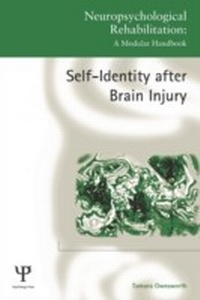
Self-Identity after Brain Injury
1st Edition
Published on 26. March 2014
244 pages
978-1-317-82018-5 (ISBN)
Description

An injury to the brain can affect virtually any aspect of functioning and, at the deepest level, can alter sense of self or the essential qualities that define who we are. In recent years, there has been a growing body of research investigating changes to self in the context of brain injury. Developments in the cognitive and social neurosciences, psychotherapy and neurorehabilitation have together provided a rich perspective on self and identity reformation after brain injury. This book draws upon these theoretical perspectives and research findings to provide a comprehensive account of the impact of brain injury on self-identity.
The second half of this book provides an in-depth review of clinical strategies for assessing changes in self-identity after brain injury, and of rehabilitation approaches for supporting individuals to maintain or re-establish a positive post-injury identity. The book emphasizes a shift in clinical orientation, from a traditional focus on alleviating impairments, to a focus on working collaboratively with people to support them to re-engage in valued activities and find meaning in their lives after brain injury.
Self-Identity after Brain Injury is the first book dedicated to self-identity issues after brain injury which integrates theory and research, and also assessment and intervention strategies. It will be a key resource to support clinicians and researchers working in brain injury rehabilitation, and will be of great interest to researchers and students in clinical psychology, neuropsychology, and allied health disciplines.
The second half of this book provides an in-depth review of clinical strategies for assessing changes in self-identity after brain injury, and of rehabilitation approaches for supporting individuals to maintain or re-establish a positive post-injury identity. The book emphasizes a shift in clinical orientation, from a traditional focus on alleviating impairments, to a focus on working collaboratively with people to support them to re-engage in valued activities and find meaning in their lives after brain injury.
Self-Identity after Brain Injury is the first book dedicated to self-identity issues after brain injury which integrates theory and research, and also assessment and intervention strategies. It will be a key resource to support clinicians and researchers working in brain injury rehabilitation, and will be of great interest to researchers and students in clinical psychology, neuropsychology, and allied health disciplines.
Reviews / Votes
'This book represents a seismic shift in thinking about brain injury and its consequences. Ownsworth explores changes to self-identity, from historical, philosophical and contemporary social neuroscience theory through to practical issues in assessment and rehabilitation. Eminently readable, this erudite and clinically relevant work will be valued by all interested in brain injury'. - Skye McDonald, School of Psychology, University of NSW, Australia'This volume provides the most comprehensive and current discussion of self-identity available. Dr. Ownsworth examines the topic from its philosophical, psychological, neuropsychological and social underpinnings through the impact of brain injury to evidence-based methods to redevelop a healthy sense of self. The effects of brain injury on self-identity are explored from a variety of perspectives: developmental issues, challenges in measurement, and implications for psychotherapeutic and rehabilitative treatment. Individual, group, and social interventions to rebuild self-identity after brain injury are detailed. Dr. Ownsworth not only catalogues but integrates the universe of methods for the evaluation and treatment of a damaged sense of self to suggest a comprehensive approach. This book will be invaluable to those working with individuals who are disabled by damaged self-identity after brain injury. It will also be of significant interest to other researchers, scholars, and clinicians who are grappling with understanding the development and restoration of a healthy self-concept'. - James F. Malec, Indiana University School of Medicine and Rehabilitation Hospital of Indiana, USA
'What it means to be who we are as human beings, and how this is affected after neurological injury or illness, encapsulates much of the personal tragedy of acquired brain injury. With 'Self-Identity after Brain Injury' Tamara Ownsworth has succeeded in producing a tour de force everyone involved in the post-acute psychological care and rehabilitation of persons with acquired brain, should read. However, this extremely well written book is so much more than an essential practical resource for clinicians. 'Self-Identity after Brain Injury' represents such a formidable integration of the theoretical underpinnings, clinical techniques, case illustrations and the state of current research on identity and brain injury, that it is undoubtedly also essential reading for academics and researchers in the field.' - Rudi Coetzer, Consultant Neuropsychologist, Betsi Cadwaladr University Health Board, NHS Wales 'This book represents a seismic shift in thinking about brain injury and its consequences. Ownsworth explores changes to self-identity from historical, philosophical and contemporary social neuroscience theory through to practical issues in assessment and rehabilitation. Eminently readable, this erudite and clinically relevant work will be valued by all interested in brain injury'. - Skye McDonald, School of Psychology, University of NSW, Australia
'This volume provides the most comprehensive and current discussion of self-identity available. Dr. Ownsworth examines the topic from its philosophical, psychological, neuropsychological and social underpinnings through the impact of brain injury to evidence-based methods to redevelop a healthy sense of self. The effects of brain injury on self-identity are explored from a variety of perspectives: developmental issues, challenges in measurement, and implications for psychotherapeutic and rehabilitative treatment. Individual, group, and social interventions to rebuild self-identity after brain injury are detailed. Dr. Ownsworth not only catalogues but integrates the universe of methods for the evaluation and treatment of a damaged sense of self to suggest a comprehensive approach. This book will be invaluable to those working with individuals who are disabled by damaged self-identity after brain injury. It will also be of significant interest to other researchers, scholars, and clinicians who are grappling with understanding the development and restoration of a healthy self-concept'. - James F. Malec, Indiana University School of Medicine and Rehabilitation Hospital of Indiana, USA'
What it means to be who we are as human beings, and how this is affected after neurological injury or illness, encapsulates much of the personal tragedy of acquired brain injury. With Self-Identity after Brain Injury Tamara Ownsworth has succeeded in producing a tour de force everyone involved in the post-acute psychological care and rehabilitation of persons with acquired brain injury, should read. However, this extremely well written book is so much more than an essential practical resource for clinicians. Self-Identity after Brain Injury represents such a formidable integration of the theoretical underpinnings, clinical techniques, case illustrations and the state of current research on identity and brain injury, that it is undoubtedly also essential reading for academics and researchers in the field.' - Rudi Coetzer, Consultant Neuropsychologist, Betsi Cadwaladr University Health Board, NHS Wales
More details
Series
Language
English
Place of publication
London
United Kingdom
Publishing group
Taylor & Francis Ltd
Target group
Professional and scholarly
Product notice
Reflowable
Illustrations
11 s/w Abbildungen, 12 s/w Tabellen, 11 s/w Zeichnungen
12 Tables, black and white; 11 Line drawings, black and white; 11 Illustrations, black and white
File size
1,23 MB
ISBN-13
978-1-317-82018-5 (9781317820185)
Copyright in bibliographic data and cover images is held by Nielsen Book Services Limited or by the publishers or by their respective licensors: all rights reserved.
Schweitzer Classification
Other editions
Additional editions
Tamara Ownsworth
Self-Identity after Brain Injury
Book
03/2014
1st Edition
Psychology Press Ltd
€231.70
Shipment within 3-4 weeks
Tamara Ownsworth
Self-Identity after Brain Injury
Book
03/2014
1st Edition
Psychology Press Ltd
€71.40
Shipment within 3-4 weeks
Person
Tamara Ownsworth is a teaching and research academic in the School of Applied Psychology at Griffith University in Brisbane, Australia, with 18 years of experience as a clinician and researcher in the brain injury field. She is also a chief investigator on the NHMRC Centre of Research Excellence in brain recovery.
Content
1. Overview of self-identity after brain injury 2. What is the self? Historical and contemporary accounts 3. Introduction to brain injury and consequences during childhood and adolescence 4. Psychological adjustment and self-identity changes after brain injury 5. Approaches for assessing changes to self after brain injury 6. Individual psychotherapy and neurorehabilitation approaches 7. Group and community-based interventions 8. Family and paediatric Interventions 9. Summary and future directions
