

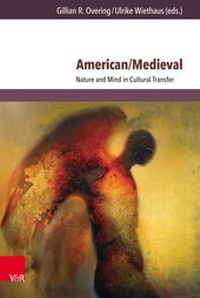
American/Medieval
Nature and Mind in Cultural Transfer
1st Edition
Published on 10. October 2016
237 pages
978-3-8470-0625-1 (ISBN)
Description

This volume offers a dialogue with and through the medieval informed by cultural categories of performativity and simultaneity in on-line media, architecture, film, poetry, and social formations. The articles depart from Medievalism Studies and attempt to answer questions such as: How do medievalists, artists, writers, and entertainment industries communicate, replicate, and evoke medieval formations? How do national and transnational discursive fields relate to understandings of the medieval in its many unstable states? Where are the communal memory sites and what functions do they serve for those who are associated with them? Where are the medieval disjunctions and conjunctions of race, ethnicity and time in a settler society? And what do place, nature, and landscape have to do with it?
More details
Other editions
Additional editions
Book
10/2016
1st Edition
Brill Deutschland
€55.00
Shipment within 7-9 days
Persons
Editor
Gillian R. Overing (PhD) is Professor of English and previously co-directed Medieval Studies at Wake Forest University.
Ulrike Wiethaus (PhD) holds a joint appointment as Professor in the Department for the Study of Religions and the American Ethnic Studies Program at Wake Forest University.
Contributions
Gillian R. Overing (PhD) is Professor of English and previously co-directed Medieval Studies at Wake Forest University.
Ulrike Wiethaus (PhD) holds a joint appointment as Professor in the Department for the Study of Religions and the American Ethnic Studies Program at Wake Forest University.
Content
- Intro
- Title Page
- Copyright
- Table of Contents
- Body
- Acknowledgments
- Gillian R. Overing and Ulrike Wiethaus: Introduction: The Making of American/Medieval
- Medievalism and the American/Medieval
- American/Medieval: The Challenge of Definition
- A/M: Old Trauma, New Archives, and Creatures on the Move
- New Archives
- Creatures on the Move
- Conclusion
- Select Bibliography
- Part One: Old Trauma
- Tina Marie Boyer: Medieval Imaginations and Internet Role-Playing Games
- Introduction
- Slender Man
- American Imaginations of the Medieval and Slender Man
- Bibliography
- Sol Miguel-Prendes: Medieval Iberian Studies: Borders, Bridges, Fences
- Boundaries
- Bridges
- Fences
- Bibliography
- Ulrike Wiethaus: "Yet another group of cowboys riding around the same old rock": Religion and the German-American Genesis of a Capitalist Stereotype
- Introduction
- From Mammon to Letzter Mensch
- Indigeneity and Doomed Pre-capitalist Wholeness
- The Natural Habitat, Race, and Sexual Threat of Homo capitalisticus
- The Puritan Spirit and the Desires of the Id
- Contemporary American Mutations of Medieval DNA
- Bibliography
- Part Two: New Archives
- Joshua Davies: "Beyond the Profane": Machine Gothic and the Cultural Memory of the Future
- Gothic Origins
- American Gothic
- Railroad Gothic
- Colonial Gothic
- Bibliography
- Mary Kate Hurley: "Scars of History": Game of Thrones and American Origin Stories
- Scars of History: Time, Nostalgia, and the Wounds of the Past
- Scars of Fantasy: Westerosi History and Time's Wounds
- Scars of Time: Martin's "Medieval" World
- Scars of History: Toward the American/Medieval
- Bibliography
- Gale Sigal: At What Price Arthur? Academic Autobiography, Medieval Studies, and the American Medieval
- Introduction
- In the Middle or On the Margins?
- The Rise of Medievalism: England as a European Prototype
- Medieval Studies and Medievalism in the United States: A Transatlantic Conversation
- American "Medieval Times": Commerce, Contemplation, and Entertainment
- Contemplative American Medieval Places: Quietly Hosting the Authentic
- Going to the American South: At What Price Arthur?
- Bibliography
- Part Three: Creatures on the Move
- Clare A. Lees: In Three Poems: Medieval and Modern in Seamus Heaney, Maureen Duffy and Colette Bryce
- The Poet and the Critic: Seamus Heaney and Helen Vendler
- First Poem: "Hermit Songs," Scribes and Scholars
- Second Poem: "Lex Innocentis 697," Maureen Duffy and the Law of the Innocents
- Third Poem: Colette Bryce's "Asylum," Iona, Ireland and Exile
- In Three Poems
- Bibliography
- Margaret D. Zulick: The Fox and the Furry: The Animal Tale and Virtual Narrative in Rhetorical Narrative Analysis
- Introduction
- Animal Tales and Narrative Theory in Western Civic Tradition
- American/Medieval: Stories of Reynard the Fox and Brer Rabbit
- Animal Tales in Virtual Worlds
- Conclusions
- Bibliography
- Ulrike Wiethaus: The Black Swan and Pope Joan: Double Lives and the American/Medieval
- Introduction
- The Doppelgänger in Religion and Secular Culture
- Contemporary Film: Transatlantic Crossings
- Conclusion
- Bibliography
- Author Biographies
- Index
