

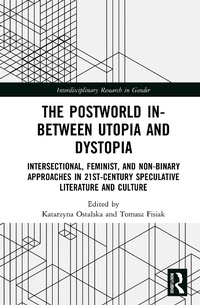
The Postworld In-Between Utopia and Dystopia
Intersectional, Feminist, and Non-Binary Approaches in 21st-Century Speculative Literature and Culture
1st Edition
Published on 29. December 2021
290 pages
978-1-000-50993-9 (ISBN)
Description

This collection of essays offers global perspectives on feminist utopia and dystopia in speculative literature, film, and art, working from a range of intersectional approaches to examine key works and genres in both their specific cultural context and a wider, global, epistemological, critical background.
The international, diverse contributions, including a Foreword by Gregory Claeys, draw upon posthumanism, speculative realism, speculative feminism, object-oriented ontology, new materialisms, and post-Anthropocene studies to propose alternative perspectives on gender, environment, as well as alternate futures and pasts rendered in fiction. Instead of binary divisions into utopia vs dystopia, the collection explores genres transcending this dichotomy, scrutinising the oeuvre of both established and emerging writers, directors, and critics.
This is a rich and unique collection suitable for scholars and students studying feminist literature, media cultural studies, and women's and gender studies.
The international, diverse contributions, including a Foreword by Gregory Claeys, draw upon posthumanism, speculative realism, speculative feminism, object-oriented ontology, new materialisms, and post-Anthropocene studies to propose alternative perspectives on gender, environment, as well as alternate futures and pasts rendered in fiction. Instead of binary divisions into utopia vs dystopia, the collection explores genres transcending this dichotomy, scrutinising the oeuvre of both established and emerging writers, directors, and critics.
This is a rich and unique collection suitable for scholars and students studying feminist literature, media cultural studies, and women's and gender studies.
More details
Series
Edition
1. Auflage
Language
English
Place of publication
London
United Kingdom
Publishing group
Taylor & Francis Ltd
Target group
College/higher education
Illustrations
5 Halftones, black and white; 5 Illustrations, black and white
ISBN-13
978-1-000-50993-9 (9781000509939)
Copyright in bibliographic data and cover images is held by Nielsen Book Services Limited or by the publishers or by their respective licensors: all rights reserved.
Schweitzer Classification
Other editions
Additional editions
Katarzyna Ostalska | Tomasz Fisiak
The Postworld In-Between Utopia and Dystopia
Intersectional, Feminist, and Non-Binary Approaches in 21st-Century Speculative Literature and Culture
Book
09/2023
1st Edition
Routledge
€63.60
Shipment within 15-20 days
Katarzyna Ostalska | Tomasz Fisiak
The Postworld In-Between Utopia and Dystopia
Intersectional, Feminist, and Non-Binary Approaches in 21st-Century Speculative Literature and Culture
Book
12/2021
1st Edition
Routledge
€205.90
Shipment within 15-20 days
Persons
Tomasz Fisiak is Assistant Professor in the Department of British Literature and Culture, Institute of English Studies, University of Lodz. His book She-(d)evils? The Construction of a Female Tyrant as a Cultural Critique was published in 2020 by Peter Lang. His academic interests include Gothic fiction/cinema, gender/queer/feminist issues, dys/utopian fiction, and popular/pulp culture. He is a member of the editorial team of Text Matters: A Journal of Literature, Theory and Culture. He is currently a team member of the project Word, Sound and Image: Intertextuality in Music Videos no. 2019/33/B/HS2/00131 financed by National Science Centre in Poland.
Katarzyna Ostalska is Associate Professor in the Department of British Literature and Culture at the University of Lodz, Poland. She is the head of the Posthumanities Research Centre at the Faculty of Philology, University of Lodz. She holds a PhD and postdoctoral degree (habilitation) in literature. Her research includes contemporary British and Irish literature and culture, particularly Irish women poets, gender studies, posthumanism, speculative fiction, animal studies, ecofeminism, and film studies. Her post-doctoral monograph Towards Female Empowerment-The New Generation of Irish Women Poets: Vona Groarke, Sinead Morrissey, Caitriona O'Reilly, and Mary O'Donoghue was published in 2015. She co-edited two collections of essays and a journal's special issue on speculative fiction (2020).
Katarzyna Ostalska is Associate Professor in the Department of British Literature and Culture at the University of Lodz, Poland. She is the head of the Posthumanities Research Centre at the Faculty of Philology, University of Lodz. She holds a PhD and postdoctoral degree (habilitation) in literature. Her research includes contemporary British and Irish literature and culture, particularly Irish women poets, gender studies, posthumanism, speculative fiction, animal studies, ecofeminism, and film studies. Her post-doctoral monograph Towards Female Empowerment-The New Generation of Irish Women Poets: Vona Groarke, Sinead Morrissey, Caitriona O'Reilly, and Mary O'Donoghue was published in 2015. She co-edited two collections of essays and a journal's special issue on speculative fiction (2020).
Content
Foreword: A Utopian/Dystopian Spectrum: From Friendship to Fear, From Consent to Coercion Gregory Claeys
Utopia and Dystopia in the 21st Century: Feminism, Intersectionality, and the Rejection of Binarism Katarzyna Ostalska and Tomasz Fisiak
Part I: Between Anthropocenic Dystopia And Ecological Utopia
Chapter 1: In Need of New Narratives: Feminist Ustopian Fiction Challenging the Anthropocene Alessandra Boller
Chapter 2: Post-Anthropocentric Ethics of Care in Turn-of-the-Century Fiction Katarzyna Wieckowska
Chapter 3: Environmental Dys/Utopian Short Stories in Olga Tokarczuk's Opowiadania Bizarne Agnieszka Lowczanin
Part II: The Materiality Of Posthuman Intersections And Speculative Discourse In Fiction And Art
Chapter 4: Critical Hope: Relationalities in 21st-Century Speculative Fiction and Art Dunja M. Mohr
Chapter 5: The Mesotopia: From Speculative Realism To Speculative Artistic Events Tristan Verran
Chapter 6: Neganthropic Architecture(s): Renee Gladman's Speculative Reorientation of Science-Fiction Malgorzata Myk
Part III: Between History And Sexual Politics: Alternate Herstories And Historical Alternatives
Chapter 7: Temporal Politics: Entangling Fictions, Futures, and Histories in Contemporary and Historical Speculative Fiction Adam Stock
Chapter 8: Utopia of Intimacy: "The Fear of the Flesh," Hyper-Sexualisation, Libidinal Exhaustion, and a New Sexual Politics beyond Oedipal (Wo)man Mark Featherstone
Chapter 9: Do Cyborgs Dream of (Becoming) People? The Alternative Non-Human Self in Ian McEwan's Machines Like Me Tomasz Dobrogoszcz
Part IV: In-Between Feminist And Postfeminist Dys/Utopias
Chapter 10: Twenty-First Century Gileads: Feminist Dystopian Fiction after Atwood-The Handmaid's Tale, The Natural Way of Things, The Water Cure, and The Testaments Fiona Tolan
Chapter 11: A Rage of Her Own: The Unpredictable Powers of Female Flight in Nnedi Okorafor's The Book of Phoenix Svetlana Stefanova
Chapter 12: Feminist Utopianism in the Posthuman Worlds of Last Ones Left Alive by Sarah Davis-Goff and Individutopia by Joss Sheldon Katarzyna Ostalska
Chapter 13: Developing the F-word: Representing Adolescent Womanhood and Race in Young-Adult Dystopian Novels Cristina Paravano
Part V: Beyond The Gender And Structural Binaries In Dys/Utopian Cinema
Chapter 14: Alien Bodies, Alien Selves: Under the Skin (2013) and Beyond Tomasz Fisiak
Chapter 15: Dys/utopian Narratives on the Screen: Beyond the Binaries in Children of Men and The Lobster Emrah Atasoy
Chapter 16: Zombie Mayhem in Austen's Hertfordshire-Intersectionality of Class and Gender Politics in Burr Steers's Pride and Prejudice and Zombies Magdalena Cieslak
Chapter 17: "Where did all you zombies come from?" Gendered Pasts, Presents and Futures in Robert Heinlein's "All You Zombies" and the Film Adaptation Predestination Emily Cox-Palmer-White
Utopia and Dystopia in the 21st Century: Feminism, Intersectionality, and the Rejection of Binarism Katarzyna Ostalska and Tomasz Fisiak
Part I: Between Anthropocenic Dystopia And Ecological Utopia
Chapter 1: In Need of New Narratives: Feminist Ustopian Fiction Challenging the Anthropocene Alessandra Boller
Chapter 2: Post-Anthropocentric Ethics of Care in Turn-of-the-Century Fiction Katarzyna Wieckowska
Chapter 3: Environmental Dys/Utopian Short Stories in Olga Tokarczuk's Opowiadania Bizarne Agnieszka Lowczanin
Part II: The Materiality Of Posthuman Intersections And Speculative Discourse In Fiction And Art
Chapter 4: Critical Hope: Relationalities in 21st-Century Speculative Fiction and Art Dunja M. Mohr
Chapter 5: The Mesotopia: From Speculative Realism To Speculative Artistic Events Tristan Verran
Chapter 6: Neganthropic Architecture(s): Renee Gladman's Speculative Reorientation of Science-Fiction Malgorzata Myk
Part III: Between History And Sexual Politics: Alternate Herstories And Historical Alternatives
Chapter 7: Temporal Politics: Entangling Fictions, Futures, and Histories in Contemporary and Historical Speculative Fiction Adam Stock
Chapter 8: Utopia of Intimacy: "The Fear of the Flesh," Hyper-Sexualisation, Libidinal Exhaustion, and a New Sexual Politics beyond Oedipal (Wo)man Mark Featherstone
Chapter 9: Do Cyborgs Dream of (Becoming) People? The Alternative Non-Human Self in Ian McEwan's Machines Like Me Tomasz Dobrogoszcz
Part IV: In-Between Feminist And Postfeminist Dys/Utopias
Chapter 10: Twenty-First Century Gileads: Feminist Dystopian Fiction after Atwood-The Handmaid's Tale, The Natural Way of Things, The Water Cure, and The Testaments Fiona Tolan
Chapter 11: A Rage of Her Own: The Unpredictable Powers of Female Flight in Nnedi Okorafor's The Book of Phoenix Svetlana Stefanova
Chapter 12: Feminist Utopianism in the Posthuman Worlds of Last Ones Left Alive by Sarah Davis-Goff and Individutopia by Joss Sheldon Katarzyna Ostalska
Chapter 13: Developing the F-word: Representing Adolescent Womanhood and Race in Young-Adult Dystopian Novels Cristina Paravano
Part V: Beyond The Gender And Structural Binaries In Dys/Utopian Cinema
Chapter 14: Alien Bodies, Alien Selves: Under the Skin (2013) and Beyond Tomasz Fisiak
Chapter 15: Dys/utopian Narratives on the Screen: Beyond the Binaries in Children of Men and The Lobster Emrah Atasoy
Chapter 16: Zombie Mayhem in Austen's Hertfordshire-Intersectionality of Class and Gender Politics in Burr Steers's Pride and Prejudice and Zombies Magdalena Cieslak
Chapter 17: "Where did all you zombies come from?" Gendered Pasts, Presents and Futures in Robert Heinlein's "All You Zombies" and the Film Adaptation Predestination Emily Cox-Palmer-White
