

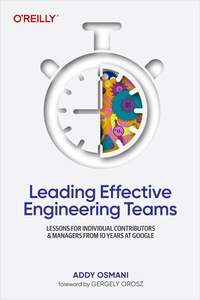
Leading Effective Engineering Teams
Lessons for Individual Contributors and Managers from 10 Years at Google
Published on 11. June 2024
278 pages
978-1-0981-4820-1 (ISBN)
Description

In this insightful and comprehensive guide, Addy Osmani shares more than a decade of experience working on the Chrome team at Google, uncovering secrets to engineering effectiveness, efficiency, and team success. Engineers and engineering leaders looking to scale their effectiveness and drive transformative results within their teams and organizations will learn the essential principles, tips, and frameworks for building highly effective engineering teams.Osmani presents best practices and proven strategies that foster engineering excellence in organizations of all sizes. Through practical advice and real-world examples, Leading Effective Engineering Teams empowers you to create a thriving engineering culture where individuals and teams can excel. Unlock the full potential of your engineering team and achieve unparalleled success by harnessing the power of trust, commitment, and accountability.With this book, you'll discover:The essential traits for engineering effectiveness and the pitfalls to avoidHow to cultivate trust, commitment, and accountability within your teamStrategies to minimize friction, optimize career growth, and deliver maximum valueThe dynamics of highly successful engineering teams and how to replicate their achievementsHow to implement a systems thinking approach for everyday problem-solving and decision-makingSelf-advocacy techniques to enhance your team's visibility and recognition within the organization
More details
Other editions
Additional editions
Addy Osmani
Leading Effective Engineering Teams
Lessons for Individual Contributors and Managers from 10 Years at Google
Book
06/2024
O'Reilly
€40.00
Available immediately
Content
- Cover
- Copyright
- Table of Contents
- Foreword
- Preface
- O'Reilly Online Learning
- How to Contact Us
- Acknowledgments
- Chapter 1. What Makes a Software Engineering Team Effective?
- Research on What Makes Teams Effective
- Project Aristotle
- Other Research
- Motivation Drives Performance
- Building an Effective Team
- Assemble the Right People
- Enable a Sense of Team Spirit
- Lead Effectively
- Sustain Effectiveness (A Growth Culture)
- Conclusion
- Chapter 2. Efficiency Versus Effectiveness Versus Productivity
- The Differences Between Efficiency, Effectiveness, and Productivity
- Goals
- Measurement
- Influencing Factors
- Output Versus Outcome
- Measuring Outputs and Outcomes
- Focusing on Outcomes over Outputs
- Effective Efficiency
- Effective Efficiency for Beginners
- Managing Trade-offs
- Redefining Team Productivity
- Balancing Effectiveness and Efficiency
- Everyday Tips for Becoming Effectively Efficient
- Conclusion
- Chapter 3. The 3 E's Model of Effective Engineering
- Enable
- Define Effectiveness for Your Business Type and Team Size
- Initialize Effectiveness
- Empower
- Feed Opportunities, Starve Problems
- Strive for Individual Effectiveness
- Follow Team Effectiveness Models
- Multiply Effectiveness
- Identify High-Leverage Activities
- Lessons from Google
- Expand
- Leadership Challenges
- The Three Always of Leadership
- Conclusion
- Chapter 4. Effective Management Behaviors: Research from Google
- Project Oxygen
- A Brief History
- Research Process
- Behaviors of High-Performing Managers
- Outcomes
- Leveraging Project Oxygen's Findings
- Project Aristotle
- Psychological Safety
- Dependability
- Structure and Clarity
- Meaning
- Impact
- Outcomes
- Leveraging Project Aristotle's Findings
- Conclusion
- Chapter 5. Common Effectiveness Antipatterns
- Antipatterns Categorization
- Individual Antipatterns
- The Specialist
- The Generalist
- The Hoarder
- The Relentless Guide
- The Trivial Tweaker
- Practice-Related Antipatterns
- Last-Minute Heroics
- PR Process Irregularities
- Protracted Refactoring
- Retrospective Negligence
- Structural Antipatterns
- Isolated Clusters
- Knowledge Bottlenecks
- Leadership Antipatterns
- Micromanagement
- Scope Mismanagement
- Planning Overkill
- Skeptical Leadership
- Passive Leadership
- Underappreciation
- Conclusion
- Chapter 6. Effective Managers
- From Engineering to Management
- Getting Started
- Defining a Strategy
- Managing Your Time
- Planning
- Execution
- Assessment
- Understanding and Setting Expectations
- What Results Are Expected from Me?
- What Results Do I Expect from Team Members?
- Communication Essentials
- Team Meetings
- One-on-Ones
- Messaging
- Nonverbal Communication
- People Management
- Hiring
- Performance Evaluation
- Attrition Management
- Mentorship and Coaching
- Managing Challenging Projects
- Managing Team Dynamics
- Individual Idiosyncrasies and Diverse Teams
- Remote Teams
- Conflict Resolution
- Enabling Mastery and Growth
- Harnessing Downtime for Growth
- Empowering Growth amid High-Workload Periods
- Networking Essentials
- Conclusion
- Chapter 7. Becoming an Effective Leader
- Effective Leaders Versus Effective Managers
- Leadership Roles
- Technical Lead
- Engineering Manager
- Tech Lead Manager (TLM)
- Assessing Your Leadership Skills
- Critical Traits
- Desirable Leadership Traits
- Leading Effectively
- Leadership Style
- Strategizing
- Playing the Part
- Mastering the Attitude
- Conclusion
- Index
- About the Author
