

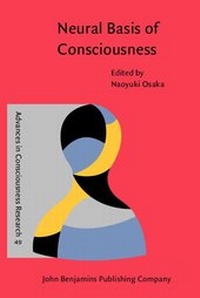
Neural Basis of Consciousness
1st Edition
Published on 30. January 2003
VIII, 227 pages
978-90-272-9639-9 (ISBN)
Description

Recent advances in cognitive neuroscience make possible an understanding of the neural events that are associated with different forms of consciousness. To fully understand and unveil the mystery of consciousness inside the brain we require examination of the concept of neural basis of conscious mind.This book provides a systematic exploration of consciousness and gives an overview of neural and quantum basis of conscious mind through careful explanation of proposed models and extends these theories challenging some generalised views on consciousness.
Each chapter provides a review of the findings and theoretical accounts related to neural basis of consciousness and the mechanisms of the different varieties of consciousness.
Professor Naoyuki Osaka (Kyoto University) has been active in experimental research on consciousness and attention for more than 15 years. (Series B)
Each chapter provides a review of the findings and theoretical accounts related to neural basis of consciousness and the mechanisms of the different varieties of consciousness.
Professor Naoyuki Osaka (Kyoto University) has been active in experimental research on consciousness and attention for more than 15 years. (Series B)
More details
Other editions
Additional editions
Naoyuki Osaka
Neural Basis of Consciousness
Book
01/2003
John Benjamins Publishing Co
€100.70
Shipment within 10-15 days
Person
Content
- Neural Basis of Consciousness
- Editorial page
- Title page
- LCC page
- Table of contents
- Preface
- Chapter 1 Issues in neural basis of consciousness
- References
- Part I Neuronal modeling
- Chapter 2 Working Memory requires conscious processes, not vice versa
- Notes
- References
- Chapter 3 Working memory-based consciousness
- References
- Chapter 4 Consciousness, intelligence and creativity
- A personal bibliography
- Chapter 5 Cerebral physiology of conscious experience
- References
- Part II Neuronal psychophysics
- Chapter 6 Neural mechanisms of perceptual organization
- References
- Chapter 7 Attention versus consciousness
- Notes
- References
- Part III Neural philosophy
- Chapter 8 Recent work on consciousness
- References
- Part IV Quantum mind
- Chapter 9 Quantum processes in the brain
- Notes
- References
- Chapter 10 Quantum consciousness
- References
- Chapter 11 On quantum theories of the mind
- References
- Name index
- Subject index
- The series ADVANCES IN CONSCIOUSNESS RESEARCH (AiCR)
