

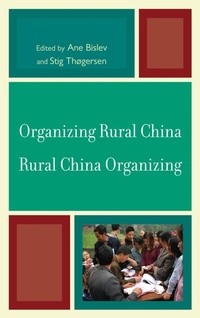
Organizing Rural China - Rural China Organizing
Lexington Books (Publisher)
1st Edition
Published on 5. April 2012
236 pages
978-0-7391-7010-6 (ISBN)
Description

During the early 1980s China embarked on what can be seen as one of the world's largest social experiments ever. Decollectivization meant much more than the reorganization of agricultural production into family based farming. It signaled significant changes to rural social relations, when privatization, marketization and increased geographical mobility started tearing apart the economic and social institutions that had structured collective village life under Mao.
The focus of this book is on how rural society has been reorganized in the 21st century. The first chapters outline the basic organizational structure of rural China and can be used as an introduction to the topic in a classroom setting. They show how the state and its social scientists draw up plans to overcome the perceived lack of rural social organization, and discuss the often problem-ridden implementation of their ideas. The second section presents case studies of institutions that organize key aspects of rural life: Boarding schools where rural children learn to accept organizational hierarchies; lineage organizations carving out new roles for themselves; "dragonhead enterprises" expected to organize agricultural production and support rural development, and several others. The book is of theoretical interest because of its focus on the re-embedding, or reintegration, of individuals into new types of collectivities, which are less predetermined by tradition and habit and more a matter of, at least perceived, individual choice. Most chapters are based on extensive fieldwork and contain vivid examples from daily life, which will make the book attractive to anyone who wants to understand how Chinese villagers experience the extraordinary social changes they are going through.
The focus of this book is on how rural society has been reorganized in the 21st century. The first chapters outline the basic organizational structure of rural China and can be used as an introduction to the topic in a classroom setting. They show how the state and its social scientists draw up plans to overcome the perceived lack of rural social organization, and discuss the often problem-ridden implementation of their ideas. The second section presents case studies of institutions that organize key aspects of rural life: Boarding schools where rural children learn to accept organizational hierarchies; lineage organizations carving out new roles for themselves; "dragonhead enterprises" expected to organize agricultural production and support rural development, and several others. The book is of theoretical interest because of its focus on the re-embedding, or reintegration, of individuals into new types of collectivities, which are less predetermined by tradition and habit and more a matter of, at least perceived, individual choice. Most chapters are based on extensive fieldwork and contain vivid examples from daily life, which will make the book attractive to anyone who wants to understand how Chinese villagers experience the extraordinary social changes they are going through.
More details
Series
Edition
1. Auflage
Language
English
Place of publication
New York
United States
Publishing group
Bloomsbury Publishing Plc
Target group
Professional and scholarly
ISBN-13
978-0-7391-7010-6 (9780739170106)
Copyright in bibliographic data and cover images is held by Nielsen Book Services Limited or by the publishers or by their respective licensors: all rights reserved.
Schweitzer Classification
Other editions
Additional editions
Ane Bislev | Stig Thogersen
Organizing Rural China - Rural China Organizing
Book
04/2012
Lexington Books
€133.10
Shipment within 10-20 days
Persons
Stig Thøgersen is professor of China studies at Aarhus University. He is the author of A County of Culture - Twentieth century China seen from the village schools of Zouping, Shandong (University of Michigan Press, 2002) and Doing Fieldwork in China (ed. with Maria Heimer, NIAS Press 2006). He has published several articles on social, political and cultural change in rural China in journals such as China Quarterly, China Journal, and Journal of Contemporary China. Besides rural organizations and rural reconstruction his main present research interest is in the life histories of Chinese overseas students.
Ane Bislev is a postdoctoral fellow at the Department of Culture and Society at Aarhus University. She did her PhD on microcredit and social capital in Yunnan and Guizhou and is currently working on a project on the informal credit markets in rural China. She is the author of The Need for Capital: Social Capital and Microcredit in Southwest China (2010).
Ane Bislev is a postdoctoral fellow at the Department of Culture and Society at Aarhus University. She did her PhD on microcredit and social capital in Yunnan and Guizhou and is currently working on a project on the informal credit markets in rural China. She is the author of The Need for Capital: Social Capital and Microcredit in Southwest China (2010).
Content
Introduction
Chapter 1: Introduction, by Ane Bislev and Stig Thøgersen
Imagining Rural China: Policies, Discourses, Ideals
Chapter 2: Continuity and Change in Rural China's Organization, by Jonathan Unger
Chapter 3: Organizing Rural China: Political and Academic Discourses, by Stig Thøgersen
Chapter 4: Government Propaganda and the Organization of Rural China, by Christian Göbel
Chapter 5: Stitching it All Back Up: The Role of Sent-Down Cadres in Rural Community Building?, by Unn Målfrid Rolandsen
Chapter 6: Reconstructing Rural China from the Bottom: A Discussion of Some Recent Chinese Experiments, by Xu Yong and Ma Hua
Chapter 7: Governing China's Failed Villages: Between a "Weak State" and a Fragmented Society, by Liu Yiqiang
Organizing Rural China: Actors and Local Practices
Chapter 8: Life in a Rural Boarding School: Learning to Organize and to Be Organized, by Mette Halskov Hansen
Chapter 9: Organizing Rural Health Care, by Mikkel Bunkenborg
Chapter 10: Lineages and the State: Re-inventing Lineages and Ancestor Ceremonies as Cultural Heritage, by Marina Svensson
Chapter 11: Native Place in Cyberspace: The Civic Enagement of an Internet Community, by Pang Cuiming
Chapter 12: Embedded Microcredit-Creating Village Cohesion on the Basis of Existing Social Networks, by Ane Bislev
Chapter 13: A Value Chain Gone Awry: Implications of the "Tainted Milk Scandal" in 2008 for Political and Social Organization in Rural China, by Jørgen Delman and Yang Minghong
Reflections
Chapter 14: Modern/Rural China: State Institutions and Village Values, by Vivienne Shue
Index
About the Editors
Chapter 1: Introduction, by Ane Bislev and Stig Thøgersen
Imagining Rural China: Policies, Discourses, Ideals
Chapter 2: Continuity and Change in Rural China's Organization, by Jonathan Unger
Chapter 3: Organizing Rural China: Political and Academic Discourses, by Stig Thøgersen
Chapter 4: Government Propaganda and the Organization of Rural China, by Christian Göbel
Chapter 5: Stitching it All Back Up: The Role of Sent-Down Cadres in Rural Community Building?, by Unn Målfrid Rolandsen
Chapter 6: Reconstructing Rural China from the Bottom: A Discussion of Some Recent Chinese Experiments, by Xu Yong and Ma Hua
Chapter 7: Governing China's Failed Villages: Between a "Weak State" and a Fragmented Society, by Liu Yiqiang
Organizing Rural China: Actors and Local Practices
Chapter 8: Life in a Rural Boarding School: Learning to Organize and to Be Organized, by Mette Halskov Hansen
Chapter 9: Organizing Rural Health Care, by Mikkel Bunkenborg
Chapter 10: Lineages and the State: Re-inventing Lineages and Ancestor Ceremonies as Cultural Heritage, by Marina Svensson
Chapter 11: Native Place in Cyberspace: The Civic Enagement of an Internet Community, by Pang Cuiming
Chapter 12: Embedded Microcredit-Creating Village Cohesion on the Basis of Existing Social Networks, by Ane Bislev
Chapter 13: A Value Chain Gone Awry: Implications of the "Tainted Milk Scandal" in 2008 for Political and Social Organization in Rural China, by Jørgen Delman and Yang Minghong
Reflections
Chapter 14: Modern/Rural China: State Institutions and Village Values, by Vivienne Shue
Index
About the Editors
