

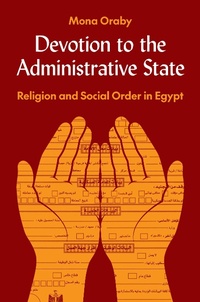
Devotion to the Administrative State
Religion and Social Order in Egypt
1st Edition
Published on 27. March 2024
328 pages
978-0-691-25066-3 (ISBN)
Description

Why the pursuit of state recognition by seemingly marginal religious groups in Egypt and elsewhere is a devotional practice
Over the past decade alone, religious communities around the world have demanded state recognition, exemption, accommodation, or protection. They make these appeals both in states with a declared religious identity and in states officially neutral toward religion. In this book, Mona Oraby argues that the pursuit of official recognition by religious minorities amounts to a devotional practice. Countering the prevailing views on secularism, Oraby contends that demands by seemingly marginal groups to have their religious differences recognized by the state in fact assure communal integrity and coherence over time. Making her case, she analyzes more than fifty years of administrative judicial trends, theological discourse, and minority claims-making practices, focusing on the activities of Coptic Orthodox Christians and Bahá'í in modern and contemporary Egypt.
Oraby documents the ways that devotion is expressed across a range of sites and sources, including in lawyers' offices, administrative judicial verdicts, televised media and film, and invitation-only study sessions. She shows how Egypt's religious minorities navigated the political and legal upheavals of the 2011 uprising and now persevere amid authoritarian repression. In a Muslim-majority state, they assert their status as Islam's others, finding belonging by affirming their difference; and difference, Oraby argues, is the necessary foundation for collective life. Considering these activities in light of the global history of civil administration and adjudication, Oraby shows that the lengths to which these marginalized groups go to secure their status can help us to reimagine the relationship between law and religion.
Over the past decade alone, religious communities around the world have demanded state recognition, exemption, accommodation, or protection. They make these appeals both in states with a declared religious identity and in states officially neutral toward religion. In this book, Mona Oraby argues that the pursuit of official recognition by religious minorities amounts to a devotional practice. Countering the prevailing views on secularism, Oraby contends that demands by seemingly marginal groups to have their religious differences recognized by the state in fact assure communal integrity and coherence over time. Making her case, she analyzes more than fifty years of administrative judicial trends, theological discourse, and minority claims-making practices, focusing on the activities of Coptic Orthodox Christians and Bahá'í in modern and contemporary Egypt.
Oraby documents the ways that devotion is expressed across a range of sites and sources, including in lawyers' offices, administrative judicial verdicts, televised media and film, and invitation-only study sessions. She shows how Egypt's religious minorities navigated the political and legal upheavals of the 2011 uprising and now persevere amid authoritarian repression. In a Muslim-majority state, they assert their status as Islam's others, finding belonging by affirming their difference; and difference, Oraby argues, is the necessary foundation for collective life. Considering these activities in light of the global history of civil administration and adjudication, Oraby shows that the lengths to which these marginalized groups go to secure their status can help us to reimagine the relationship between law and religion.
More details
Other editions
Additional editions
Book
03/2024
Princeton University Press
€104.16
Shipment within 10-20 days
Book
03/2024
Princeton University Press
€30.50
Shipment within 10-20 days
Person
Mona Oraby is assistant professor of political science at Howard University. She is the coauthor of A Universe of Terms: Religion in Visual Metaphor.
Content
- Cover
- Contents
- List of Illustrations
- Note on Translation, Transliteration, and Names
- Acknowledgments
- Introduction
- Part 1: Ephemera
- Hosna's Tattoo
- Rauf's Strategy
- Maher's Testimony
- Fadi's Wish
- Part II: Inscriptions
- 1. Sealed in the Skin and on Paper: Locating the Self
- 2. Sealed in Administrative Court: The Order of Revelation
- Part III: Covenants
- 3. Divine Administration: Shoghi Effendi and the Bahá'í World Order
- 4. Obedience to Government Is Obedience to God: Bahá'í Televised Claims to Recognition
- Part IV: Ethics
- 5. A Christian Like Us: Coptic Lawyers at the Vanguard
- 6. The Bahá'í Youth Conference: World Building and Common Calling
- Epilogue
- Appendix
- Bibliography
- Index
