

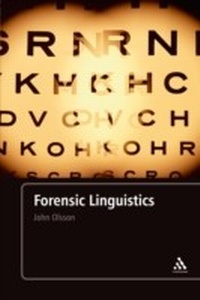
Forensic Linguistics
An Introduction to Language, Crime and the Law
2nd Edition
Published on 31. March 2008
288 pages
978-1-4411-3441-7 (ISBN)
Description

First published in 2004, John Olsson's practical introduction to Forensic Linguistics has become required reading for courses on this new and expanding branch of applied linguistics. This second edition has been revised and updated throughout, and includes new chapters on language in the justice system, forensic transcription, and expanded information on forensic phonetics. The book includes an appendix of forensic texts for student study, exercises and suggestions for further reading.
This unique, hands-on introduction to Forensic Linguistics, based on Olsson's extensive experience as a practising forensic linguist, is essential reading for students, and researchers encountering this branch of applied linguistics for the first time.
This unique, hands-on introduction to Forensic Linguistics, based on Olsson's extensive experience as a practising forensic linguist, is essential reading for students, and researchers encountering this branch of applied linguistics for the first time.
Reviews / Votes
"John Olsson's Forensic Linguistics provides a well-organized and accessible introduction to general theoretical and practical questions regarding this new and rapidly expanding discipline of applied linguistics. Like the first, the second edition of Forensic linguistics is an exceptionally clear and helpful overview of the field. In addition to new chapters on language in the justice system and forensic transcription, and expanded information on forensic phonetics, the second edition provides ample coverage of topics such as authorship studies, variation, veracity in language and forensic text types. In each chapter the author considers a chosen topic, illustrating the approaches by describing a number of important cases . Exercises, ideas for discussion, and suggestions for further reading enhance the text and provide starting points for student projects. Clearly written and comprehensible to students at all levels, this book is an ideal introduction to forensic linguistics. It is also a helpful reference for anyone contemplating forensic linguistic research." - Professor Lelija Socanac, Center for Language and Law, Faculty of Law, University of Zagreb, Croatia "Written by one of the pioneers in the field, Forensic Linguistics is unquestionably one of the most definitive introductions to the dynamic intersection between language, crime, and the law." -- Language Policy "Olsson's book is an accessible and well-written introductory text"More details
Edition
2nd edition
Language
English
Place of publication
New York
United States
ISBN-13
978-1-4411-3441-7 (9781441134417)
Copyright in bibliographic data and cover images is held by Nielsen Book Services Limited or by the publishers or by their respective licensors: all rights reserved.
Schweitzer Classification
Other editions
Additional editions
Book
03/2008
2nd Edition
Continuum International Publishing Group Ltd.
€247.60
Shipment within 15-20 days
Book
03/2008
2nd Edition
Continuum International Publishing Group Ltd.
€56.30
Shipment within 15-20 days
Previous edition
John Olsson | June Luchjenbroers
Forensic Linguistics
E-Book
12/2013
1st Edition
Bloomsbury Academic
€39.99
Available for download
Person
John Olsson operated a world-renowned forensic linguistics consultancy and training service at www.thetext.co.uk from 1996 onwards. He worked an Adjunct Professor at Nebraska Wesleyan University, USA, where he taught forensic linguistics online. He was also Visiting Professor of Forensic Linguistics at the International University of Novi Pazar in Serbia where he ran an annual summer school in Forensic Linguistics, and was a board member of the Language and Law Centre at the University of Zagreb, Croatia, where he was also a visiting Professor. He was then a lecturer in Forensic Linguistics in both the School of Linguistics and the School of Law at Bangor University, Wales, and was head of the Forensic Linguistics Institute.
Content
Introduction
1. Previous authorship studies
2. Individuals and language use
3. Evidence in court
4. An authorship enquiry
5. Sampling and authorship
6. Single text enquiries
7. Authorship profiling
8. Detecting plagiarism
9. Veracity in language
10. Language in the justice system
11. Forensic text types
12. Forensic phonetics
13. Forensic transcription
Appendix A: Exercises
Appendix B: Texts
Index
1. Previous authorship studies
2. Individuals and language use
3. Evidence in court
4. An authorship enquiry
5. Sampling and authorship
6. Single text enquiries
7. Authorship profiling
8. Detecting plagiarism
9. Veracity in language
10. Language in the justice system
11. Forensic text types
12. Forensic phonetics
13. Forensic transcription
Appendix A: Exercises
Appendix B: Texts
Index
