

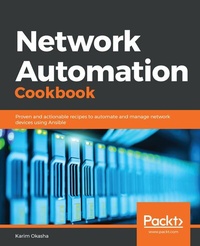
Network Automation Cookbook
Proven and actionable recipes to automate and manage network devices using Ansible
1st Edition
Published on 3. June 2024
482 pages
978-1-78995-187-5 (ISBN)
Description

Take your network automation skills to the next level with practical recipes on managing network devices from a variety of vendors like Cisco, Juniper, and AristaKey Features - Use Ansible to automate network infrastructure with the help of step-by-step instructions
- Implement network automation best practices to save cost, avoid critical errors, and reduce downtime
- Deliver a robust automation framework by integrating Ansible with NAPALM, NetBox, and Batfish
Book DescriptionNetwork Automation Cookbook is designed to help system administrators, network engineers, and infrastructure automation engineers to centrally manage switches, routers, and other devices in their organization's network. This book will help you gain hands-on experience in automating enterprise networks and take you through core network automation techniques using the latest version of Ansible and Python. With the help of practical recipes, you'll learn how to build a network infrastructure that can be easily managed and updated as it scales through a large number of devices. You'll also cover topics related to security automation and get to grips with essential techniques to maintain network robustness. As you make progress, the book will show you how to automate networks on public cloud providers such as AWS, Google Cloud Platform, and Azure. Finally, you will get up and running with Ansible 2.9 and discover troubleshooting techniques and network automation best practices. By the end of this book, you'll be able to use Ansible to automate modern network devices and integrate third-party tools such as NAPALM, NetBox, and Batfish easily to build robust network automation solutions.What you will learn - Understand the various components of Ansible
- Automate network resources in AWS, GCP, and Azure cloud solutions
- Use IaC concepts to design and build network solutions
- Automate network devices such as Cisco, Juniper, Arista, and F5
- Use NetBox to build network inventory and integrate it with Ansible
- Validate networks using Ansible and Batfish
Who this book is forThis Ansible network automation book is for network and DevOps engineers interested in automating complex network tasks. Prior understanding of networking and basic Linux knowledge is required.
- Implement network automation best practices to save cost, avoid critical errors, and reduce downtime
- Deliver a robust automation framework by integrating Ansible with NAPALM, NetBox, and Batfish
Book DescriptionNetwork Automation Cookbook is designed to help system administrators, network engineers, and infrastructure automation engineers to centrally manage switches, routers, and other devices in their organization's network. This book will help you gain hands-on experience in automating enterprise networks and take you through core network automation techniques using the latest version of Ansible and Python. With the help of practical recipes, you'll learn how to build a network infrastructure that can be easily managed and updated as it scales through a large number of devices. You'll also cover topics related to security automation and get to grips with essential techniques to maintain network robustness. As you make progress, the book will show you how to automate networks on public cloud providers such as AWS, Google Cloud Platform, and Azure. Finally, you will get up and running with Ansible 2.9 and discover troubleshooting techniques and network automation best practices. By the end of this book, you'll be able to use Ansible to automate modern network devices and integrate third-party tools such as NAPALM, NetBox, and Batfish easily to build robust network automation solutions.What you will learn - Understand the various components of Ansible
- Automate network resources in AWS, GCP, and Azure cloud solutions
- Use IaC concepts to design and build network solutions
- Automate network devices such as Cisco, Juniper, Arista, and F5
- Use NetBox to build network inventory and integrate it with Ansible
- Validate networks using Ansible and Batfish
Who this book is forThis Ansible network automation book is for network and DevOps engineers interested in automating complex network tasks. Prior understanding of networking and basic Linux knowledge is required.
More details
Other editions
Additional editions
Karim Okasha
Network Automation Cookbook
Proven and actionable recipes to automate and manage network devices using Ansible
Book
04/2020
Packt Publishing
€52.60
Shipment within 3-4 weeks
Person
Okasha Karim :
Karim Okasha is a network consultant with over 15 years of experience in the ICT industry. He is specialized in the design and operation of large telecom and service provider networks and has lots of experience in network automation. Karim has a bachelor's degree in telecommunications and holds several expert-level certifications, such as CCIE, JNCIE, and RHCE. He is currently working in Red Hat as a network automation consultant, helping large telecom and service providers to design and implement innovative network automation solutions. Prior to joining Red Hat, he worked for Saudi Telecom Company as well as Cisco and Orange S.A.
Karim Okasha is a network consultant with over 15 years of experience in the ICT industry. He is specialized in the design and operation of large telecom and service provider networks and has lots of experience in network automation. Karim has a bachelor's degree in telecommunications and holds several expert-level certifications, such as CCIE, JNCIE, and RHCE. He is currently working in Red Hat as a network automation consultant, helping large telecom and service providers to design and implement innovative network automation solutions. Prior to joining Red Hat, he worked for Saudi Telecom Company as well as Cisco and Orange S.A.
Content
Table of Contents - Building Blocks of Ansible
- Managing Cisco IOS Devices Using Ansible
- Automating Juniper Devices in the Service Providers Using Ansible
- Building Data Center Networks with Arista and Ansible
- Automating Application Delivery with F5 LTM and Ansible
- Administering a Multi-Vendor Network with NAPALM and Ansible
- Deploying and Operating AWS Networking Resources with Ansible
- Deploying and Operating Azure Networking Resources with Ansible
- Deploying and Operating GCP Networking Resources with Ansible
- Network Validation with Batfish and Ansible
- Building a Network Inventory with Ansible and NetBox
- Simplifying Automation with AWX and Ansible
- Advanced Techniques and Best Practices for Ansible
- Managing Cisco IOS Devices Using Ansible
- Automating Juniper Devices in the Service Providers Using Ansible
- Building Data Center Networks with Arista and Ansible
- Automating Application Delivery with F5 LTM and Ansible
- Administering a Multi-Vendor Network with NAPALM and Ansible
- Deploying and Operating AWS Networking Resources with Ansible
- Deploying and Operating Azure Networking Resources with Ansible
- Deploying and Operating GCP Networking Resources with Ansible
- Network Validation with Batfish and Ansible
- Building a Network Inventory with Ansible and NetBox
- Simplifying Automation with AWX and Ansible
- Advanced Techniques and Best Practices for Ansible
