

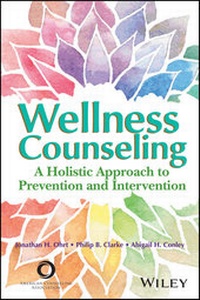
Wellness Counseling
Description

This innovative text presents a comprehensive review of the theoretical and empirical support for a wellness approach to counseling with current techniques for client assessment, case conceptualization, treatment planning, and intervention. The authors provide holistic strategies for wellness promotion with children, adolescents, and young, midlife, and older adults, as well as in counseling with groups, couples, and families. Each chapter includes reflection questions, learning activities, and resources to deepen readers' understanding of the content and application to practice. Wellness boosters offer quick methods for clients and counselors to increase their domain-specific and overall well-being. In addition, experienced counselors share their personal experiences implementing wellness interventions in "Practitioner Spotlight" vignettes. A chapter on counselor self-care completes the book.
- Requests for digital versions from ACA can be found on www.wiley.com.
- To purchase print copies, please visit the ACA website
- Reproduction requests for material from boks published by ACA should be directed to publications@counseling.org
More details
Other editions
Additional editions
Persons
Jonathan H. Ohrt, PhD, is an associate professor and counselor education program coordinator at the University of South Carolina.
Philip B. Clarke, PhD, is an associate professor in the Department of Counseling at Wake Forest University.
Abigail H. Conley, PhD, is an assistant professor in the Department of Counseling and Special Education, and an affiliate faculty member in the Institute for Women's Health, at Virginia Commonwealth University.
Content
- Intro
- Title Page
- Copyright Page
- Table of Contents
- Preface
- About the Authors
- About the Spotlight Contributors
- Acknowledgments
- Part I Foundations of Wellness Counseling
- Chapter 1 Introduction to Wellness Counseling
- The Value of Wellness
- Wellness Is Who We Are
- The World Needs Wellness Counselors
- The Wellness Platform
- Counseling With the Whole Person
- Strength and Prevention Based
- Applicable Across the Life Span
- Applicable Across Presenting Concerns
- Wellness Is Transtheoretical and Honors the Change Process
- Wellness Is for Counselors Too!
- Conclusion
- Reflection Prompts
- Resources
- References
- Chapter 2 History and Background
- Ancient Wellness
- Ayurveda
- Traditional Chinese Medicine (TCM)
- Greek and Roman Medicine
- Modern Wellness Movements
- Theoretical Wellness Models in Counseling
- Wellness at the Core of the Counseling Profession
- Hettler's Six Dimensions of Wellness Model
- The Indivisible Self Model of Wellness (IS-Wel)
- Substance Abuse and Mental Health Services Administration (SAMHSA)
- Research
- Conclusion
- Reflection Prompts
- Resources
- References
- Chapter 3 Trends in Health and Wellness
- Advances in Modern Medicine and Lifestyle Diseases
- Social Determinants of Health
- Health and Mental Health Disparities
- Health Policy, Health Promotion, and Advocacy
- Conclusion
- Reflection Prompts
- Resources
- References
- Part II The Five Domains of Wellness
- Chapter 4 Mind
- The Brain
- Stress Response
- Rewiring the Brain, Retrain the Mind
- Perception and Depression
- Neurogenesis and Trauma
- Neurobiology of Mindfulness
- Biology, Cognition, and Behavior Change
- Counseling Interventions
- First-Wave Interventions
- Second-Wave Interventions
- Third-Wave Interventions
- Conclusion
- Reflection Prompts
- Resources
- References
- Chapter 5 Body
- Physical Activity and Health
- Nutrition
- Nutrition and Health
- Cancer and Antioxidants
- Body Image
- Counseling Interventions
- Media Literacy
- Barriers to Body Wellness
- Conclusion
- Reflection Prompts
- Resources
- References
- Chapter 6 Spirit
- Spirituality
- Spiritual Development Theory
- Spiritual Struggles
- Meaning Making
- Gratitude
- Career Development and Service
- EcoWellness
- Barriers to Spirit Wellness
- Counseling Interventions
- Conclusion
- Resources
- References
- Chapter 7 Emotion
- Emotional Intelligence (EI)
- Emotion Regulation
- Linking Emotions to Health
- Emotional Expression/Positivity
- Specific Emotional Processes Related to Wellness
- Happiness
- Optimism and Hope
- Forgiveness
- Cultivating Positive Emotions and Counselor Interventions
- Emotion-Focused Therapy (EFT)
- Social and Emotional Learning (SEL) Programs
- Conclusion
- Reflection Prompts
- Resources
- References
- Chapter 8 Connection
- Social Support
- Supporting Others
- Social Isolation
- Benefits of Connection Wellness
- Trauma
- SMI
- Navigating Obstacles to Connection Wellness
- Social Skills
- Social Media
- Cultural Considerations in Connection Wellness
- Assessment and Intervention
- Interconnected Interventions
- Connection and Body
- Connection and Spirit
- Connection and Mind
- Connection and Emotion
- Conclusion
- Reflection Prompts
- Resources
- References
- Part III Wellness Counseling in Action
- Chapter 9 Assessment and Case Conceptualization
- Co-Creating Definitions of Holistic and Domain-Specific Wellness With Your Client
- Critical Concepts in Wellness Psychoeducation During Assessment
- Assessing Wellness Strengths and Goals
- Wellness Measures
- Balancing Wellness and Clinical Assessments
- Multicultural Considerations
- Wellness-Based Client Conceptualization
- Benefits of Wellness Assessment
- Applying Wellness Concepts With Clients in Crisis
- Conclusion
- Reflection Prompts
- Resources
- References
- Chapter 10 Treatment Planning
- Wellness Intervention Planning Process
- Intervention Planning at the Primary Level
- Intervention Planning at the Secondary and Tertiary Levels
- Transtheoretical Model (TTM)
- Change Processes
- Stages of Change
- Precontemplation
- Contemplation
- Preparation
- Action
- Maintenance
- Brainstorming
- Goal Setting
- S.M.A.R.T. Goals
- Specific
- Measurable
- Attainable
- Relevant
- Time Related
- Selecting Interventions
- Evidence-Based Interventions
- Client Readiness
- Client Culture, Religion, Values, and Family System
- Scope of Practice and Collaboration
- Case Example
- Conclusion
- Reflection Prompts
- Resources
- References
- Chapter 11 Interventions
- Principles of Wellness Counseling
- Solution-Focused Counseling
- The Covert Antecedents Model of Relapse: A Foundation for Wellness Intervention
- Wellness Self-Assessment Intervention
- Wellness Boosters
- Wellness Balancers
- Daily Wellness Practices (DWPs)
- Working Your Wellness Plan
- Wellness in Action
- Capitalizing on Success: The Wellness Progress Check-In
- Conclusion
- Reflection Prompts
- References
- Chapter 12 Wellness Counseling for Couples, Families, and Groups
- The Importance of Wellness for Couples and Families
- Couples
- Families
- Couples Counseling Assessment
- Understanding Couple Wellness
- Wellness-Based Goal Setting With Couples
- Wellness Interventions for Couples
- Mind Wellness
- Body Wellness
- Spirit Wellness
- Emotion Wellness
- Connection Wellness
- Understanding Family Wellness
- Mind Wellness
- Body Wellness
- Spirit Wellness
- Emotion Wellness
- Connection Wellness
- Wellness-Based Goal Setting With Families
- Wellness Interventions With Families
- Connection Wellness
- Emotion Wellness
- Spirit Wellness
- Body Wellness
- Mind Wellness
- Family Wellness Balancers and Failed Solutions
- A Note About Technology
- Wellness in Groups
- Wellness Group: Session 1
- Introduction and Discussion
- Wellness Group: Session 2
- Stress and Burnout
- Wellness Group: Session 3
- Wellness Dimensions
- Wellness Group: Session 4
- Wellness Grid
- Wellness Group: Session 5
- Wellness Dimension Goals
- Wellness Group: Session 6
- Identifying Barriers and Closure
- Conclusion
- Reflection Prompts
- Resources
- References
- Part IV Wellness Counseling Across the Life Span
- Chapter 13 Wellness Counseling With Children, Adolescents, and Emerging Adults
- Introduction to Child and Adolescent Wellness
- Wellness in Primary Care
- Wellness in K-12 Schools
- Mindsets and Behaviors
- Classroom Lessons
- Small Groups
- Individual Counseling
- Recommendations
- Collaborate With Other Service Providers in the School
- Create a School Wellness Committee
- Collaborate With Community Organizations and Service Providers
- Advocate for School Wellness Policies
- Provide Resources on the School Website
- Offer Services to Families
- Postsecondary
- University 101
- Campus Wellness Initiatives
- Conclusion
- Reflection Prompts
- Resources
- References
- Chapter 14 Wellness Counseling With Early, Midlife, and Older Adults
- Developmental Considerations for Emerging Adults
- The Context of Emerging Adulthood
- What Is Emerging Adulthood?
- The Transition Framework
- Wellness Interventions for Emerging Adults
- Middle Adulthood
- Wellness Interventions for Clients in Middle Adulthood
- Older Adulthood
- Wellness Interventions With Older Adults
- Conclusion
- Reflection Prompts
- Resources
- References
- Chapter 15 Wellness Counseling for Counselors
- Counselor Susceptibility to Burnout and Impairment
- Self-Care
- Wellness Intervention Plan
- Cues of Low Counselor Wellness Across the Five Domains
- Balancers and Boosters and Suggestions for Counselor Wellness
- Wellness in Supervision
- Brief Summary of the WELMS
- Phase and Activities
- Organizational Wellness
- Conclusion
- Reflection Prompts
- Resources
- References
- Index
- Technical Support
- EULA
