

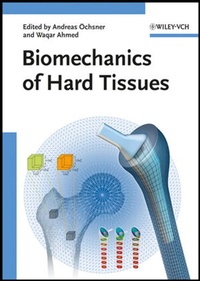
Biomechanics of Hard Tissues
Modeling, Testing, and Materials
1st Edition
Published on 4. August 2011
XVI, 306 pages
978-3-527-63274-9 (ISBN)
Description

This monograph assembles expert knowledge on the latest biomechanical modeling and testing of hard tissues, coupled with a concise introduction to the structural and physical properties of bone and cartilage.
A strong focus lies on the current advances in understanding bone structure and function from a materials science perspective, providing practical knowledge on how to model, simulate and predict the mechanical behavior of bone. The book presents directly applicable methods for designing and testing the performance of artificial bones and joint replacements, while addressing innovative and safe approaches to stimulated bone regeneration essential for clinical researchers.
A strong focus lies on the current advances in understanding bone structure and function from a materials science perspective, providing practical knowledge on how to model, simulate and predict the mechanical behavior of bone. The book presents directly applicable methods for designing and testing the performance of artificial bones and joint replacements, while addressing innovative and safe approaches to stimulated bone regeneration essential for clinical researchers.
More details
Other editions
Additional editions
Software
11/2010
Wiley-VCH
€214.78
No shipping information available
Book
11/2010
1st Edition
Wiley-VCH
€169.00
Article exhausted; check different version
Persons
Andreas Öchsner is Professor in the Department of Applied Mechanics at the Technical University of Malaysia, Malaysia. Having obtained a Master Degree in Aeronautical Engineering at the University of Stuttgart (1997), Germany, he spent the time from 1997-2003 at the University of Erlangen-Nuremberg as a research and teaching assistant to obtain his PhD in Engineering Sciences. From 2003-2006, he worked as Assistant Professor in the Department of Mechanical Engineering and Head of the Cellular Metals Group affiliated with the University of Aveiro, Portugal. He has published over 140 research papers and organized three international conferences on diffusion in solids and liquids.
Waqar Ahmed is Director of the Institute of Advanced Manufacturing and Innovation at the School of Computing, Technology and Applied Sciences of the University of Central Lancashire, UK. He obtained his PhD in Chemistry from the University of Salford/Strathclyde and holds a certificate in business administration from the University of Warwick. Before pursuing his academic career he worked as an engineer and operations manager in various British companies. Waqar Ahmed acts as editor-in-chief for four international journals devoted to nanomanufacturing and biomaterials and as vice-president of the Society of Nanoscience & Nanotechnology.
Waqar Ahmed is Director of the Institute of Advanced Manufacturing and Innovation at the School of Computing, Technology and Applied Sciences of the University of Central Lancashire, UK. He obtained his PhD in Chemistry from the University of Salford/Strathclyde and holds a certificate in business administration from the University of Warwick. Before pursuing his academic career he worked as an engineer and operations manager in various British companies. Waqar Ahmed acts as editor-in-chief for four international journals devoted to nanomanufacturing and biomaterials and as vice-president of the Society of Nanoscience & Nanotechnology.
Content
1 BONE AND CARTILAGE, ITS STRUCTURE AND PHYSICAL PROPERTIES
Introduction: Growth Conditions, Matter Geometry and Packing, Collagen, Mechanical and Electrochemical Behavior of Porous Matter and Tissues
Cartilage Matrix and Types
Cartilage Growth and Development: Fetal Development, Mineralization, Growth and Repair, Diseases
Regulation of Cartilage Activity and Streaming Potentials in Cartilage
Bones as Organs and Tissues: Functions and Types of Bones
Structure of Bone: Compact and Trabecular Tissues, Osteons and Cells, Inorganic and Organic Matrix Parts
Marrow, Endosteum and Periosteum, Nerves, Blood Vessels and Cartilage
Remodeling and its Purposes
Bone as a Composite and its Mechanics
Bone as a Capillary Porous System
Diseases of Bone
Bioengineering: Growing Artificial Cartilage and Bone
2 CONSTITUTIVE MODELLING OF THE MECHANICAL BEHAVIOR OF TRABECULAR BONE: CONTINUUM MECHANICAL APPROACHES
Introduction
Continuum Mechanics
Experimental Testing and Material Properties
Structure and Idealization
Modelling of Mechanical Behavior
3 NUMERICAL SIMULATION OF BONE REMODELING PROCESS CONSIDERING INTERFACE TISSUE DIFFERENTIATION IN TOTAL HIP REPLACEMENTS
Introduction
Bone Remodeling and Interface Models
Bone Remodeling Based on Optimality Conditions
Interface Behavior and Adaptation
Formulation for Simultaneous Bone Remodeling and Interface Adaptation
Finite Element Models and Algorithm
Numerical Results
Discussion and Concluding Remarks
4 BONE AS A COMPOSITE MATERIAL: NATURAL BONE AND BIOMIMETICS
Introduction
Phases and Volume Fractions
Individual Phase Mechanical Properties
Introduction to Composite Mechanics
Bone as a Composite: Macro-scale
Bone as a Composite: Micro-scale
Anisotropy
Implications
Conclusions
5 MECHANOBIOLOGICAL MODELS FOR BONE TISSUE. APPLICATIONS TO IMPLANT DESIGN
Introduction
Biological and Mechanobiological Factors in Bone Remodelling and Bone Fracture Healing
Phenomenological Models of Bone Remodeling
Mechanistic Models of Bone Remodeling
Examples of Application of Bone Remodeling Models to Implant Design
Models of Tissue Differentiation. Application to Bone Fracture Healing
Mechanistic Models of Bone Fracture Healing
Modelling the Influence of Some Mechanical Factors in the Course of Bone Fracture Healing
Concluding Remarks
References
6 BIOMECHANICAL TESTS FOR ORTHOPAEDIC IMPLANTS; TRIBOLOGICAL ISSUES & SIMULATION CONDITIONS
Tribological Testing for Orthopaedic Implants: Kinematic and Lubricating Condition, Oxygen Concentration
Experimental Analysis for Orthopaedic Implants
Finite Element Method Analysis for Orthopaedic Implants
7 SCAFFOLD-BASED BONE REGENERATION
Tissue Scaffolds and Their Role in Tissue Regeneration
Regenerative Properties of the Body: Processes in Bone Regeneration, Limitations
Design Considerations for a Tissue Scaffold: Materials, Architecture, Vascularization, Heterogeneous Approaches
Design Methodologies: Outer Geometry, Statistics-, Voroni- and Unit-Cell-Based Design
Scaffold Fabrication: Freeze-Drying, Salt Leaching, 3D Fabrication
Scaffold Behavior During Regeneration
8 MECHANICAL AND MAGNETIC STIMULATION ON CELLS FOR BONE REGENERATION
Introduction
Effects of Stimulation on Cells
Mechanical Stimulations on Cells
Magnetic Stimulations
Other Stimulations and Future Developments
Conclusion
9 JOINT REPLACEMENT IMPLANTS
Introduction
Design of Joint Replacement Implants: Regulations, Requirements, Concept and Detail Design, Preclinical and Clinical Testing
Joint Replacement Implants for Weight-bearing Joints: Hip, Knee, Ankle; Materials and Fixation Methods
Joint Replacement Implants for Joints of the Hand: Fingers, Wrist; Materials and Fixation Methods
10 INTERSTITIAL FLUID MOVEMENT IN CORTICAL BONE TISSUE
Introduction
Bone Interfaces, Porosities and Fluids
The Vascular Structures of Bone
The Vascular Porosity
The Lacunar Canalicular Porosity
The Poroelastic Model for Cortical Bone
Electrokinetic Effects in Bone
Interchange of Interstitial Fluid between the Vascular and Lacunar Cana
Introduction: Growth Conditions, Matter Geometry and Packing, Collagen, Mechanical and Electrochemical Behavior of Porous Matter and Tissues
Cartilage Matrix and Types
Cartilage Growth and Development: Fetal Development, Mineralization, Growth and Repair, Diseases
Regulation of Cartilage Activity and Streaming Potentials in Cartilage
Bones as Organs and Tissues: Functions and Types of Bones
Structure of Bone: Compact and Trabecular Tissues, Osteons and Cells, Inorganic and Organic Matrix Parts
Marrow, Endosteum and Periosteum, Nerves, Blood Vessels and Cartilage
Remodeling and its Purposes
Bone as a Composite and its Mechanics
Bone as a Capillary Porous System
Diseases of Bone
Bioengineering: Growing Artificial Cartilage and Bone
2 CONSTITUTIVE MODELLING OF THE MECHANICAL BEHAVIOR OF TRABECULAR BONE: CONTINUUM MECHANICAL APPROACHES
Introduction
Continuum Mechanics
Experimental Testing and Material Properties
Structure and Idealization
Modelling of Mechanical Behavior
3 NUMERICAL SIMULATION OF BONE REMODELING PROCESS CONSIDERING INTERFACE TISSUE DIFFERENTIATION IN TOTAL HIP REPLACEMENTS
Introduction
Bone Remodeling and Interface Models
Bone Remodeling Based on Optimality Conditions
Interface Behavior and Adaptation
Formulation for Simultaneous Bone Remodeling and Interface Adaptation
Finite Element Models and Algorithm
Numerical Results
Discussion and Concluding Remarks
4 BONE AS A COMPOSITE MATERIAL: NATURAL BONE AND BIOMIMETICS
Introduction
Phases and Volume Fractions
Individual Phase Mechanical Properties
Introduction to Composite Mechanics
Bone as a Composite: Macro-scale
Bone as a Composite: Micro-scale
Anisotropy
Implications
Conclusions
5 MECHANOBIOLOGICAL MODELS FOR BONE TISSUE. APPLICATIONS TO IMPLANT DESIGN
Introduction
Biological and Mechanobiological Factors in Bone Remodelling and Bone Fracture Healing
Phenomenological Models of Bone Remodeling
Mechanistic Models of Bone Remodeling
Examples of Application of Bone Remodeling Models to Implant Design
Models of Tissue Differentiation. Application to Bone Fracture Healing
Mechanistic Models of Bone Fracture Healing
Modelling the Influence of Some Mechanical Factors in the Course of Bone Fracture Healing
Concluding Remarks
References
6 BIOMECHANICAL TESTS FOR ORTHOPAEDIC IMPLANTS; TRIBOLOGICAL ISSUES & SIMULATION CONDITIONS
Tribological Testing for Orthopaedic Implants: Kinematic and Lubricating Condition, Oxygen Concentration
Experimental Analysis for Orthopaedic Implants
Finite Element Method Analysis for Orthopaedic Implants
7 SCAFFOLD-BASED BONE REGENERATION
Tissue Scaffolds and Their Role in Tissue Regeneration
Regenerative Properties of the Body: Processes in Bone Regeneration, Limitations
Design Considerations for a Tissue Scaffold: Materials, Architecture, Vascularization, Heterogeneous Approaches
Design Methodologies: Outer Geometry, Statistics-, Voroni- and Unit-Cell-Based Design
Scaffold Fabrication: Freeze-Drying, Salt Leaching, 3D Fabrication
Scaffold Behavior During Regeneration
8 MECHANICAL AND MAGNETIC STIMULATION ON CELLS FOR BONE REGENERATION
Introduction
Effects of Stimulation on Cells
Mechanical Stimulations on Cells
Magnetic Stimulations
Other Stimulations and Future Developments
Conclusion
9 JOINT REPLACEMENT IMPLANTS
Introduction
Design of Joint Replacement Implants: Regulations, Requirements, Concept and Detail Design, Preclinical and Clinical Testing
Joint Replacement Implants for Weight-bearing Joints: Hip, Knee, Ankle; Materials and Fixation Methods
Joint Replacement Implants for Joints of the Hand: Fingers, Wrist; Materials and Fixation Methods
10 INTERSTITIAL FLUID MOVEMENT IN CORTICAL BONE TISSUE
Introduction
Bone Interfaces, Porosities and Fluids
The Vascular Structures of Bone
The Vascular Porosity
The Lacunar Canalicular Porosity
The Poroelastic Model for Cortical Bone
Electrokinetic Effects in Bone
Interchange of Interstitial Fluid between the Vascular and Lacunar Cana
