

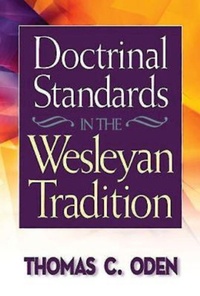
Doctrinal Standards in the Wesleyan Tradition
Description

More details
Other editions
Additional editions
Person
Thomas C. Oden, the retired Henry Anson Buttz Professor of Theology and Ethics, is an ancient ecumenical evangelical with a passion for orthodoxy. For over thirty years he taught at Drew University and came under the influence of his "irascible, endearing Jewish mentor" Will Herberg. Herberg bluntly told Oden that he would remain "densely uneducated" unless he "read deeply in patristic writers." This focus on patristics (the early church fathers) helped professor Oden to realize that modernity is over. As he probed the early church writers for several decades, he incorporated and rechanneled his activism and idealism for the modernist social gospel into a recovery of the classic religious tradition. Scripture found new life in him, which means he repented an enthrallment with progressive social causes in favor of a stable two-thousand year memory, which he defines as orthodoxy.
Content
- Cover
- Half title
- Title
- Copyright
- Contents
- Introduction: Two Hundred Years Later
- Overview
- Why the Debate on Doctrinal Standards Has Reappeared
- Has the Momentum of "Doctrinal Pluralism" Been Reversed?
- The Pivotal Issue
- Part One: The Historical Debate in Contemporary Focus
- 1. The Formation of Wesleyan Standards of Doctrine
- Is There a Distinctive Wesleyan Form of "Doctrinal Standard"?
- "Our Doctrines" and the "Doctrinal Minutes"
- 2. The Transplanting of Standards to America, 1773-1784
- The Pattern Set: First American Conference, 1773
- The Status of the Minutes
- The Subscription of 1781: To Preach the Doctrine of the Sermons, Notes, and Minutes
- Summary of Doctrinal Instructions to 1784
- Articles of Religion Added to Established Doctrinal Standards: The Founding Conference, Christmas, 1784
- Complementarity of the Articles, Homilies, and Prayerbook
- Did the American Conference Become Doctrinally Alienated from Wesley?
- The "Binding Minute": Union Grounded on Connection with Wesley
- The Legal Principle of Non-abrogation and Its Doctrinal Relevance
- 3. The Maintenance of Established Standards of Doctrine, 1785-1808
- The Discipline of 1785
- Doctrinal Changes Disavowed by the Conferences
- The Corresponding British Pattern
- The Deed of Settlement: General Conference of 1796
- The Six Explanatory Tracts Incorporated with the Discipline, 1788-1808
- Entering the Nineteenth Century
- The Discipline of 1805
- 4. The Constitutional Protection of Established Standards: 1808 to the Present
- The Preamble of the General Conference of 1808
- The Construction of the First Restrictive Rule
- The Dual Clauses Point to Two Types of Texts
- The Surveillance of Established Standards
- The First Restrictive Rule Becomes Virtually Unamendable: The Exception of 1832
- Wesley's Continuing Influence
- Doctrinal Union with British Methodism Conspicuously Reaffirmed
- Doctrinal Criteria for Preaching and Trial
- The Extension of Chargeable Offenses to Include "Established Standards"
- Doctrinal Accountability of Church Members
- 5. Continuing Issues of Wesleyan Doctrinal Standards
- I. Can Cultural, Doctrinal, and Theological Pluralism Be Accommodated?
- II. Are Standards Textually Defined?
- III. Appoint Another Doctrinal Commission?
- IV. Why Does the Debate Continue?
- V. Are Standards Enforceable?
- VI. Are They Binding?
- VII. Can Constitutional Protection of the Standards Continue?
- VIII. What If the Standards Are Abandoned or Ignored?
- Conclusions
- Part Two: Doctrinal Documents of the Wesleyan Tradition
- 6. The Textual Core of the Wesleyan Doctrinal Tradition
- I. The Notes As Doctrinal Standards.
- Does the Translation Signal Openness to the Critical Spirit?
- How Do the Notes Function as Doctrinal Standards?
- Extracts from the Notes
- A Selection from the Notes on the Beatitudes.
- II. Wesley's Sermons as Doctrinal Standards.
- Wesley's Preface to the Sermons on Several Occasions
- Sequential Organization of Themes of the Standard Sermons
- Titles and Themes of Wesley's Sermons on Several Occasions
- The Catholic Spirit
- III. The Articles as Doctrinal Standards.
- The Roots of the Twenty-five Articles in the Augsburg Confession
- Early Anglican Sources of the Thirty-nine Articles
- Wesley's Omissions and Amendments
- How the Anglican Tradition of Pastoral Subscription Became Transmuted in the Wesleyan Tradition
- The Nature and Problems of Assent to the Twenty-five Articles
- The Challenge of the Articles Today
- The Systematic Structure of the Twenty-five Articles
- How the Thirty-nine Articles Were Amended to Twenty-five
- 7. Doctrinal Inheritance of the Wesleyan Family of Churches
- I. Toward a Definition of International Pan-Wesleyan Doctrine.
- Defining the Family
- A Chronology of the American Forms of the Wesleyan Family of Churches
- II. Variants of the Articles: Collation and Variants of the Articles of Religion of Representative Wesleyan-rooted Church Bodies
- III. Selected Documents. International Statements of Methodist Doctrinal Standards
- Doctrinal Standards of British Methodism
- The Doctrines of the Salvation Army (1878)
- The Catechism of 1852, No. 1
- Doctrinal Traditions of the Evangelical Church and the United Brethren Church
- Conclusion
- 8. Outline Syllabus of a Course on the Articles of Religion
- Appendix: The Ward Motion
- List of Abbreviations
- Notes
- Bibliography
- Index of Persons
- Index of Subjects
- Scripture Index
