

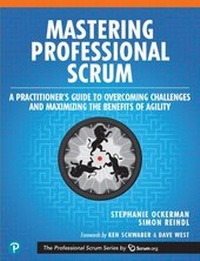
Mastering Professional Scrum
A Practitioner's Guide to Overcoming Challenges and Maximizing the Benefits of Agility
1st Edition
Published on 7. July 2021
224 pages
978-0-13-484161-8 (ISBN)
Description

"Our job as Scrum professionals is to continually improve our ability to use Scrum to deliver products and services that help customers achieve valuable outcomes. This book will help you to improve your ability to apply Scrum."
-From the Foreword by Ken Schwaber, co-author of Scrum Mastering Professional Scrum is for anyone who wants to deliver increased value by using Scrum more effectively. Leading Scrum practitioners Stephanie Ockerman and Simon Reindl draw on years of Scrum training and coaching to help you return to first principles and apply Scrum with the professionalism required to achieve its transformative potential.
The authors aim to help you focus on proven Scrum approaches for improving quality, getting and using fast feedback, and becoming more adaptable, instead of "going through the motions" and settling for only modest improvements.
Whether you're a Scrum Master, Development Team member, or Product Owner, you'll find practical advice for facing challenges with transparency and courage, overcoming a wide array of common challenges, and continually improving your Scrum practice.
Realistically assess your current Scrum practice, and identify areas for improvement
Recognize what a great Scrum Team looks like and get there
Focus on "Done"-not "sort-of-Done" or "almost-Done"
Measure and optimize the value delivered by every Product Increment
Improve the way you plan, develop, and grow
Clear away wider organizational impediments to agility and professionalism
Overcome common misconceptions that stand in the way of progress
Register your book for convenient access to downloads, updates, and/or corrections as they become available. See inside book for details.
-From the Foreword by Ken Schwaber, co-author of Scrum Mastering Professional Scrum is for anyone who wants to deliver increased value by using Scrum more effectively. Leading Scrum practitioners Stephanie Ockerman and Simon Reindl draw on years of Scrum training and coaching to help you return to first principles and apply Scrum with the professionalism required to achieve its transformative potential.
The authors aim to help you focus on proven Scrum approaches for improving quality, getting and using fast feedback, and becoming more adaptable, instead of "going through the motions" and settling for only modest improvements.
Whether you're a Scrum Master, Development Team member, or Product Owner, you'll find practical advice for facing challenges with transparency and courage, overcoming a wide array of common challenges, and continually improving your Scrum practice.
Realistically assess your current Scrum practice, and identify areas for improvement
Recognize what a great Scrum Team looks like and get there
Focus on "Done"-not "sort-of-Done" or "almost-Done"
Measure and optimize the value delivered by every Product Increment
Improve the way you plan, develop, and grow
Clear away wider organizational impediments to agility and professionalism
Overcome common misconceptions that stand in the way of progress
Register your book for convenient access to downloads, updates, and/or corrections as they become available. See inside book for details.
All prices
More details
Series
Edition
1. Auflage
Language
English
Place of publication
Boston
United States
Publishing group
Pearson Education (US)
Target group
Professional and scholarly
File size
3,84 MB
ISBN-13
978-0-13-484161-8 (9780134841618)
Copyright in bibliographic data and cover images is held by Nielsen Book Services Limited or by the publishers or by their respective licensors: all rights reserved.
Schweitzer Classification
Other editions
Additional editions
Stephanie Ockerman | Simon Reindl
Mastering Professional Scrum: A Practitioners Guide to Overcoming Challenges and Maximizing the Benefits of Agility
A Practitioners Guide to Overcoming Challenges and Maximizing the Benefits of Agility
Book
12/2019
1st Edition
Addison Wesley
€31.99
Available immediately
Persons
Stephanie Ockerman has more than a decade of experience in both traditional waterfall and agile delivery approaches and has worked with implementations in leading large-scale technology programs, acting as a Scrum Master, and coaching Scrum Teams and organizations. She is also a certified Project Management Professional (PMP) through PMI and a Co-Active Coach trained by the Coach Training Institute. Stephanie is an active blogger and frequently speaks at agile and leadership conferences around the world.
Simon Reindl is an experienced developer, trainer, coach, and technologist. He has more than 20 years' experience helping organizations in the private and public sectors and all industries adopt new technology and improve the value delivered. He is qualified to lead the full range of Professional Scrum Training courses (PSF, PSD .NET, PSM, PSPO and SPS) as well as coach people at all levels-whether in technical or managerial roles. Simon is a qualified teacher and Certified Agile Coach. He is also an active blogger and speaker at agile and technical conferences around the world.
Simon Reindl is an experienced developer, trainer, coach, and technologist. He has more than 20 years' experience helping organizations in the private and public sectors and all industries adopt new technology and improve the value delivered. He is qualified to lead the full range of Professional Scrum Training courses (PSF, PSD .NET, PSM, PSPO and SPS) as well as coach people at all levels-whether in technical or managerial roles. Simon is a qualified teacher and Certified Agile Coach. He is also an active blogger and speaker at agile and technical conferences around the world.
Content
Foreword by Ken Schwaber xiii
Foreword by Dave West xvii
Introduction xxi
Acknowledgments xxvii
About the Authors xxix
Chapter 1: Continuously Improving Your Scrum Practice 1
Focus on Seven Key Areas to Improve Your Scrum Practice 2
Growing Scrum Requires a Team to Improve Other Capabilities 7
A Process for Continuous Improvement 12
Summary 21
Call to Action 22
Chapter 2: Creating a Strong Team Foundation 23
Forming a Team Identity 23
What Makes a Good Team Member? 24
Who Should Be on a Scrum Team? 27
How Do Scrum Teams Form Working Agreements? 29
What Does Self-Organization Look Like? 31
How Do Scrum Teams Collaborate? 36
How Do Teams Progress? 42
Summary 47
Call to Action 48
Chapter 3: Delivering "Done" Product Increments 49
What Is a Definition of "Done"? 50
Using Sprint Goals to Get to "Done" 55
Getting PBIs to "Done" Earlier in the Sprint 58
Limiting Work Items in Progress 62
Building in Quality from the Beginning 64
Quality Metrics 68
Tackling Technical Debt 70
Summary 74
Call to Action 74
Chapter 4: Improving Value Delivered 77
What Is Value? 77
Delivering Faster Is a Good Start, But Not Enough 78
Product Value and the Scrum Team 80
Using the Product Vision to Enliven Team Purpose, Focus, and Identity 81
Measuring Value 83
Inspecting and Adapting Based on Feedback 90
Summary 92
Call to Action 93
Chapter 5: Improving Planning 95
Planning with a Product Mindset 96
Creating Alignment 100
Product Backlog Refinement 101
Planning a Sprint 107
How Far Ahead to Refine 111
Planning Releases 112
Summary 113
Call to Action 114
Chapter 6: Helping Scrum Teams Develop and Improve 115
Using the Sprint Retrospective to Uncover Areas for Improvement 115
Identifying and Removing Impediments 118
Growing Individual and Team Capabilities 124
Being an Accountable Scrum Master 127
Summary 135
Call to Action 135
Chapter 7: Leveraging the Organization to Improve 137
Organizations Need to Evolve to Succeed 137
Developing People and Teams 138
Getting Comfortable with Transparency 144
A Culture of Accountability, Not a Culture of Blame 145
Letting Go of (the Illusion of) Control 146
The Real Power of the Iron Triangle 146
Funding Initiatives 148
"Being Agile" Is Not the Goal 152
Nail It Before You Scale It 153
Summary 154
Call to Action 154
Chapter 8: Conclusion and What's Next 157
Business Agility Requires Emergent Solutions 157
Call to Action 160
Appendix A: A Self-Assessment for Understanding Where You Are 161
Business Agility 161
Effective Empiricism with Scrum 162
Effective Teamwork with Scrum 167
Analysis of Assessment Answers 168
Appendix B: Common Misconceptions About Scrum 169
Scrum Is Not a Methodology or a Governance Process 169
Index 175
Foreword by Dave West xvii
Introduction xxi
Acknowledgments xxvii
About the Authors xxix
Chapter 1: Continuously Improving Your Scrum Practice 1
Focus on Seven Key Areas to Improve Your Scrum Practice 2
Growing Scrum Requires a Team to Improve Other Capabilities 7
A Process for Continuous Improvement 12
Summary 21
Call to Action 22
Chapter 2: Creating a Strong Team Foundation 23
Forming a Team Identity 23
What Makes a Good Team Member? 24
Who Should Be on a Scrum Team? 27
How Do Scrum Teams Form Working Agreements? 29
What Does Self-Organization Look Like? 31
How Do Scrum Teams Collaborate? 36
How Do Teams Progress? 42
Summary 47
Call to Action 48
Chapter 3: Delivering "Done" Product Increments 49
What Is a Definition of "Done"? 50
Using Sprint Goals to Get to "Done" 55
Getting PBIs to "Done" Earlier in the Sprint 58
Limiting Work Items in Progress 62
Building in Quality from the Beginning 64
Quality Metrics 68
Tackling Technical Debt 70
Summary 74
Call to Action 74
Chapter 4: Improving Value Delivered 77
What Is Value? 77
Delivering Faster Is a Good Start, But Not Enough 78
Product Value and the Scrum Team 80
Using the Product Vision to Enliven Team Purpose, Focus, and Identity 81
Measuring Value 83
Inspecting and Adapting Based on Feedback 90
Summary 92
Call to Action 93
Chapter 5: Improving Planning 95
Planning with a Product Mindset 96
Creating Alignment 100
Product Backlog Refinement 101
Planning a Sprint 107
How Far Ahead to Refine 111
Planning Releases 112
Summary 113
Call to Action 114
Chapter 6: Helping Scrum Teams Develop and Improve 115
Using the Sprint Retrospective to Uncover Areas for Improvement 115
Identifying and Removing Impediments 118
Growing Individual and Team Capabilities 124
Being an Accountable Scrum Master 127
Summary 135
Call to Action 135
Chapter 7: Leveraging the Organization to Improve 137
Organizations Need to Evolve to Succeed 137
Developing People and Teams 138
Getting Comfortable with Transparency 144
A Culture of Accountability, Not a Culture of Blame 145
Letting Go of (the Illusion of) Control 146
The Real Power of the Iron Triangle 146
Funding Initiatives 148
"Being Agile" Is Not the Goal 152
Nail It Before You Scale It 153
Summary 154
Call to Action 154
Chapter 8: Conclusion and What's Next 157
Business Agility Requires Emergent Solutions 157
Call to Action 160
Appendix A: A Self-Assessment for Understanding Where You Are 161
Business Agility 161
Effective Empiricism with Scrum 162
Effective Teamwork with Scrum 167
Analysis of Assessment Answers 168
Appendix B: Common Misconceptions About Scrum 169
Scrum Is Not a Methodology or a Governance Process 169
Index 175
