


The Objectives of Islamic Law
The Promises and Challenges of the Maqasid Al-Shari'A
Lexington Books (Publisher)
1st Edition
Published on 6. July 2020
332 pages
978-1-4985-4994-3 (ISBN)
Description

Scholars, thinkers, and activists around the world are paying increasing attention to a legal reform method that promises to revolutionize the way people think about Islamic law. Known as "The Objectives of the Shari'a" (maqa?id al-shari'a), the theory offers a way to derive and apply new Islamic laws using an ancient methodology. The theory identifies core objectives that underlie Islamic law, and then looks at inherited Islamic laws to see whether they meet those objectives. According to the maqa?id theory, historical Islamic laws that meet their objectives should be retained, and those that do not-no matter how entrenched in practice or embedded in texts-should be discarded or reformed.
Recently, several scholars have questioned the maqa?id theory, arguing that it is designed not to reform laws, but to support existing power structures. They warn that adopting the maqa?id wholesale would set the reform project back, ensuring that inherited Islamic laws are never fully reformed to agree with contemporary values like gender-egalitarianism and universal human rights.
The Objectives of Islamic Law: The Promises and Challenges of the Maqa?id al-Shari'acaptures the ongoing debate between proponents and skeptics of the maqa?id theory. It raises some of the most important issues in Islamic legal debates today, and lays out visions for the future of Islamic law.
Recently, several scholars have questioned the maqa?id theory, arguing that it is designed not to reform laws, but to support existing power structures. They warn that adopting the maqa?id wholesale would set the reform project back, ensuring that inherited Islamic laws are never fully reformed to agree with contemporary values like gender-egalitarianism and universal human rights.
The Objectives of Islamic Law: The Promises and Challenges of the Maqa?id al-Shari'acaptures the ongoing debate between proponents and skeptics of the maqa?id theory. It raises some of the most important issues in Islamic legal debates today, and lays out visions for the future of Islamic law.
More details
Edition
1. Auflage
Language
English
Place of publication
New York
United States
Publishing group
Bloomsbury Publishing Plc
Target group
Professional and scholarly
Illustrations
1 graphs;
ISBN-13
978-1-4985-4994-3 (9781498549943)
Copyright in bibliographic data and cover images is held by Nielsen Book Services Limited or by the publishers or by their respective licensors: all rights reserved.
Schweitzer Classification
Other editions
Additional editions
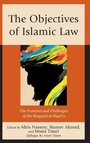
Idris Nassery | Rumee Ahmed | Muna Tatari
The Objectives of Islamic Law
The Promises and Challenges of the Maqasid al-Shari'a
Book
02/2018
Lexington Books
€150.90
Shipment within 15-20 days
Persons
Idris Nassery is postdoctoral fellow in the Institute of Islamic Theology at the University of Paderborn.
Rumee Ahmed is associate dean of arts and associate professor of Islamic law at the University of British Columbia.
Muna Tatari is assistant professor of Islamic systematic theology in the Institute of Islamic Theology at the University of Paderborn.
Rumee Ahmed is associate dean of arts and associate professor of Islamic law at the University of British Columbia.
Muna Tatari is assistant professor of Islamic systematic theology in the Institute of Islamic Theology at the University of Paderborn.
Content
Editor's Introduction
Part I: Promises
1. Goals and Purposes Maqa?id al-Shari?ah: Methodological Perspectives
Mohammad Hashim Kamali
2. Realising Maqa?id in the Shari?ah
Jasser Auda
3. Freedom of Religion in the Age of Multi-Religious Societies with Special Reference to Maqa?id al-Shari?ah
Muhammad Khalid Masud
4. The Inviolability of Human Dignity: A Maqa?idi Perspective
Idris Nassery
5. Qur'an, Sunnah, Maqa?id and the Religious Other: The Ideas of Mu?ammad Sha?rur
Adis Duderija
6. Ibn ?A¯shu¯r's Interpretation of the Purposes of the Law (Maqa¯s?id al-Shari¯?ah): An Islamic Modernist Approach to Legal Change
Felicitas Opwis
7. Maqa?id al-Shari?ah in Islamic Contracts: A Study of Current Practices of Islamic Finance in Light of Islamic Legal Maxims
Younes Soualhi
Part II: Challenges
8. Reason and Revelation: A Meaningful Contribution to Contemporary Ethical Debates in a Secular Context
Muna Tatari
9. The Hermeneutical Approach of Sha?ibi on the Basis of the Maqa?id Definition of
Part I: Promises
1. Goals and Purposes Maqa?id al-Shari?ah: Methodological Perspectives
Mohammad Hashim Kamali
2. Realising Maqa?id in the Shari?ah
Jasser Auda
3. Freedom of Religion in the Age of Multi-Religious Societies with Special Reference to Maqa?id al-Shari?ah
Muhammad Khalid Masud
4. The Inviolability of Human Dignity: A Maqa?idi Perspective
Idris Nassery
5. Qur'an, Sunnah, Maqa?id and the Religious Other: The Ideas of Mu?ammad Sha?rur
Adis Duderija
6. Ibn ?A¯shu¯r's Interpretation of the Purposes of the Law (Maqa¯s?id al-Shari¯?ah): An Islamic Modernist Approach to Legal Change
Felicitas Opwis
7. Maqa?id al-Shari?ah in Islamic Contracts: A Study of Current Practices of Islamic Finance in Light of Islamic Legal Maxims
Younes Soualhi
Part II: Challenges
8. Reason and Revelation: A Meaningful Contribution to Contemporary Ethical Debates in a Secular Context
Muna Tatari
9. The Hermeneutical Approach of Sha?ibi on the Basis of the Maqa?id Definition of
