

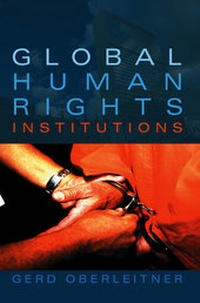
Global Human Rights Institutions
Published on 29. April 2013
248 pages
978-0-7456-7341-7 (ISBN)
Description

The range of global human rights institutions which have beencreated over the past half century is a remarkable achievement.Yet, their establishment and proliferation raises importantquestions. Why do states create such institutions and what do theywant them to achieve? Does this differ from what the institutionsthemselves seek to accomplish? Are global human rights institutionseffective remedies for violations of human dignity or temples forthe performance of stale bureaucratic rituals? What happens tohuman rights when they are being framed in global institutions?
This book is an introduction to global human rights institutionsand to the challenges and paradoxes of institutionalizing humanrights. Drawing on international legal scholarship andinternational relations literature, it examines UN institutionswith a human rights mandate, the process of mainstreaming humanrights, international courts which adjudicate human rights, andnon-governmental human rights organizations.
In mapping the ever more complex network of global human rightsinstitutions it asks what these institutions are and what they arefor. It critically assesses and appraises the ways in which globalinstitutions bureaucratize human rights, and reflects on how thisprocess is changing our perception of human rights.
This book is an introduction to global human rights institutionsand to the challenges and paradoxes of institutionalizing humanrights. Drawing on international legal scholarship andinternational relations literature, it examines UN institutionswith a human rights mandate, the process of mainstreaming humanrights, international courts which adjudicate human rights, andnon-governmental human rights organizations.
In mapping the ever more complex network of global human rightsinstitutions it asks what these institutions are and what they arefor. It critically assesses and appraises the ways in which globalinstitutions bureaucratize human rights, and reflects on how thisprocess is changing our perception of human rights.
More details
Other editions
Additional editions
Book
10/2007
Polity Press
€70.50
Shipment within 15-20 days
Book
10/2007
Polity Press
€25.50
Shipment within 15-20 days
Person
Gerd Oberleitner is Director of the European Training and Research Centre for Human Rights and Democracy at the University of Graz.
Content
Preface by Conor Gearty.
Acknowledgements.
Abbreviations.
1 Introduction.
2 Institutionalizing human rights: expectations, paradoxes,and consequences.
Efficiency, legitimacy, power.
Arena, instrument, actor.
Autonomy and dependence.
Form and function.
Bureaucracy: authority and alienation.
Predominance of law.
Exclusion and inclusion.
Guarding the guards.
Remedy and ritual.
3 The rise of global human rights institutions.
A timeline.
A typology.
Functions, activities, and expectations.
4 United Nations human rights institutions.
Commission on Human Rights.
'Politicisation': membership and selectivity.
Standard setting.
Advisory services and technical cooperation.
Response to human rights violations: 1235 and 1503.
Special procedures.
The Commission 1946-2006: achievements and legacy.
Human Rights Council.
Membership.
Mandate.
First steps.
Sub-Commission on the Promotion and Protection of HumanRights.
Membership, mandate, and activities.
Hierarchy, expertise, and politics.
Prospects.
Commission on the Status of Women.
Economic and Social Council.
General Assembly.
A 'grand debate' on human rights?.
Leadership, budget, standards, scrutiny.
Third Committee.
Achievements.
United Nations High Commissioner for Human Rights.
A mandate between servant and shield.
From headquarters to the field.
Treaty bodies.
State reports.
Inter-state complaints.
Individual complaints.
Inquiries.
General Comments.
Achievements.
5 Mainstreaming human rights.
From mandate to mainstreaming.
International Labour Organisation.
United Nations Development Programme.
United Nations Children's Fund.
United Nations Educational, Scientific and CulturalOrganisation.
United Nations High Commissioner for Refugees.
United Nations Human Settlements Programme.
World Health Organisation.
Food and Agricultural Organisation.
World Bank and International Monetary Fund.
World Trade Organisation.
Challenges ahead in mainstreaming human rights.
United Nations Security Council.
Safeguarding international peace and security.
Genocide, the responsibility to protect, and human security.
Peace operations.
Democratic legitimacy.
International humanitarian law and civilians in armedconflict.
Criminal justice for human rights violations.
Cooperation, transparency, and the role of NGOs.
Prospects.
6 World courts and human rights.
International Court of Justice.
International Criminal Court.
Towards a world court of human rights?.
7 Non-governmental organisations .
Independence between law and politics.
Consultation, co-operation, compensation, competition.
Functions.
Information, definition, mobilisation.
Agenda-setting, norm-making, and policy development.
Accompanying implementation.
Advocacy, education, and operation.
Legitimacy.
Challenges.
8 Conclusion .
References.
Index
Acknowledgements.
Abbreviations.
1 Introduction.
2 Institutionalizing human rights: expectations, paradoxes,and consequences.
Efficiency, legitimacy, power.
Arena, instrument, actor.
Autonomy and dependence.
Form and function.
Bureaucracy: authority and alienation.
Predominance of law.
Exclusion and inclusion.
Guarding the guards.
Remedy and ritual.
3 The rise of global human rights institutions.
A timeline.
A typology.
Functions, activities, and expectations.
4 United Nations human rights institutions.
Commission on Human Rights.
'Politicisation': membership and selectivity.
Standard setting.
Advisory services and technical cooperation.
Response to human rights violations: 1235 and 1503.
Special procedures.
The Commission 1946-2006: achievements and legacy.
Human Rights Council.
Membership.
Mandate.
First steps.
Sub-Commission on the Promotion and Protection of HumanRights.
Membership, mandate, and activities.
Hierarchy, expertise, and politics.
Prospects.
Commission on the Status of Women.
Economic and Social Council.
General Assembly.
A 'grand debate' on human rights?.
Leadership, budget, standards, scrutiny.
Third Committee.
Achievements.
United Nations High Commissioner for Human Rights.
A mandate between servant and shield.
From headquarters to the field.
Treaty bodies.
State reports.
Inter-state complaints.
Individual complaints.
Inquiries.
General Comments.
Achievements.
5 Mainstreaming human rights.
From mandate to mainstreaming.
International Labour Organisation.
United Nations Development Programme.
United Nations Children's Fund.
United Nations Educational, Scientific and CulturalOrganisation.
United Nations High Commissioner for Refugees.
United Nations Human Settlements Programme.
World Health Organisation.
Food and Agricultural Organisation.
World Bank and International Monetary Fund.
World Trade Organisation.
Challenges ahead in mainstreaming human rights.
United Nations Security Council.
Safeguarding international peace and security.
Genocide, the responsibility to protect, and human security.
Peace operations.
Democratic legitimacy.
International humanitarian law and civilians in armedconflict.
Criminal justice for human rights violations.
Cooperation, transparency, and the role of NGOs.
Prospects.
6 World courts and human rights.
International Court of Justice.
International Criminal Court.
Towards a world court of human rights?.
7 Non-governmental organisations .
Independence between law and politics.
Consultation, co-operation, compensation, competition.
Functions.
Information, definition, mobilisation.
Agenda-setting, norm-making, and policy development.
Accompanying implementation.
Advocacy, education, and operation.
Legitimacy.
Challenges.
8 Conclusion .
References.
Index
