

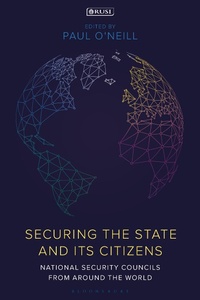
Securing the State and its Citizens
National Security Councils from Around the World
1st Edition
Published on 2. June 2022
264 pages
978-0-7556-4202-1 (ISBN)
Description

The global security situation is challenging and constantly changing. Responding to threats requires the effective coordination of the various levers of national power. These must now go beyond the traditional diplomatic, information, military and economic levers, to involve other, non-security agencies, including those responsible for the environment, health, education and industry.
Through a uniquely extensive study of countries from across the world, this book considers how nations have developed bespoke coordination mechanisms to the unique threats they face, and how these mechanisms have had to evolve as the threats change. It covers nations for whom the system is well established (e.g. the US in 1947) and other countries whose arrangements are more recent, such as the UK (2010). Where the National Security Councils have existed for longest, the case studies highlight how they have transformed as the national understanding of security has changed, typically to reflect a broadening. Consequently, while there are no universal solutions, the comparative approach taken in this book identifies enduring principles for shaping the creation or reform of national security coordination fit for the challenges of the twenty-first century.
Through a uniquely extensive study of countries from across the world, this book considers how nations have developed bespoke coordination mechanisms to the unique threats they face, and how these mechanisms have had to evolve as the threats change. It covers nations for whom the system is well established (e.g. the US in 1947) and other countries whose arrangements are more recent, such as the UK (2010). Where the National Security Councils have existed for longest, the case studies highlight how they have transformed as the national understanding of security has changed, typically to reflect a broadening. Consequently, while there are no universal solutions, the comparative approach taken in this book identifies enduring principles for shaping the creation or reform of national security coordination fit for the challenges of the twenty-first century.
Reviews / Votes
It is an excellent idea to review the different approaches countries have taken in building their security organisations. I regret that this sort of book was not around when we were designing New Zealand's system. Where we had largely to rely on our own circumstances, we can now compare and learn from the wider experience of many others from across the world * Gerald Hensley, first Co-ordinator of New Zealand Domestic and External Security (1987-1989) * A timely and much-needed comprehensive study of national security structures building upon the experiences of different countries, political systems and strategic cultures. An invaluable reference for academicians, political analysts, foreign policy experts and practitioners working in the field. * Dr Yevgeniya Gaber, Foreign Policy Advisor to the Prime Minister of Ukraine *More details
Edition
1. Auflage
Language
English
Place of publication
London
United Kingdom
Publishing group
Bloomsbury Publishing PLC
Target group
Professional and scholarly
ISBN-13
978-0-7556-4202-1 (9780755642021)
Copyright in bibliographic data and cover images is held by Nielsen Book Services Limited or by the publishers or by their respective licensors: all rights reserved.
Schweitzer Classification
Other editions
Additional editions
Book
06/2022
Bloomsbury Publishing PLC
€48.46
Shipment within 10-20 days
Person
Paul O'Neill is a Senior Research Fellow in Military Sciences at RUSI with research interests in organisational aspects of security and defence. He was previously a senior Royal Air Force officer working in strategy and human resources roles across Defence including in Whitehall.
Content
Foreword by Lord Mark Sedwill
Introduction (Paul O'Neill)
1. National security structures in Africa (Ann M. Fitz-Gerald)
2. Argentina and the long quest for a National Security Council
(Martin Verrier)
3. National security in Canada (Hugh Segal and Ann M. Fitz-Gerald)
4. Colombia's National Security Council and the fluid architecture for presidential counselling (Oscar Palma)
5. Centralized decision-making in France: The non-permanent Defence and National Security Council (Patrick Chevallereau)
6. A National Security Council: Georgia's historic challenge to get it right (Natia Seskuria)
7. Ghana's National Security Council: Negotiating institutional and political decision-making processes
(Kwesi Aning and Naila Salihu)
8. India's National Security Council: Addressing a strategic gap (Aaditya Dave)
9. Iraq's National Security Council: From Repression to Inclusive Security (Manuel Almeida and Aram Habeeb)
10. Israel's National Security Staff comes of age (Charles (Chuck) Freilich)
11. Japan's National Security Council since 2013: The Abe and Suga administrations (Yasuhiro Matsuda)
12. Kenya's National Security Council: Balancing democratic control and executive power (Singo S. Mwachofi)
13. New Zealand: Small but integrated (Jim Rolfe)
14. Disjointed security: Assessing Norway's national security sector
(Anders Romarheim)
15. South Africa: In search of both security and process (Abel Esterhuyse)
16. The National Security and Defence Council of Ukraine: Responding to state aggression (Hanna Shelest)
17. The British National Security Council: It takes a village (Catarina Thomson)
18. Washington's 'Keepers of the Keys' (Frank Hoffman)
19. Case study analysis (Paul O'Neill)
20. The orchestration of National Security Systems: The NSC as conductor (Paul O'Neill)
Afterword
Author biographies
Selected Further Reading
Endorsements
Index
Introduction (Paul O'Neill)
1. National security structures in Africa (Ann M. Fitz-Gerald)
2. Argentina and the long quest for a National Security Council
(Martin Verrier)
3. National security in Canada (Hugh Segal and Ann M. Fitz-Gerald)
4. Colombia's National Security Council and the fluid architecture for presidential counselling (Oscar Palma)
5. Centralized decision-making in France: The non-permanent Defence and National Security Council (Patrick Chevallereau)
6. A National Security Council: Georgia's historic challenge to get it right (Natia Seskuria)
7. Ghana's National Security Council: Negotiating institutional and political decision-making processes
(Kwesi Aning and Naila Salihu)
8. India's National Security Council: Addressing a strategic gap (Aaditya Dave)
9. Iraq's National Security Council: From Repression to Inclusive Security (Manuel Almeida and Aram Habeeb)
10. Israel's National Security Staff comes of age (Charles (Chuck) Freilich)
11. Japan's National Security Council since 2013: The Abe and Suga administrations (Yasuhiro Matsuda)
12. Kenya's National Security Council: Balancing democratic control and executive power (Singo S. Mwachofi)
13. New Zealand: Small but integrated (Jim Rolfe)
14. Disjointed security: Assessing Norway's national security sector
(Anders Romarheim)
15. South Africa: In search of both security and process (Abel Esterhuyse)
16. The National Security and Defence Council of Ukraine: Responding to state aggression (Hanna Shelest)
17. The British National Security Council: It takes a village (Catarina Thomson)
18. Washington's 'Keepers of the Keys' (Frank Hoffman)
19. Case study analysis (Paul O'Neill)
20. The orchestration of National Security Systems: The NSC as conductor (Paul O'Neill)
Afterword
Author biographies
Selected Further Reading
Endorsements
Index
