

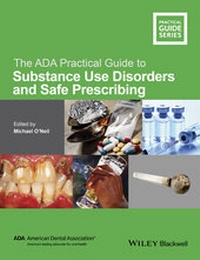
The ADA Practical Guide to Substance Use Disorders and Safe Prescribing
Description

More details
Other editions
Additional editions
Person
Content
1
Substance Use Disorders, Drug Diversion, and Pain Management: The Scope of the Problem
Michael O'Neil, PHARMD
Introduction
The practice of dentistry has become increasingly complicated by multiple factors, including increasing numbers of patients with substance use disorder (SUD), patients receiving chronic pain medications, and prescription drug-related crime (see Box 1.1). In January 2012, the Centers for Disease Control (CDC) announced that the USA is experiencing an epidemic of prescription drug-related overdoses with the majority of these involving prescription opioids.1 Findings from the 2011 National Health and Aging Trends Study reported bothersome pain afflicts half of the community-dwelling US older adult population and is associated with significant reduction in physical function, particularly in those with multisite pain.2 National Survey on Drug Use and Health (NSDUH) 2012 data indicate that 6.8 million people aged 12 or older are current nonmedical users of psychotherapeutic drugs and that 4.9 million of these were users of pain relievers.3 The NSDUH 2012 data also indicate that the rate of current illicit drug (e.g., cocaine, marijuana, inhalants) use among persons aged 12 or older was 9.2%. In 2012, the NSDUH survey revealed an estimated 22.2 million persons aged 12 or older were classified as having an SUD in the past year (8.5% of the population aged 12 or older). Other results from this survey are include 2.8 million people were classified as having an SUD of both alcohol and illicit drugs, 4.5 million had an SUD associated with illicit drugs but not alcohol, and 14.9 million an SUD associated with alcohol but not illicit drugs. Overall, 17.7 million had an SUD associated with alcohol and 7.3 million had an SUD associated with illicit drugs.3
Box 1.1 Factors Complicating the Practice of General Dentistry
- Chronic pain management.
- Misuse of prescription medication.
- SUD associated with prescription medications.
- SUD associated with illicit substances.
- SUD associated with alcohol.
- Psychiatric disorders (diagnosed and undiagnosed).
- Opioid maintenance treatment programs (methadone, buprenorphine).
- Aging population.
- Polypharmacy (use of multiple medications to treat the same condition).
- Patient criminal activity.
The extent of the overlap of pain management, SUD, prescription drug misuse, and drug diversion in the same patient has not been well defined. However, patients commonly present with more than one of these clinical and ethical challenges at any given office visit or hospital admission. Individual motivations and behaviors leading to the abuse, misuse, and diversion of prescription drugs, illicit drugs, and alcohol vary significantly. This chapter will provide an overview of SUD, prescription drug misuse, drug diversion, pain management, and cultural considerations in patients involved in these activities. Key terminology used throughout this book is also defined.
Definitions
Acute Pain
Acute pain comes on quickly, can be moderate to severe in intensity, and generally lasts a short period of time (e.g., from days up to 3 months). Acute pain is considered a beneficial process, warning of potential harm to the body from injury or medical conditions. Acute pain is most commonly nociceptive, modulated by mediators such as prostaglandins, substance P, and histamines, or neuropathic, characterized by alterations in the transmission pathways of nerves.
Addiction
Addiction is a primary chronic disease of brain reward, motivation, memory, judgment, and related circuitry. Dysfunction in these circuits leads to characteristic biological, psychological, social, and spiritual manifestations that frequently result in destructive and life-threatening behaviors.4 Addiction is influenced by multiple factors, including, but not limited to, genetics, environment, sociology, physiology, and individual behaviors.
Addiction is characterized by the inability to consistently abstain, impairment in behavioral control, craving, diminished recognition of significant problems in behavior and interpersonal relationships, and a dysfunctional emotional response. Like other chronic diseases, addiction often involves cycles of relapse and remission. Without treatment or engagement in recovery activities, addiction is progressive and can result in disability or premature death.4
Chronic Pain
Chronic pain generally refers to intractable pain that exists for 3 months or more and does not resolve in response to treatment. Some conditions may become chronic in as little as 1 month. Chronic pain may be continuous or reoccurring, persisting for months or even a lifetime. While the exact duration and characteristics of acute and chronic pain may overlap considerably depending on a patient's medical condition, dental practitioners should recognize that specific timelines for the diagnosis of acute versus chronic pain may be integrated into federal and state legislation and into state board regulations to promote safe pain management practices and safe medication prescribing guidelines.
Drug Diversion
Drug diversion may be defined as the intentional transfer of a substance, or possession of a substance, or alteration of legitimate medication orders outside the boundaries designated by the Food and Drug Administration, federal Drug Enforcement Administration (DEA), or state regulatory board. Drug diversion may involve prescription or over-the counter (OTC) medications or illicit substances. These illegal activities are usually motivated by financial incentives, SUD behaviors, or other activities, such as sharing medications with the intent to help. Examples include a patient selling or giving their prescription medication to someone else, altering the original information on a prescription without the prescriber's consent, or theft of medications.
Drug Misuse
Drug misuse may be defined as taking a prescribed or OTC medication for nonprescribed purposes, in excessive doses, shorter intervals than prescribed or recommended, or for reasons other than the original intent of the prescription. Examples include doubling the dosage, shortening dosing intervals, or treating disorders for which the medication was not prescribed.
Opiates and Opioids
Opiates refer to natural substances derived from the poppy plant. Opioids function in a similar manner to opiates but are either synthetic or partially synthetic derivatives of opiates. For the purpose of this text, the term opioid will be used interchangeably for opiate.
Prescriber-Patient Mismatch
Prescriber-patient mismatch is defined as the inconsistency in treatment goals or expectations of treatment between the prescriber and the patient. Examples include analgesia, sedation, or anxiolysis.
Substance Abuse
Substance Abuse is a maladaptive pattern of chemical use (e.g. alcohol, medications, marijuana, cocaine, solvents, etc.) leading to clinically significant impairment or distress, as manifested by one (or more) of the following, occurring within a 12-month period:
- Recurrent chemical use resulting in a failure to fulfill major role obligations at work, school, or home
- Recurrent chemical use in situations in which it is physically hazardous
- Recurrent chemically-related legal problems
- Continued chemical use despite having persistent or recurrent social or interpersonal problems caused by or exacerbated by the effects of the chemical
The substance abuse culture consists of individuals whose sole intent is to alter in any number of ways their mood, psychological sense of well-being, physical sense of well-being, or their personal connection with the world around them.5
Substance Dependence
Substance dependence may be defined as persistent use of alcohol, other drugs, or chemicals despite having problems related to use of the substance. It is a maladaptive pattern of chemical use, leading to clinically significant impairment or distress, as manifested by three (or more) of the following, occurring within a 12-month period:
- Tolerance, as defined by either of the following:
- - a need for significantly increased amounts of the substance to achieve intoxication or desired effect;
- - significantly diminished effect with continued use of the same amount of the substance.
- Withdrawal, as manifested by either of the following:
- - the characteristic withdrawal symptom for the substance (see Chapter 2);
- - the same (or a closely related) substance is taken to relieve or avoid withdrawal symptoms.
- The substance is often taken in larger amounts or over a longer period than was intended.
- There is a persistent desire or unsuccessful efforts to cut down or control substance use.
- A great deal of time is spent in activities necessary to obtain the substance, use the substance, or recover from its effects.
- Important social, occupational, or recreational activities are given up or reduced because of substance use.
- The substance use is continued despite knowledge of having a persistent or recurrent physical or psychological problem that is likely to have been caused or exacerbated by the...
