

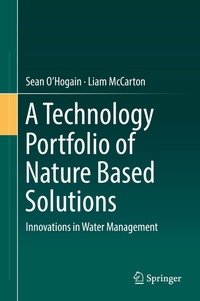
A Technology Portfolio of Nature Based Solutions
Description

This book aims to define the concept of Nature Based Solutions (NBS) by using case studies from members of the European Innovation Partnership (EIP) Water Action Group - NatureWat. NBS is defined and characterized in terms of water source, contaminants, removal mechanisms and resource recovery potential. The case studies presented illustrate the appropriateness of NBS promoting climate resilience. Readers will discover a technology portfolio based on a number of demonstration sites in the fields of climate change adaption, water and wastewater treatment, resource recovery and re-use, and restoring ecosystems to promote the use of nature based solutions. The chapters in the book present a multidisciplinary approach involving social scientists, governance representatives and engineers.
The underlying philosophy of the book is the circular economy of water which prioritizes the concepts of resource recovery and resilience within water resource management. The first section of the book presents the background and objectives of the study, and how the action group aims to promote the use of nature based solutions through its diverse technology portfolio. Particular attention is given to the goals of finding cost-effective solutions for wastewater treatment, climate change mitigation, disaster risk reduction, flood protection, greening cities, degraded areas restoration and biodiversity preservation. The chapter on reclaimed water addresses water reuse and defines the term fit for purpose. Barriers and limitations related to NBS for water resource management are discussed. The book concludes with several case studies at local, regional and global levels which illustrate a new approach to water management. These case studies illustrate the application of a hybrid green and grey infrastructure system. This is a combination of traditional engineered infrastructure with nature based solutions which combines centralised and decentralised systems to optimise the reclamation of water for reuse in a fit for purpose model.
More details
Other editions
Additional editions
Persons
Dr. O'Hogain is a lecturer in the School of Civil & Structural Engineering at Dublin Institute of Technology , specialising in water and wastewater analysis. His research topics have included Reed beds, Rainwater Harvesting and International Development, and he has conducted research projects in Ireland, Latin America and Africa.
Dr. Liam McCarton is a lecturer in the School of Civil & Structural Engineering at Dublin Institute of Technology. He is Director of Engineers Without Borders, Ireland. He is experienced with over twenty five years of lecturing, international development program management, environmental engineering design and commissioning of water and sanitation, and education and health infrastructure projects.
