

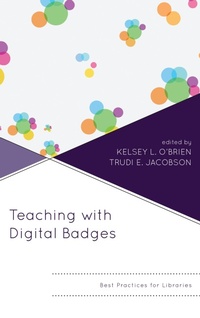
Teaching with Digital Badges
Best Practices for Libraries
1st Edition
Published on 15. September 2018
246 pages
979-8-216-24497-4 (ISBN)
Description

Digital Badges are gaining traction in the education landscape, and librarians have been some of the leading pioneers at the forefront of this exciting new frontier. This book provides examples of how badges are being used to enhance and invigorate the teaching and assessment of information literacy. Chapters provide inspiration for teaching librarians interested in:
Providing an engaging experience for their students Gaining insight into this growing innovative technology trendDiscovering how librarians are using badges to enhance their teachingForming meaningful collaborations with faculty and teachersDeveloping knowledge about badge system design and badging platformsLearning how badges can motivate, support, and celebrate learning achievementsLaunching a badging project
The book is divided into two sections. The first section explores the environment in which badges are being developed, in particular situating them within the current educational setting, and provides guidelines on how best to create a badging program. The second section details contributing authors' firsthand experiences creating, implementing, and refining digital badges and digital badging systems, in some cases collaborating with teachers and faculty. These chapters provide a wealth of ideas about using digital badges in academic and school libraries to engage and motivate students.
Providing an engaging experience for their students Gaining insight into this growing innovative technology trendDiscovering how librarians are using badges to enhance their teachingForming meaningful collaborations with faculty and teachersDeveloping knowledge about badge system design and badging platformsLearning how badges can motivate, support, and celebrate learning achievementsLaunching a badging project
The book is divided into two sections. The first section explores the environment in which badges are being developed, in particular situating them within the current educational setting, and provides guidelines on how best to create a badging program. The second section details contributing authors' firsthand experiences creating, implementing, and refining digital badges and digital badging systems, in some cases collaborating with teachers and faculty. These chapters provide a wealth of ideas about using digital badges in academic and school libraries to engage and motivate students.
More details
Series
Edition
1. Auflage
Language
English
Place of publication
United States
Publishing group
Bloomsbury Publishing Plc
Illustrations
7 b/w photos; 13 tables; 1 textbox
ISBN-13
979-8-216-24497-4 (9798216244974)
Copyright in bibliographic data and cover images is held by Nielsen Book Services Limited or by the publishers or by their respective licensors: all rights reserved.
Schweitzer Classification
Other editions
Additional editions
Book
09/2018
Rowman & Littlefield Publishers
€64.30
Shipment within 3-4 weeks
Persons
Kelsey O'Brien is an Information Literacy Librarian at the University at Albany, SUNY. She has been involved with digital badges for the past several years, beginning in 2013 when she first started working on the Metaliteracy Badging System. Since then she has played a central role in its design and implementation, and enthusiastically follows the latest badge-related literature and trends. Kelsey is incoming co-convener of ACRL's Digital Badges Interest Group and an active member of SUNY's FACT2 Micro-credentialing Task Force. She has presented extensively on badges at her home institution and at national (ALA, LOEX) and international conferences (LILAC), and has also co-taught two metaliteracy MOOCs, one of which incorporated digital badges. Prior to her role as an academic librarian, Kelsey has worked as a high school Library Media Specialist and a Youth Services Librarian. She serves as the liaison for the Writing and Critical Inquiry program at the University at Albany, a required course for first year students, and enjoys helping students transition from high school to college research. Kelsey can be contacted at klobrien@albany.edu or via Twitter at @KelseyMoak.
Trudi Jacobson is the Head of the Information Literacy Department at the University at Albany, and holds the rank of Distinguished Librarian. She has been deeply involved with information literacy throughout her career, and thrives on finding new and engaging ways to teach students, both within courses and through less formal means. She has worked closely with Thomas Mackey for many years. Together, they originated the metaliteracy framework to emphasize the metacognitive learner as producer and participant in dynamic information environments. They co-authored the first article to define this model with Reframing Information Literacy as a Metaliteracy (C & RL, 2011) and followed that piece with their book Metaliteracy: Reinventing Information Literacy to Empower Learners (Neal-Schuman, 2014). They co-authored the essay "Proposing a Metaliteracy Model to Redefine Information Literacy" (2013) and co-edited their most recent book for ALA/Neal-Schuman entitled Metaliteracy in Practice (2016). She has also written extensively on other topics. She co-chaired the Association of College & Research Libraries Task Force that created the Information Literacy Framework for Higher Education. Trudi is a member of the Editorial Board of Communications in Information Literacy. She freelances as the acquisitions editor for Rowman & Littlefield's Innovations in Information Literacy series. Trudi was the 2009 recipient of the Miriam Dudley Instruction Librarian Award. You can contact her at tjacobson@albany.edu
Trudi Jacobson is the Head of the Information Literacy Department at the University at Albany, and holds the rank of Distinguished Librarian. She has been deeply involved with information literacy throughout her career, and thrives on finding new and engaging ways to teach students, both within courses and through less formal means. She has worked closely with Thomas Mackey for many years. Together, they originated the metaliteracy framework to emphasize the metacognitive learner as producer and participant in dynamic information environments. They co-authored the first article to define this model with Reframing Information Literacy as a Metaliteracy (C & RL, 2011) and followed that piece with their book Metaliteracy: Reinventing Information Literacy to Empower Learners (Neal-Schuman, 2014). They co-authored the essay "Proposing a Metaliteracy Model to Redefine Information Literacy" (2013) and co-edited their most recent book for ALA/Neal-Schuman entitled Metaliteracy in Practice (2016). She has also written extensively on other topics. She co-chaired the Association of College & Research Libraries Task Force that created the Information Literacy Framework for Higher Education. Trudi is a member of the Editorial Board of Communications in Information Literacy. She freelances as the acquisitions editor for Rowman & Littlefield's Innovations in Information Literacy series. Trudi was the 2009 recipient of the Miriam Dudley Instruction Librarian Award. You can contact her at tjacobson@albany.edu
Content
List of Figures and Tables
Foreword
Preface
Acknowledgements
Part I: The Badging Environment
Chapter 1: Overview of Micro-Credentialing
Cinthya Ippoliti
Chapter 2: Forces of Change for Higher Education: Opening Gates for Digital Badging
Trudi E. Jacobson
Chapter 3: Addressing Stakeholder Needs to Establish Meaningful Digital Badging in Higher Education
Laureen P. Cantwell and Kristyn K. Rose
Chapter 4: Digital Badges in Schools
Amanda Rose Fuller
Chapter 5: Badges Can Do That: Ideas for Using Badges to Enhance Information Literacy Instruction
Allison Hosier
Chapter 6: Badging Best Practices
Kelsey L. O'Brien
Part II: Badging and Information Literacy: Case Studies
Chapter 7: Pollak Library Spark Tutorials
J. Lindsay O'Neill
Chapter 8: Competency-Based Education, Badging, and the Library
Michael Fosmire and Amy S. Van Epps
Chapter 9: Hot Neoliberal Commodities or Tools for Empowerment? A Badges Case Study and Conversation
Emily Ford, Jost Lottes, Betty Izumi, and Dawn Richardson
Chapter 10: Badging and Workplace Information Literacy: Helping Students Prepare for the Professional World
Megan Blauvelt Heuer
Chapter 11: Failing Better: Scaffolding Learning with the Metaliteracy Badging System
Kelsey L. O'Brien
About the Editors and Contributors
Index
Foreword
Preface
Acknowledgements
Part I: The Badging Environment
Chapter 1: Overview of Micro-Credentialing
Cinthya Ippoliti
Chapter 2: Forces of Change for Higher Education: Opening Gates for Digital Badging
Trudi E. Jacobson
Chapter 3: Addressing Stakeholder Needs to Establish Meaningful Digital Badging in Higher Education
Laureen P. Cantwell and Kristyn K. Rose
Chapter 4: Digital Badges in Schools
Amanda Rose Fuller
Chapter 5: Badges Can Do That: Ideas for Using Badges to Enhance Information Literacy Instruction
Allison Hosier
Chapter 6: Badging Best Practices
Kelsey L. O'Brien
Part II: Badging and Information Literacy: Case Studies
Chapter 7: Pollak Library Spark Tutorials
J. Lindsay O'Neill
Chapter 8: Competency-Based Education, Badging, and the Library
Michael Fosmire and Amy S. Van Epps
Chapter 9: Hot Neoliberal Commodities or Tools for Empowerment? A Badges Case Study and Conversation
Emily Ford, Jost Lottes, Betty Izumi, and Dawn Richardson
Chapter 10: Badging and Workplace Information Literacy: Helping Students Prepare for the Professional World
Megan Blauvelt Heuer
Chapter 11: Failing Better: Scaffolding Learning with the Metaliteracy Badging System
Kelsey L. O'Brien
About the Editors and Contributors
Index
