

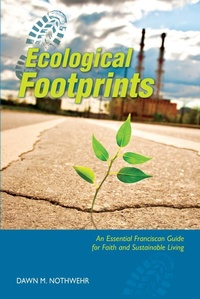
Ecological Footprints
An Essential Franciscan Guide for Faith and Sustainable Living
Published on 1. November 2012
368 pages
978-0-8146-3957-3 (ISBN)
Description

The Franciscan Vision offers a powerful antidote to the moral malaise that prevents ordinary Christians from making the necessary choices to live more simply and share the world's goods more equitably. This is the driving conviction behind Ecological Footprints. Dawn M. Nothwehr unfolds the theological, spiritual, and ethical treasure trove of Christianity-especially as it has been developed and lived in Franciscan theology and tradition-as it relates to our efforts to achieve sustainable living. She succeeds admirably in presenting it all in a style that makes this book both accessible and compelling to no specialist readers.
More details
Other editions
Additional editions
Dawn M. Nothwehr
Ecological Footprints
An Essential Franciscan Guide for Faith and Sustainable Living
Book
11/2012
Liturgical Press
€52.23
Shipment within 10-20 days
Person
Dawn M. Nothwehr, OSF
Content
- Intro
- Title Page
- Copyright
- Contents
- Preface
- Acknowledgments
- Part 1: The Bible: Creation and the Word
- Chapter 1: "In the Beginning.": The Hebrew Testament on Creation and Redemption
- Introduction: St. Francis and St. Clare and the Scriptures
- The Unity of the Stories of Creation and Redemption
- Creation and Redemption in Genesis 1-11
- Creation and Redemption beyond Genesis
- Gleanings from Hebrew Testament Texts
- From the Writings of St. Francis
- Reflection and Application
- Questions for Reflection and Discussion
- Suggestions for Action
- Prayer
- Sources for Further Study
- Chapter 2: Toward a New Creation: The Christian Testament on Creation and Redemption
- Introduction: God So Loved the World
- Our Rich Heritage
- Linking Original Creation and New Creation
- Creation and New Creation: Insights from an Evolutionary Worldview
- Reign of God-New Creation-Emergence
- St. Bonaventure's Dynamic Trinity and Doctrine of Creation: A Hope-Filled Vision
- From the Writings of St. Francis
- Reflection and Application
- Questions for Reflection and Discussion
- Suggestions for Action
- Prayer
- Sources for Further Study
- Part 2: St. Francis and St. Clare: Models of Faith and Sustainable Living
- Chapter 3: A Word from Lady Clare of Assisi on Sustainable Living
- Introduction: Why Consider St. Clare?
- Clare's Community-Minded Living
- Lady Clare's Lessons for Sustainable Living
- From the Writings of St. Clare
- Reflection and Application
- Questions for Reflection and Discussion
- Suggestions for Action
- Prayer
- Sources for Further Study
- Abbreviations
- Chapter 4: St. Francis's Kinship with Creation
- Introduction: More Than Your Garden Variety
- Poetry, Prayer, and Poverty
- A Franciscan Theological Reflection Method
- Three Elements of Content for a Franciscan Ecotheology
- From the Writings of St. Francis
- Reflection and Application
- Questions for Reflection and Discussion
- Suggestions for Action
- Prayer
- Sources for Further Study
- Part 3: St. Bonaventure of Bagnoregio: Creator, Christ, Creatures, Cosmos
- Chapter 5: Who Is God? Christ in the Middle of a Love Triangle
- Introduction: The Seraphic Doctor
- Something about St. Bonaventure's Thought
- Christ "the Firstborn of All Creation" in the Middle of a Love Triangle
- From the Writings of St. Bonaventure
- Reflection and Application
- Questions for Reflection and Discussion
- Suggestions for Action
- Prayer
- Sources for Further Study
- Part 4: Blessed John Duns Scotus: One in a Million
- Chapter 6: Sacred Subtle Thoughts Concerning Creation
- Introduction: The Subtle Doctor
- Something about Blessed John Duns Scotus's Thought
- From the Writings of John Duns Scotus
- Reflection and Application
- Importance of Scotistic Theology and Philosophy for Ecotheology
- Questions for Reflection and Discussion
- Suggestions for Action
- Prayer
- Sources for Further Study
- Part 5: What Is Ours to Do: Urgent Issues
- Chapter 7: Human-Caused Global Warming: A Leper Awaiting Our Embrace
- Introduction: Embracing a Leper
- Why Do We Resist Dealing with Human-Induced Global Warming and Climate Change?
- Lessons from the Leper: Embracing True Sustainability
- From the Writings of St. Francis
- Reflection and Application
- Questions for Reflection and Discussion
- Suggestions for Action
- Prayer
- Sources for Further Study
- Chapter 8: Flowing Water for Life: A Human Right
- Introduction: Morally Significant Facts
- The Hydrologic Cycle: Basic Facts
- The Global Water Crisis: An Exposé
- From the Writings of St. Francis
- Reflection and Application
- Questions for Reflection and Discussion
- Suggestions for Action
- Prayer
- Sources for Further Study
- Chapter 9: Food Access, "Foodprint," Food Security
- Introduction
- Understanding Food Security
- Background to the 2008 Access-to-Food Crisis
- Causes Contributing to the Global Food Crisis
- Efforts toward Correction
- The Current Global Situation with a View toward 2015
- Theology of the Land and the Moral Vision of Leviticus 25
- Catholic Social Teaching
- From the Writings of St. Francis
- Reflection and Application
- Feasting and Fasting in the Footprints of Jesus
- Questions for Reflection and Discussion
- Suggestions for Action
- Prayer
- Sources for Further Study
- Chapter 10: Crisis of Peak Oil and Sustainable Energy
- Introduction: Life without Oil?
- What Are Some Moral Concerns about Peak Oil?
- An Ethical Framework for Assessing Energy Sources
- Moral Problems and Fossil Fuels
- A Review and Assessment of Key Alternative Energy Sources
- From the Writings of St. Francis
- Reflection and Application
- A Personal Reflection on the Keystone XL Pipeline
- Questions for Reflection and Discussion
- Suggestions for Action
- Prayer
- Sources for Further Study
- Afterword: A Call to Penance for Justice, Peace, and the Integrity of Creation
- "The Way of the Cross and the Suffering Earth"
