


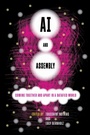
AI and Assembly
Coming Together and Apart in a Datafied World
Published on 8. July 2025
218 pages
978-1-5036-4276-8 (ISBN)
Available for download
Description

Artificial intelligence has moved from the lab into everyday life and is now seemingly everywhere. As AI creeps into every aspect of our lives, the data grab required to power AI also expands. People worldwide are tracked, analyzed, and influenced, whether on or off their screens, inside their homes or outside in public, still or in transit, alone or together. What does this mean for our ability to assemble with others for collective action, including protesting, holding community meetings and organizing rallies ? In this context, where and how does assembly take place, and who participates by choice and who by coercion? AI and Assembly explores these questions and offers global perspectives on the present and future of assembly in a world taken over by AI.
The contributors analyze how AI threatens free assembly by clustering people without consent, amplifying social biases, and empowering authoritarian surveillance. But they also explore new forms of associational life that emerge in response to these harms, from communities in the US conducting algorithmic audits to human rights activists in East Africa calling for biometric data protection and rideshare drivers in London advocating for fair pay. Ultimately, AI and Assembly is a rallying cry for those committed to a digital future beyond the narrow horizon of corporate extraction and state surveillance.
The contributors analyze how AI threatens free assembly by clustering people without consent, amplifying social biases, and empowering authoritarian surveillance. But they also explore new forms of associational life that emerge in response to these harms, from communities in the US conducting algorithmic audits to human rights activists in East Africa calling for biometric data protection and rideshare drivers in London advocating for fair pay. Ultimately, AI and Assembly is a rallying cry for those committed to a digital future beyond the narrow horizon of corporate extraction and state surveillance.
Reviews / Votes
"This book is a road sign, a forewarning on the broader impact of AI on assembly and association rights. In exploring this intersection, the book paves the pathways for the reorientation of frontline civic actions in the face of AI." - Nicholas Opiyo, Executive Director, Chapter Four Uganda"AI and Assembly pierces through the AI hype and delivers a thoughtful exploration of AI's place in the history of technology development and its relationship to people and power. The featured community of scholars challenges us to rethink perceived boundaries between physical and digital space and sets the reader on an important path to recognize why assembly and association are critical rights in the modern AI era. A must-have volume." - Nicole Ozer, Technology and Civil Liberties Director, ACLU of Northern California and 2024-2025 Technology and Human Rights Fellow, Harvard Kennedy School Carr Center
"AI and Assembly reorients readers to threats that AI systems pose to human rights. Nothias and Bernholz brilliantly and convincingly argue that AI jeopardizes our freedom to assemble beyond just freedom of expression. Essential reading for those who want to understand and democratically shape AI's role in civil society and AI's impact on our freedoms." - Mary L. Gray, MacArthur Fellow and co-author of Ghost Work: How to Stop Silicon Valley from Building a New Global Underclass
"Much more than expanded calculative power, AI puts culture together in new ways, driven by corporate imperatives rather than social values. This highly imaginative collection approaches this crucial development by asking how AI transforms how we assemble and appear to each other, both on the streets and online: a model example of how to expand public debate about AI beyond mere technology." - Nick Couldry, London School of Economics and Political Science
"What would human life be like without the ability to choose your relationships and gather with others? This book takes us on a journey to understand the power of collective rights in a digital world that increasingly treats us as individuals. I recommend it to anyone seeking to escape the stranglehold of individualism in conversations about technology." - J. Nathan Matias, Citizens and Technology Lab, Cornell University
"AI and Assembly shifts the speech-dominant perspective to another critical other freedom: that of assembly. Ultimately, AI is about agency - who has it and who does not; what we are able to know and how we can hold the technology companies to account. AI will impact the way we organize and assemble at its core and this critical book helps us understand how." - Marietje Schaake, author of The Tech Coup: How to Save Democracy from Silicon Valley
More details
Edition
New edition
Language
English
Place of publication
Palo Alto
United States
Target group
Professional and scholarly
Edition type
New edition
Illustrations
12 illustrations - 10 tables, 10 figures, 2 maps
ISBN-13
978-1-5036-4276-8 (9781503642768)
Copyright in bibliographic data and cover images is held by Nielsen Book Services Limited or by the publishers or by their respective licensors: all rights reserved.
Schweitzer Classification
Other editions
Additional editions
Book
07/2025
Stanford University Press
€35.00
Shipment within 15-20 days
Persons
Toussaint Nothias is Clinical Associate Professor in Experimental Humanities and Social Engagement, and Affiliate Faculty in Media, Culture, and Communication at New York University. Lucy Bernholz is a Senior Research Scholar at Stanford University's Center on Philanthropy and Civil Society, and was the Founding Director of the Digital Civil Society Lab.
Content
List of Tables and Figures
Prologue: In Our Defense
-Tawana Petty
1. Introduction
-Toussaint Nothias and Lucy Bernholz
2. Illusions of Agency?
-Michael Hamilton
3. Algorithmic Violence
-Ashley Lee
4. From Threat to Advocacy
-Lisa Garbe, Daniel Mwesigwa, and Toussaint Nothias
5. Machine-Made
-Lucy Bernholz
6. A Tale of Two Audits
-Danae Metaxa and Deborah Raji
7. Thinking Alternately, from Elsewhere
-Noopur Raval
Acknowledgments
About the Contributors
Index
Prologue: In Our Defense
-Tawana Petty
1. Introduction
-Toussaint Nothias and Lucy Bernholz
2. Illusions of Agency?
-Michael Hamilton
3. Algorithmic Violence
-Ashley Lee
4. From Threat to Advocacy
-Lisa Garbe, Daniel Mwesigwa, and Toussaint Nothias
5. Machine-Made
-Lucy Bernholz
6. A Tale of Two Audits
-Danae Metaxa and Deborah Raji
7. Thinking Alternately, from Elsewhere
-Noopur Raval
Acknowledgments
About the Contributors
Index

