

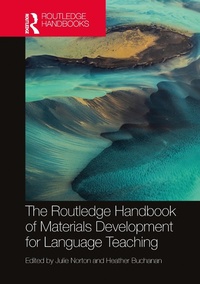
The Routledge Handbook of Materials Development for Language Teaching
1st Edition
Published on 16. March 2022
560 pages
978-1-000-53973-8 (ISBN)
Description

The Routledge Handbook of Materials Development for Language Teaching is the definitive resource for all working in this area of language and English language teaching. With 34 chapters authored by leading figures from around the world, the Handbook provides an historical overview of the development of language teaching materials, critical discussion of core issues, and an assessment of future directions.
The contributions represent a range of different international contexts, providing insightful, state-of-the-art coverage of the field. Structured in nine sections, the Handbook covers:
changes and developments in language teaching materials
controversial issues in materials development
research and materials development
materials for language learning and skills development
materials evaluation and adaptation
materials for specific contexts
materials development and technology
developing materials for publication
professional development and materials writing
Demonstrating throughout the dynamic relationship between theory and practice, this accessible Handbook is essential reading for researchers, scholars, and students on MA programmes in ELT, TESOL, and applied linguistics.
The contributions represent a range of different international contexts, providing insightful, state-of-the-art coverage of the field. Structured in nine sections, the Handbook covers:
changes and developments in language teaching materials
controversial issues in materials development
research and materials development
materials for language learning and skills development
materials evaluation and adaptation
materials for specific contexts
materials development and technology
developing materials for publication
professional development and materials writing
Demonstrating throughout the dynamic relationship between theory and practice, this accessible Handbook is essential reading for researchers, scholars, and students on MA programmes in ELT, TESOL, and applied linguistics.
Reviews / Votes
'This volume presents a treasure trove of scholarship, information and advice for those concerned with materials development for language teaching. The authors have drawn together writers from a range of backgrounds and specialisms to provide insight into all aspects of materials from production to adaptation and from representation to evaluation. The emphasis on the digital is particularly timely given recent moves to online learning, and the critical stance taken by many of the authors will be welcomed by the TESOL community. The Handbook should be on the library shelves of all institutions that offer language teaching programmes.'Fiona Copland, University of Stirling, UK
'Not many books address comprehensibly the diversity of issues in materials development, materials in practice and the evaluation of materials. This book engages the reader in debate, thereby enabling the triggers to critical thought.'
Jayakaran Mukundan, Universiti Putra Malaysia, Malaysia
'As well as focusing on how theory and practice interrelate, the handbook aims to increase mutual understanding between the two camps: practitioners and theorists.'
Paul A. Davies, English Language Teaching Journal
'The Handbook makes a significant contribution to previous literature on materials development by mapping the key issues, challenges, and considerations for each focal theme, and how they could be addressed in practice, as well as indicating future directions.'
Abdullah Yildiz, English Language Teaching Journal
More details
Series
Edition
1. Auflage
Language
English
Place of publication
London
United Kingdom
Publishing group
Taylor & Francis Ltd
Target group
Professional and scholarly
Illustrations
15 Tables, black and white; 8 Line drawings, black and white; 10 Halftones, black and white; 18 Illustrations, black and white
ISBN-13
978-1-000-53973-8 (9781000539738)
Copyright in bibliographic data and cover images is held by Nielsen Book Services Limited or by the publishers or by their respective licensors: all rights reserved.
Schweitzer Classification
Other editions
Additional editions
Julie Norton | Heather Buchanan
The Routledge Handbook of Materials Development for Language Teaching
Book
10/2024
1st Edition
Routledge
€71.30
Shipment within 10-20 days
Julie Norton | Heather Buchanan
The Routledge Handbook of Materials Development for Language Teaching
Book
03/2022
1st Edition
Routledge
€335.20
Shipment within 15-20 days
Persons
Julie Norton is a Lecturer in Applied Linguistics and TESOL and Co-Director of Teaching and Learning at the School of Education, University of Leicester. She is a Senior Fellow of the Higher Education Authority (SFHEA). She is also co-author of Navigate Pre-Intermediate.
Heather Buchanan is a Lecturer in Language Education and Director of Postgraduate Taught Courses (Teaching and Learning) at the University of York and an experienced teacher trainer. She is co-author of Navigate Intermediate.
Consultant editor: Graham Hall
Editorial Advisory Board: Kathleen Graves, Hitomi Masuhara, David Nunan
Heather Buchanan is a Lecturer in Language Education and Director of Postgraduate Taught Courses (Teaching and Learning) at the University of York and an experienced teacher trainer. She is co-author of Navigate Intermediate.
Consultant editor: Graham Hall
Editorial Advisory Board: Kathleen Graves, Hitomi Masuhara, David Nunan
Content
List of illustrations
Acknowledgements
List of Contributors
Introduction and overview
PART 1
Changes and developments in language teaching materials
1. The discipline of materials development
2. Language learning materials in the digital era
3. Theory and practice in materials development
PART 2
Controversial issues in materials development
4. Why do we need coursebooks?
5. Authenticity in language teaching materials
6. Selecting language for materials writing
7. From global English to Global Englishes: questioning approaches to ELT materials
8. Culture and materials development
9. Representation in coursebooks: a critical perspective
PART 3
Research and materials development
10. Materials development: what can you research, how and why?
11. Using research to inform materials development
12. Writing corpus-informed materials
PART 4
Materials for language learning and skills development
13. Materials for teaching grammar
14. Materials for teaching vocabulary
15. Materials for developing speaking skills
16. Materials for developing reading skills
17. Materials for developing writing skills
PART 5
Materials evaluation and adaptation
18. The analysis and evaluation of language teaching materials
19. Approaches to materials adaptation
PART 6
Materials for specific contexts
20. Developing a primary coursebook series for Turkey
21. Versioning coursebooks
22. Writing EAP materials
23. Writing materials for ESOL
24. Materials for English Medium Education
25. Writing materials for Spanish teenagers
26. Writing materials for an English-speaking environment
PART 7
Materials development and technology
27. Developing blended learning materials
28. Materials for mobile learning
PART 8
Developing materials for publication
29. Learner contributions to materials in language teaching
30. How do writers write?
31. The editor's role in developing materials
PART 9
Professional development and materials writing
32. Making the materials writing leap: scaffolding the journey from teacher to teacher-writer
33. Materials as a tool for professional development: a perspective from publishing
34. Training materials writers
Index
Acknowledgements
List of Contributors
Introduction and overview
PART 1
Changes and developments in language teaching materials
1. The discipline of materials development
2. Language learning materials in the digital era
3. Theory and practice in materials development
PART 2
Controversial issues in materials development
4. Why do we need coursebooks?
5. Authenticity in language teaching materials
6. Selecting language for materials writing
7. From global English to Global Englishes: questioning approaches to ELT materials
8. Culture and materials development
9. Representation in coursebooks: a critical perspective
PART 3
Research and materials development
10. Materials development: what can you research, how and why?
11. Using research to inform materials development
12. Writing corpus-informed materials
PART 4
Materials for language learning and skills development
13. Materials for teaching grammar
14. Materials for teaching vocabulary
15. Materials for developing speaking skills
16. Materials for developing reading skills
17. Materials for developing writing skills
PART 5
Materials evaluation and adaptation
18. The analysis and evaluation of language teaching materials
19. Approaches to materials adaptation
PART 6
Materials for specific contexts
20. Developing a primary coursebook series for Turkey
21. Versioning coursebooks
22. Writing EAP materials
23. Writing materials for ESOL
24. Materials for English Medium Education
25. Writing materials for Spanish teenagers
26. Writing materials for an English-speaking environment
PART 7
Materials development and technology
27. Developing blended learning materials
28. Materials for mobile learning
PART 8
Developing materials for publication
29. Learner contributions to materials in language teaching
30. How do writers write?
31. The editor's role in developing materials
PART 9
Professional development and materials writing
32. Making the materials writing leap: scaffolding the journey from teacher to teacher-writer
33. Materials as a tool for professional development: a perspective from publishing
34. Training materials writers
Index
