

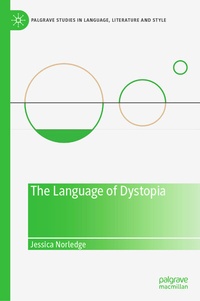
The Language of Dystopia
Description

This book presents an extended account of the language of dystopia, exploring the creativity and style of dystopian narratives and mapping the development of the genre from its early origins through to contemporary practice. Drawing upon stylistic, cognitive-poetic and narratological approaches, the work proposes a stylistic profile of dystopia, arguing for a reader-led discussion of genre that takes into account reader subjectivity and personal conceptualisations of prototypicality. In examining and identifying those aspects of language that characterise dystopian narratives and the experience of reading dystopian fictions, the work discusses in particular the manipulation and construction of dystopian languages, the conceptualisation of dystopian worlds, the reading of dystopian minds, the projection of dystopian ethics, the unreliability of dystopian refraction, and the evolution and hybridity of the dystopian genre.
More details
Other editions
Additional editions
Person
Jessica Norledge is part of the Applied English Team at the University of Nottingham, UK, where she teaches across Literary Linguistics and Applied Linguistics. She specialises in the cognitive poetics of emotion and the language of dystopia, having published on the dystopian short story, dystopian epistolary, dystopian minds, and the experience of reading dystopian fiction.
Content
Chapter 1: Towards A Poetics of Dystopia.- Chapter 2: Language in Dystopia.- Chapter 3: Building Dystopian Worlds.- Chapter 4: Reading Dystopian Minds.- Chapter 5: Dystopian Ethics.- Chapter 6: Unreliability and Dystopian Refraction.- Chapter 7: Reconceiving Dystopia.
