

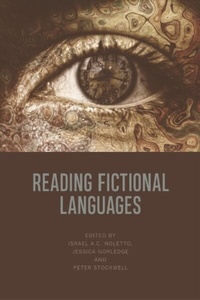
Reading Fictional Languages
1st Edition
Published on 4. December 2023
272 pages
978-1-3995-2916-7 (ISBN)
Description

Provides a guide for creating, exploring, and understanding fictional, imaginary, and invented languages
- Brings together many of the key creators, designers and researchers of imagined languages in literature, TV and cinema
- Features the languages of Tolkien's Middle Earth, Star Trek, Avatar, Game of Thrones, Dune, and SpEEC, Lapin, Láadan, Marain, Speedtalk, Heptapod B, and many others including a language invented exclusively for this book
- Serves as both a handbook and guide to the creation, design principles, exploration, analysis and experience of reading fictional languages
Reading Fictional Languages brings together scholars, creators, designers and speakers of fictional languages from across the world in a unique book that explores the imagined languages of fantasy, science fiction, dystopia and alternate realities. It explores the role of invented languages in world-building, characterisation, and the feeling of authentic immersion in the forms of thought of aliens, animals, machines, and the people who inhabit alternative worlds from our own.
More details
Other editions
Additional editions
Israel Noletto | Jessica Norledge | Peter Stockwell
Reading Fictional Languages
Book
12/2023
Edinburgh University Press
€126.50
Shipment within 15-20 days
Content
- Cover
- Half Title
- Title Page
- Copyright
- Contents
- List of contributors
- Acknowledgements
- 1 Introduction: reading fictional languages
- Part I: Design
- 2 Conlanging with non-conlangers: the art of language invention in television and media
- 3 On the inner workings of language creation: using conlangs to drive reader engagement in fictional worlds
- 4 Dialects in constructed languages
- 5 Alien typographies in sf and the influence of Asian languages
- 6 Design intentions and actual perception of fictional languages: Quenya, Sindarin, and Na'vi
- 7 The phonaesthetics of constructed languages: results from an online rating experiment
- Part II: Interpretation
- 8 Tolkien's use of invented languages in The Lord of the Rings
- 9 Changing tastes: reading the cannibalese of Charles Dickens' Holiday Romance and nineteenth-century popular culture
- 10 Dialectal extrapolation as a literary experiment in Aldiss' 'A spot of Konfrontation'
- 11 Women, fire, and dystopian things
- 12 Building the conomasticon: names and naming in fictional worlds
- 13 The language of Lapine in Watership Down
- 14 Unspeakable languages
- Index
