

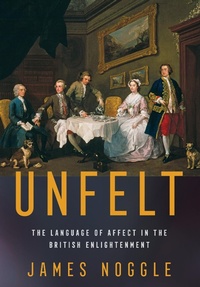
Unfelt
The Language of Affect in the British Enlightenment
Published on 1. March 2020
282 pages
978-1-5017-4714-4 (ISBN)
Description

Unfelt offers a new account of feeling during the British Enlightenment, finding that the passions and sentiments long considered as preoccupations of the era depend on a potent insensibility, the secret emergence of pronounced emotions that only become apparent with time. Surveying a range of affects including primary sensation, love and self-love, greed, happiness, and patriotic ardor, James Noggle explores literary evocations of imperceptibility and unfeeling that pervade and support the period's understanding of sensibility.
Each of the four sections of Unfelt-on philosophy, the novel, historiography, and political economy-charts the development of these idioms from early in the long eighteenth century to their culmination in the age of sensibility. From Locke to Eliza Haywood, Henry Fielding, and Frances Burney, and from Dudley North to Hume and Adam Smith, Noggle's exploration of the insensible dramatically expands the scope of affect in the period's writing and thought.
Drawing inspiration from contemporary affect theory, Noggle charts how feeling and unfeeling flow and feed back into each other, identifying emotional dynamics at their most elusive and powerful: the potential, the incipient, the emergent, the virtual.
Open Access edition funded by the National Endowment for the Humanities
Each of the four sections of Unfelt-on philosophy, the novel, historiography, and political economy-charts the development of these idioms from early in the long eighteenth century to their culmination in the age of sensibility. From Locke to Eliza Haywood, Henry Fielding, and Frances Burney, and from Dudley North to Hume and Adam Smith, Noggle's exploration of the insensible dramatically expands the scope of affect in the period's writing and thought.
Drawing inspiration from contemporary affect theory, Noggle charts how feeling and unfeeling flow and feed back into each other, identifying emotional dynamics at their most elusive and powerful: the potential, the incipient, the emergent, the virtual.
Open Access edition funded by the National Endowment for the Humanities
Reviews / Votes
Noggle's superlative study traces unfelt tributaries of affect that, though not immediately perceptible, nevertheless flow together into the kinds of sea-changes that we might call identity formation, character development, or, on a much larger scale, social evolution writ large.... Precise, forthright, and circumspect... Unfelt is a book for scholars of the long eighteenth century, and it unquestionably succeeds as such. * Eighteenth-Century Fiction * James Noggle's Unfelt offers both genealogy and endorsement. Unfelt is a densely theorized book. * Modern Language Quarterly * Noggle's account certainly represents one of the most careful dialogues I've seen yet between eighteenth-century literary studies and the broader Spinozist paradigm of affect theory. * Eighteenth-Century Studies *More details
Language
English
Place of publication
Ithaca
United States
Illustrations
3 Charts
ISBN-13
978-1-5017-4714-4 (9781501747144)
DOI
tps://doi.org/10.7298/9y99-0f50
Copyright in bibliographic data and cover images is held by Nielsen Book Services Limited or by the publishers or by their respective licensors: all rights reserved.
Schweitzer Classification
Other editions
Person
James Noggle is Professor of English at Wellesley College. He is author of The Temporality of Taste in Eighteenth-Century British Writing and The Skeptical Sublime. He also edits the Restoration and Eighteenth-Century volume of The Norton Anthology of English Literature.
Content
Introduction: Unfelt Affect
1. Philosophy: Affective Nonconsciousness
1.1. The Insensible Parts of Locke's Essay
1.2. David Hartley's Ghost Matter
1.3. Vivacity and Insensible Association: Condillac and Hume
1.4. Sentiment and Secret Consciousness: Haywood and Smith
2. Fiction: Unfelt Engagement
2.1. Unfeeling before Sensibility
2.2. External and Invisible
2.3. Insensible against Involuntary in Burney
2.4. Austen as Coda
3. Historiography: Insensible Revolutions
3.1. The Force of the Thing: Unfelt Moeurs in French Historiography
3.2. The Insensible Revolution and Scottish Historiography
3.3. Gibbon in History
3.4. The Embrace of Unfeeling
4. Political Economy: Moving with Money
4.1. Mandeville and the Other Happiness
4.2. Feeling Untaxed
4.3. The Money Flow
4.4. Invisible versus Insensible
Epilogue: Insensible Emergence of Ideology
1. Philosophy: Affective Nonconsciousness
1.1. The Insensible Parts of Locke's Essay
1.2. David Hartley's Ghost Matter
1.3. Vivacity and Insensible Association: Condillac and Hume
1.4. Sentiment and Secret Consciousness: Haywood and Smith
2. Fiction: Unfelt Engagement
2.1. Unfeeling before Sensibility
2.2. External and Invisible
2.3. Insensible against Involuntary in Burney
2.4. Austen as Coda
3. Historiography: Insensible Revolutions
3.1. The Force of the Thing: Unfelt Moeurs in French Historiography
3.2. The Insensible Revolution and Scottish Historiography
3.3. Gibbon in History
3.4. The Embrace of Unfeeling
4. Political Economy: Moving with Money
4.1. Mandeville and the Other Happiness
4.2. Feeling Untaxed
4.3. The Money Flow
4.4. Invisible versus Insensible
Epilogue: Insensible Emergence of Ideology
