

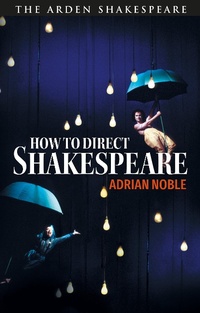
How to Direct Shakespeare
1st Edition
Published on 11. August 2022
248 pages
978-1-350-23126-9 (ISBN)
Description

You may be a student, or just starting out in the theatre profession, or an actor contemplating a switch to directing, or anyone dreaming of a life in the theatre. Know this: by developing and sharpening your skills on a Shakespeare text, you will be preparing yourself for your next production whatever or wherever that might be.
Practical, inspirational and steeped in the wisdom and expertise of one of the great Shakespearean directors of our age, How to Direct Shakespeare guides you through each step of a production, from conception to final presentation to an audience. It includes close analysis of the text and provides strategies for focusing on the main action and structure; it considers dramatic energy and the world of the play, and illuminates these with examples drawn from a variety of Shakespeare's plays. It will assist you with creating your vision for the production as you collaborate with the design team, cast the play and work with actors in rehearsal. And it walks you through the encounter with the audience as you open your production.
Drawing on examples from his work as artistic director of The Royal Shakespeare Company and subsequent directing work that has taken him all over the world, Noble shows how every production is shaped by a vision of the world - the interplay of the writer's vision and the director's interpretation of it. How to Direct Shakespeare will inspire and equip you as you develop your vision for your next production.
Practical, inspirational and steeped in the wisdom and expertise of one of the great Shakespearean directors of our age, How to Direct Shakespeare guides you through each step of a production, from conception to final presentation to an audience. It includes close analysis of the text and provides strategies for focusing on the main action and structure; it considers dramatic energy and the world of the play, and illuminates these with examples drawn from a variety of Shakespeare's plays. It will assist you with creating your vision for the production as you collaborate with the design team, cast the play and work with actors in rehearsal. And it walks you through the encounter with the audience as you open your production.
Drawing on examples from his work as artistic director of The Royal Shakespeare Company and subsequent directing work that has taken him all over the world, Noble shows how every production is shaped by a vision of the world - the interplay of the writer's vision and the director's interpretation of it. How to Direct Shakespeare will inspire and equip you as you develop your vision for your next production.
More details
Edition
1. Auflage
Language
English
Place of publication
London
United Kingdom
Publishing group
Bloomsbury Publishing PLC
Target group
College/higher education
Illustrations
4 bw illus
ISBN-13
978-1-350-23126-9 (9781350231269)
Copyright in bibliographic data and cover images is held by Nielsen Book Services Limited or by the publishers or by their respective licensors: all rights reserved.
Schweitzer Classification
Other editions
Additional editions
Adrian Noble
How to Direct Shakespeare
Book
09/2022
The Arden Shakespeare
€29.00
Shipment within 15-20 days
Person
Adrian Noble is a freelance director of theatre, opera and film, whose work can be seen in the UK, USA, Canada, China, Hong Kong and across Europe. He was the Artistic Director of The Royal Shakespeare Company, 1991-2003, and of the Shakespeare Festival, San Diego, USA, 2010-2013. In 2014 Nobel was Mellon Visiting Artist and Thinker at Columbia University, USA. He is the recipient of multiple awards and honours in the UK, USA and Europe.
Content
Acknowledgements and thanks
List of Illustrations
Introduction
Chapter 1: You
Chapter 2: Him
Chapter 3: The Director and the text
Part 1: The World (Who's Who)
Part 2: Reading the Play
Part 3: Analysing the Play
Part 4: Entering Shakespeare's World
Chapter 4: Awayday One; Dramatic Energy (How does he do it?)
1: Apposition
2: Metaphor
3: Metre and Pulse
4: Line Endings
5: Word Play
6: Vocabulary
7: Shape and Structure
Chapter 5: Let's Design it! The Eye
To Start:
1: Wall of Ideas
2: Read the Play
3: Analyse
4: Brainstorm
The Model
A Methodology
Space
The mechanics
Floors
Entrances
Axes
Walls
The Skeleton of the Play
The Journey and two Casebooks
Playtime
"In the Round"
Thrust
Technology (How to get from A to B)
Colour, Texture and Decoration
Storyboard
Show and Tell
Costume and the Actor
Working with Lighting Designers
Chapter 6: Design (The Ear)
Music and Sound
Chapter 7: Casting the Play
1. The Actor's World
2. Do I Cast the Part or the Actor?
3. The Process
4. Putting it Together
Chapter 8: Awayday Two: Stanislavski and Actioning
Chapter 9: To Cut or Not to Cut
Length
Shape
Choice of Edition
Chapter 10: The Rehearsal Plan
The Traditional Way
Basic Aims of Rehearsal
Making a Plan
Chapter 11: Rehearsing the Play; the Beginning
The Rehearsal Room
Stage Management
An Approach to Day One of Rehearsals
Chapter 12: Awayday Three: Improvisation
1. Building a Company
2. Building a Character
3. Developing Relationships and Exploring the World of the Play
4. Exploring Scenes and Situations without using the text
Chapter 13: Rehearsing the Play: End of the Beginning
Work on Language
Work on Character
Chapter 14: Rehearsing the Play: Middle
Aims for Middle Section of Rehearsals
Examples from Romeo and Juliet
"The Tank"
Blocking
Blocking Large Scale Scenes
Second Pass at Scenes
What to do if your Actors get Inhibited or Stuck
Chapter 15: Rehearsing the Play: End
First Run Through: How does it Work?
How to give your Notes
Second and Third Run Throughs
Preparing for the Theatre
Chapter 16: The "Tech", "Dress", Previews and Opening
1. The Tech; How to set up a Tech and how to run a Tech
2. The Dress
3. Curtain Calls
4. Previews
5. Opening
Index
List of Illustrations
Introduction
Chapter 1: You
Chapter 2: Him
Chapter 3: The Director and the text
Part 1: The World (Who's Who)
Part 2: Reading the Play
Part 3: Analysing the Play
Part 4: Entering Shakespeare's World
Chapter 4: Awayday One; Dramatic Energy (How does he do it?)
1: Apposition
2: Metaphor
3: Metre and Pulse
4: Line Endings
5: Word Play
6: Vocabulary
7: Shape and Structure
Chapter 5: Let's Design it! The Eye
To Start:
1: Wall of Ideas
2: Read the Play
3: Analyse
4: Brainstorm
The Model
A Methodology
Space
The mechanics
Floors
Entrances
Axes
Walls
The Skeleton of the Play
The Journey and two Casebooks
Playtime
"In the Round"
Thrust
Technology (How to get from A to B)
Colour, Texture and Decoration
Storyboard
Show and Tell
Costume and the Actor
Working with Lighting Designers
Chapter 6: Design (The Ear)
Music and Sound
Chapter 7: Casting the Play
1. The Actor's World
2. Do I Cast the Part or the Actor?
3. The Process
4. Putting it Together
Chapter 8: Awayday Two: Stanislavski and Actioning
Chapter 9: To Cut or Not to Cut
Length
Shape
Choice of Edition
Chapter 10: The Rehearsal Plan
The Traditional Way
Basic Aims of Rehearsal
Making a Plan
Chapter 11: Rehearsing the Play; the Beginning
The Rehearsal Room
Stage Management
An Approach to Day One of Rehearsals
Chapter 12: Awayday Three: Improvisation
1. Building a Company
2. Building a Character
3. Developing Relationships and Exploring the World of the Play
4. Exploring Scenes and Situations without using the text
Chapter 13: Rehearsing the Play: End of the Beginning
Work on Language
Work on Character
Chapter 14: Rehearsing the Play: Middle
Aims for Middle Section of Rehearsals
Examples from Romeo and Juliet
"The Tank"
Blocking
Blocking Large Scale Scenes
Second Pass at Scenes
What to do if your Actors get Inhibited or Stuck
Chapter 15: Rehearsing the Play: End
First Run Through: How does it Work?
How to give your Notes
Second and Third Run Throughs
Preparing for the Theatre
Chapter 16: The "Tech", "Dress", Previews and Opening
1. The Tech; How to set up a Tech and how to run a Tech
2. The Dress
3. Curtain Calls
4. Previews
5. Opening
Index
