

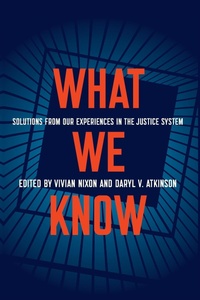
What We Know
Description

"This is what we know, and we know it better than anyone else." -from the introduction by Vivian Nixon and Daryl V. Atkinson
A thoughtful and surprising cornucopia of ideas for improving America's criminal justice system, from those most impacted by it
When The New Press, the Center for American Progress, and the Formerly Incarcerated and Convicted Peoples and Family Movement issued a call for innovative reform ideas, over three hundred currently and formerly incarcerated individuals responded. What We Know collects two dozen of their best suggestions, each of which proposes a policy solution derived from their own lived experience.
Ideas run the gamut: A man serving time in Indiana argues for a Prison Labor Standards Act, calling for us to reject prison slavery. A Nebraska man who served a federal prison term for white-collar crimes suggests offering courses in entrepreneurship as a way to break down barriers to employment for people returning from incarceration. A woman serving a life sentence in Georgia spells out a system of earned privileges that could increase safety and decrease stress inside prison. And a man serving a twenty-five-year term for a crime he committed at age fifteen advocates powerfully for eliminating existing financial incentives to charge youths as adults.
With contributors including nationally known formerly incarcerated leaders in justice reform, twenty-three justice-involved individuals add a perspective that is too often left out of national reform conversations.
More details
Persons
The Reverend Vivian Nixon is executive director of College and Community Fellowship (CCF), a New York-based organization committed to removing barriers to higher education for women with criminal-record histories and their families
Attorney Daryl Atkinson was the inaugural Second Chance Fellow for the U.S. Department of Justice, and is now the co-director of Forward Justice, a law, policy, and strategy center in Durham, North Carolina, dedicated to advancing racial, social, and economic justice in the United States.
Content
- Intro
- Introduction
- A Note from the Editors
- 1 Earmark Jobs to Reduce Recidivism
- 2 A Tiny Ray of Light: On the Need for an Authentic Oversight Regime Within the Texas Department of Criminal Justice
- 3 Unlock Digital Inclusion
- 4 On Prison Labor
- 5 Correcting Excessive Sentences of Youthful Offenders
- 6 An Act to Increase Voter Registration and Participation
- 7 On Honor Yards
- 8 Undebatable
- 9 A Call for Pardons
- 10 Over-Incarceration and Gain Time: What's Wrong and How to Fix It
- 11 From Coming Home to Running the Homecoming Project
- 12 "Life" Means Death
- 13 The 13th and the Problem of the Color Line
- 14 From the Ground Up: Tapping the Strengths of Incarcerated People
- 15 A Bridge to Employment
- 16 Closing the Literacy Gap
- 17 The Age of Inequality: Ending the Mass Incarceration of Our Youth
- 18 Prisons as Nursing Homes: A Taxpayer Debacle
- 19 In Defense of Survival: Incentivizing Good Behavior
- 20 Electoral Politics: The New Revolution
- 21 Wards of the State
- 22 Mass Incarceration and Small Business
- 23 A New North Star
- Acknowledgments
- Notes
