

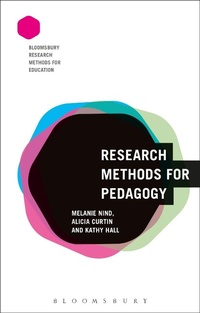
Research Methods for Pedagogy
1st Edition
Published on 6. October 2016
296 pages
978-1-4742-4284-4 (ISBN)
Description

Aspects of pedagogy are frequently researched, but the concept itself is poorly understood. More than just teaching and learning, pedagogy is about values, identities, relationships and interactions bounded by context. As such, researchers of pedagogy face the challenge of working out what constitutes pedagogical texts, data or evidence, and how these can be generated and understood.
Research Methods for Pedagogy begins by exploring the different conceptualisations of pedagogy and their implications for how it is researched. The authors reflect on how their sociocultural stance on pedagogy influences the methods they choose to focus on in the book. Moving beyond just schools and formal pedagogies into informal and everyday pedagogies, the authors use a range of case studies across educational sectors and cultures to discuss methods for researching pedagogy. Common approaches such as ethnography and action research are included alongside some quantitative and quasi-experimental methods and often less familiar participatory, multimodal and reflective methods. The authors demonstrate the relationships between theoretical stance, pedagogical context and research approach. Finally, the book addresses the complexity of pedagogy research through discussion of particular ethical and relational aspects as it highlights innovations and developments in research methods for pedagogy.
Boxed case studies, reflections on real research projects, a glossary of key terms and an annotated list of further reading all help to guide students and scholars through their research design and choice of methods in this area.
Research Methods for Pedagogy begins by exploring the different conceptualisations of pedagogy and their implications for how it is researched. The authors reflect on how their sociocultural stance on pedagogy influences the methods they choose to focus on in the book. Moving beyond just schools and formal pedagogies into informal and everyday pedagogies, the authors use a range of case studies across educational sectors and cultures to discuss methods for researching pedagogy. Common approaches such as ethnography and action research are included alongside some quantitative and quasi-experimental methods and often less familiar participatory, multimodal and reflective methods. The authors demonstrate the relationships between theoretical stance, pedagogical context and research approach. Finally, the book addresses the complexity of pedagogy research through discussion of particular ethical and relational aspects as it highlights innovations and developments in research methods for pedagogy.
Boxed case studies, reflections on real research projects, a glossary of key terms and an annotated list of further reading all help to guide students and scholars through their research design and choice of methods in this area.
More details
Series
Edition
1. Auflage
Language
English
Place of publication
London
United Kingdom
Publishing group
Bloomsbury Publishing PLC
Target group
College/higher education
Illustrations
10 bw illus
ISBN-13
978-1-4742-4284-4 (9781474242844)
Copyright in bibliographic data and cover images is held by Nielsen Book Services Limited or by the publishers or by their respective licensors: all rights reserved.
Schweitzer Classification
Other editions
Additional editions
Melanie Nind | Alicia Curtin | Kathy Hall
Research Methods for Pedagogy
Book
10/2016
Bloomsbury Academic
€53.47
Shipment within 15-20 days
Persons
Melanie Nind is Professor of Education at the University of Southampton, UK. She is Co-Director of ESRC National Centre for Research Methods and Co-Editor of the International Journal of Research & Method in Education.
Alicia Curtin is a Lecturer in the School of Education at University College Cork, Ireland.
Kathy Hall is Professor of Education and Head of the School of Education at University College Cork, Ireland.
Alicia Curtin is a Lecturer in the School of Education at University College Cork, Ireland.
Kathy Hall is Professor of Education and Head of the School of Education at University College Cork, Ireland.
Content
Acknowledgements
Series Editor Preface
A Glossary of Research Methods and Approaches
Introduction
Part I: Conceptions of Pedagogy and Implications for Research
Introduction to Part One: Conceptions of Pedagogy and Implications for Research
Chapter 1: Pedagogy - Theoretical Perspectives and Methodological Implications
Chapter 2: Different Pedagogies - Different Research Methods: Values into Practice
Chapter 3: Teasing out Pedagogy: The Art, Craft and Science
Part II: Researching Pedagogy in Context
Introduction to Part Two: Researching Pedagogy in Context
Chapter 4: Researching Pedagogy in Early Childhood Settings: Ethnographic, Multimodal and
Chapter 5: Researching Pedagogy in Schools: Methods Focused on Classroom Interaction,
Chapter 6: Researching the Everyday and Out-of-School: Research Methods and Innovation
Part Three: Researching the Hidden and Hard-to-know
Introduction to Part Three: Researching the Hidden and Hard-to-know
Chapter 7: Pedagogy as Interaction: Methods for Reflecting on Interaction and Methods
Chapter 8: Pedagogy Embodied: Methods of Analysis for Embodied Practice
Chapter 9: Pedagogy as Space: Pushing Methodological Boundaries
Conclusion
References
Index
Series Editor Preface
A Glossary of Research Methods and Approaches
Introduction
Part I: Conceptions of Pedagogy and Implications for Research
Introduction to Part One: Conceptions of Pedagogy and Implications for Research
Chapter 1: Pedagogy - Theoretical Perspectives and Methodological Implications
Chapter 2: Different Pedagogies - Different Research Methods: Values into Practice
Chapter 3: Teasing out Pedagogy: The Art, Craft and Science
Part II: Researching Pedagogy in Context
Introduction to Part Two: Researching Pedagogy in Context
Chapter 4: Researching Pedagogy in Early Childhood Settings: Ethnographic, Multimodal and
Chapter 5: Researching Pedagogy in Schools: Methods Focused on Classroom Interaction,
Chapter 6: Researching the Everyday and Out-of-School: Research Methods and Innovation
Part Three: Researching the Hidden and Hard-to-know
Introduction to Part Three: Researching the Hidden and Hard-to-know
Chapter 7: Pedagogy as Interaction: Methods for Reflecting on Interaction and Methods
Chapter 8: Pedagogy Embodied: Methods of Analysis for Embodied Practice
Chapter 9: Pedagogy as Space: Pushing Methodological Boundaries
Conclusion
References
Index
