

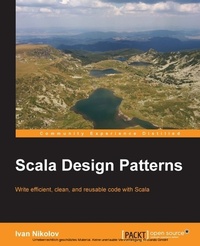
Scala Design Patterns
Write efficient, clean, and reusable code with Scala
Published on 8. July 2025
382 pages
978-1-78588-202-9 (ISBN)
Description

Write efficient, clean, and reusable code with Scala
Key Features
Unleash the power of Scala and apply it in the real world.
Increase your efficiency by leveraging the power of Creational, Structural, Behavioural, and Functional design patterns.
Build object oriented and functional applications quickly and effectively.
Book DescriptionScala has become increasingly popular in many different IT sectors. The language is exceptionally feature-rich which helps developers write less code and get faster results. Design patterns make developer's lives easier by helping them write great software that is easy to maintain, runs efficiently and is valuable to the company or people concerned. You will learn about the various features of Scala and be able to apply well-known, industry-proven design patterns in your work. The book starts off by focusing on some of the most interesting features of Scala while using practical real-world examples. We will also cover the popular "Gang of Four" design patterns and show you how to incorporate functional patterns effectively. By the end of this book, you will have enough knowledge and understanding to quickly assess problems and come up with elegant solutions. What you will learn
Immerse yourself in industry-standard design patterns-structural, creational, and behavioral-to create extraordinary applications.
Feel the power of traits and their application in Scala.
Implement abstract and self types and build clean design patterns.
Build complex entity relationships using structural design patterns.
Create applications faster by applying functional design patterns.
Who this book is forIf you want to increase your understanding of Scala and apply it to real-life application development, then this book is for you. We've also designed the book to be used as a quick reference guide while creating applications. Previous Scala programming knowledge is expected.
Key Features
Unleash the power of Scala and apply it in the real world.
Increase your efficiency by leveraging the power of Creational, Structural, Behavioural, and Functional design patterns.
Build object oriented and functional applications quickly and effectively.
Book DescriptionScala has become increasingly popular in many different IT sectors. The language is exceptionally feature-rich which helps developers write less code and get faster results. Design patterns make developer's lives easier by helping them write great software that is easy to maintain, runs efficiently and is valuable to the company or people concerned. You will learn about the various features of Scala and be able to apply well-known, industry-proven design patterns in your work. The book starts off by focusing on some of the most interesting features of Scala while using practical real-world examples. We will also cover the popular "Gang of Four" design patterns and show you how to incorporate functional patterns effectively. By the end of this book, you will have enough knowledge and understanding to quickly assess problems and come up with elegant solutions. What you will learn
Immerse yourself in industry-standard design patterns-structural, creational, and behavioral-to create extraordinary applications.
Feel the power of traits and their application in Scala.
Implement abstract and self types and build clean design patterns.
Build complex entity relationships using structural design patterns.
Create applications faster by applying functional design patterns.
Who this book is forIf you want to increase your understanding of Scala and apply it to real-life application development, then this book is for you. We've also designed the book to be used as a quick reference guide while creating applications. Previous Scala programming knowledge is expected.
More details
Edition
Digital original
Language
English
Place of publication
Birmingham
United Kingdom
Target group
US School Grade: College Graduate Student
Edition type
Digital original
File size
9,06 MB
ISBN-13
978-1-78588-202-9 (9781785882029)
Copyright in bibliographic data and cover images is held by Nielsen Book Services Limited or by the publishers or by their respective licensors: all rights reserved.
Schweitzer Classification
Other editions
New editions
Ivan Nikolov
Scala Design Patterns
Design modular, clean, and scalable applications by applying proven design patterns in Scala
E-Book
09/2024
2nd Edition
Packt Publishing Limited
€39.99
Available for download
Additional editions
Person
Nikolov Ivan :
Ivan Nikolov is a technical architect based in London. He works in the ad tech industry and uses Scala in combination with libraries and technologies such as Spark, Hadoop, RabbitMQ, Kafka, SQL and NoSQL stores, and Akka. He also uses other JVM and scripting languages. Some of the projects Ivan has worked on include a large-scale real-time machine learning platform, batch processing solutions, and high load APIs. Ivan also likes getting involved with open source projects, whether it be to contribute or get inspiration and good ideas.
Ivan Nikolov is a technical architect based in London. He works in the ad tech industry and uses Scala in combination with libraries and technologies such as Spark, Hadoop, RabbitMQ, Kafka, SQL and NoSQL stores, and Akka. He also uses other JVM and scripting languages. Some of the projects Ivan has worked on include a large-scale real-time machine learning platform, batch processing solutions, and high load APIs. Ivan also likes getting involved with open source projects, whether it be to contribute or get inspiration and good ideas.
Content
Table of Contents
The Design Patterns Out There and Setting Up Your Environment
Traits and Mixin Compositions
Unification
Abstract and Self Types
Aspect Oriented Programming and Components
Creational Patterns
Structural Patterns
Behavioral Patterns - Part 1
Behavioral Patterns - Part 2
Functional Design Patterns - The Deep Theory
Functional Design Patterns - Applying What We Learned
Real Life Applications
The Design Patterns Out There and Setting Up Your Environment
Traits and Mixin Compositions
Unification
Abstract and Self Types
Aspect Oriented Programming and Components
Creational Patterns
Structural Patterns
Behavioral Patterns - Part 1
Behavioral Patterns - Part 2
Functional Design Patterns - The Deep Theory
Functional Design Patterns - Applying What We Learned
Real Life Applications
