

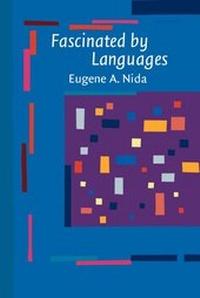
Fascinated by Languages
1st Edition
Published on 21. August 2003
VI, 157 pages
978-90-272-9641-2 (ISBN)
Description

In this unique account of 60 years of Bible translation, Eugene Nida sets out his journey with a personal touch. On the way, he reveals the importance of a solid knowledge of Greek and Hebrew as well as of the historical settings in which the Bible was created, in order to render effective translations. Through his story we get to know Nida's views on translations through the ages, in different cultures and narrative traditions, right through to the 21st Century.
This book is in the first place a study in anthropological linguistics that tells the rich history of Bible translation, the Bible Societies, translator training, and cultural translation problems.
Eugene A. Nida (1914) went to UCLA (Phi Beta Kappa, 1936) and the University of Southern California (Helenistic Greek, 1939). He taught at the Summer Institute of Linguistics from 1937-1952 and is past president of the Linguistic Society of America (1968).
From 1943-1981 he was language consultant for the American Bible Society and the United Bible Societies which led him to study many cultures across 96 countries and to lecture in over a hundred universities and colleges to this day.
His published works include Bible Translating (1946), Customs and Cultures (1954), Toward a Science of Translating (1964), Religion across Cultures (1968), The Sociolinguistics of Intercultural Communication (1996) and Translation in Context (2002).
This book is in the first place a study in anthropological linguistics that tells the rich history of Bible translation, the Bible Societies, translator training, and cultural translation problems.
Eugene A. Nida (1914) went to UCLA (Phi Beta Kappa, 1936) and the University of Southern California (Helenistic Greek, 1939). He taught at the Summer Institute of Linguistics from 1937-1952 and is past president of the Linguistic Society of America (1968).
From 1943-1981 he was language consultant for the American Bible Society and the United Bible Societies which led him to study many cultures across 96 countries and to lecture in over a hundred universities and colleges to this day.
His published works include Bible Translating (1946), Customs and Cultures (1954), Toward a Science of Translating (1964), Religion across Cultures (1968), The Sociolinguistics of Intercultural Communication (1996) and Translation in Context (2002).
More details
Other editions
Additional editions
Eugene A. Nida
Fascinated by Languages
Book
08/2003
John Benjamins Publishing Co
€132.47
Shipment within 3-4 weeks
Eugene A. Nida
Fascinated by Languages
Book
08/2003
John Benjamins Publishing Co
€84.80
Shipment within 10-15 days
Content
- Fascinated by Languages
- Title page
- LCC page
- Contents
- Fascinated by languages
- Part I: In more than ninety countries
- Travel surprises
- Africa South of the Sahara
- Asia
- Latin America
- North America
- Eastern Europe
- Western Europe
- Part II: Bible translation, texts and interpretations
- Bible translation
- Bible as literary genre
- Texts and interpretations
- Specific Bible translation problems
- Part III: A personal touch
- Who am I?
- Selective Bibliography
- Index
