


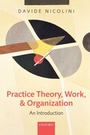
Practice Theory, Work, and Organization
An Introduction
1st Edition
Published on 14. November 2012
283 pages
978-0-19-164462-7 (ISBN)
Description

This book is a rigorous yet accessible introduction to contemporary practice theories, discussing their distinctive contribution to the study of work and organizations. It surveys their origins, theoretical assumptions, concepts, and application.
More details
Other editions
Additional editions
Book
12/2012
Oxford University Press
€69.90
Shipment within 15-20 days
Content
- Cover
- TABLE OF CONTENTS
- LIST OF FIGURES
- 1 Introduction
- 1.1 What is new? The affordance of practice theories
- 1.2 There is no such a thing as a unified practice theory
- 1.3 Practice theories and the study of work and organization
- 1.3.1 Returning to practice: a weak and strong programme?
- 1.4 The content and structure of the book
- 1.5 The rolling case study
- 1.5.1 What is telemedicine?
- 1.5.2 What is chronic heart failure?
- 1.5.3 Telemonitoring at Garibaldi
- 1.6 Words of thanks
- 2 Praxis and Practice Theory: A Brief Historical Overview
- 2.1 The legacy of Greek classical thought and the demotion of practice in the Western tradition
- 2.1.1 Plato's intellectualist legacy
- 2.1.2 Aristotle on praxis
- 2.2 The demotion of practice in the Western tradition
- 2.3 The rediscovery of practice: Marx, Heidegger, and Wittgenstein
- 2.3.1 Marx
- 2.3.2 Nietzsche, Heidegger, and the primacy of practice in the phenomenological tradition
- 2.3.3 Wittgenstein: intelligibility as practice
- 2.3.4 The return of practice in contemporary social thought
- 3 Praxeology and the Work of Giddens and Bourdieu
- 3.1 Giddens: practice as the basic domain of study of the social sciences
- 3.1.1 Giddens' view of practice
- 3.1.2 Giddens at work
- 3.2 Bourdieu's praxeology: an overview
- 3.2.1 On habitus
- 3.2.2 How habitus produces practice
- 3.2.3 Theorizing practice
- 3.2.4 Bourdieu's praxeology and the study of work and organization
- Rolling case study: Telemedicine and the nursing habitus
- 4 Practice as Tradition and Community
- 4.1 Practice, tradition, and learning
- 4.2 Practice and community
- 4.3 Withdrawing the phrase 'community of practice'?
- Rolling case study: Becoming part of the practice of telemedicine
- 5 Practice as Activity
- 5.1 The Marxian roots of cultural historical activity theory
- 5.2 The central tenets of cultural and historical activity theory
- 5.2.1 The central role of mediation
- 5.2.2 The activity system as the basic unit of analysis
- 5.2.3 There is no such a thing as an object-less activity
- 5.2.4 The confiictual and expanding nature of activity systems
- 5.2.5 The interventionist nature of CHAT
- 5.3 The weaknesses of a strong theory
- Rolling case study: Telemedicine as an activity system
- 6 Practice as Accomplishment
- 6.1 Ethno-methodology's view of everyday activity
- 6.1.1 Accountability
- 6.1.2 Reflexivity
- 6.1.3 Indexicality
- 6.1.4 Membership
- 6.2 The implication of ethno-methodology for the study of (work) practices
- 6.3 The new generation of EM-oriented studies of work and organization
- 6.4 An unfinished task
- Rolling case study: Accomplishing monitoring
- 7 Practice as the House of the Social: Contemporary Developments of the Heideggerian and Wittgensteinian Traditions
- 7.1 Why people do what they do?
- 7.2 Practices and their organization
- 7.3 Practices and materials
- 7.4 How practices constitute action, sociality, the world, and themselves
- 7.5 Some further theoretical implications
- 7.6 Empirical and methodological consequences: a 'site' still under construction?
- Rolling case study: Telemonitoring as a practice-order bundle
- 8 Discourse and Practice
- 8.1 Conversation analysis: discourse as talk in interaction
- 8.1.1 The basic assumptions of CA and their implications for the understanding of practice
- 8.2 Practice as discourse: Foucault and the Foucauldian tradition
- 8.3 Critical discourse analysis
- 8.4 Mediated discourse analysis
- 8.4.1 The five pillars of mediated discourse analysis
- 8.4.2 Nexus analysis
- Rolling case study: Telemonitoring: a conversation analysis view
- 9 Bringing it all Together: A Tooklit to Study and Represent Practice at Work
- 9.1 The need for a toolkit approach
- 9.2 A package of theories and methods
- 9.2.1 The theory-method package: an overview
- 9.2.2 Zooming in on practice: in the beginning was the deed
- 9.2.3 Representing practice through foregrounding the active role of tools, materials, and the body
- 9.2.4 Representing practice through zooming in on its oriented and concerned nature
- 9.2.5 Appreciating practice as bounded creativity
- 9.2.6 Representing practice by focusing on legitimacy and learning
- 9.3 Zooming out by trailing practices and their connections
- 9.3.1 A palette for zooming out
- 9.3.2 How practice and their associations can act at a distance
- 9.3.3 How did we get here?
- 9.3.4 When to stop the zooming in and out?
- 9.4 The benefits and perils of the zooming metaphor
- 9.5 Where next
- BIBLIOGRAPHY
- INDEX
- A
- B
- C
- D
- E
- F
- G
- H
- I
- J
- K
- L
- M
- N
- O
- P
- Q
- R
- S
- T
- U
- V
- W
- Y
- Z
