

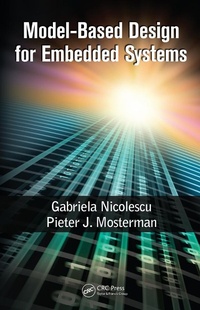
Model-Based Design for Embedded Systems
1st Edition
Published on 3. September 2018
766 pages
978-1-351-83471-1 (ISBN)
Description

The demands of increasingly complex embedded systems and associated performance computations have resulted in the development of heterogeneous computing architectures that often integrate several types of processors, analog and digital electronic components, and mechanical and optical components-all on a single chip. As a result, now the most prominent challenge for the design automation community is to efficiently plan for such heterogeneity and to fully exploit its capabilities.
A compilation of work from internationally renowned authors, Model-Based Design for Embedded Systems elaborates on related practices and addresses the main facets of heterogeneous model-based design for embedded systems, including the current state of the art, important challenges, and the latest trends. Focusing on computational models as the core design artifact, this book presents the cutting-edge results that have helped establish model-based design and continue to expand its parameters.
The book is organized into three sections: Real-Time and Performance Analysis in Heterogeneous Embedded Systems, Design Tools and Methodology for Multiprocessor System-on-Chip, and Design Tools and Methodology for Multidomain Embedded Systems. The respective contributors share their considerable expertise on the automation of design refinement and how to relate properties throughout this refinement while enabling analytic and synthetic qualities. They focus on multi-core methodological issues, real-time analysis, and modeling and validation, taking into account how optical, electronic, and mechanical components often interface.
Model-based design is emerging as a solution to bridge the gap between the availability of computational capabilities and our inability to make full use of them yet. This approach enables teams to start the design process using a high-level model that is gradually refined through abstraction levels to ultimately yield a prototype. When executed well, model-based design encourages enhanced performance and quicker time to market for a product. Illustrating a broad and diverse spectrum of applications such as in the automotive aerospace, health care, consumer electronics, this volume provides designers with practical, readily adaptable modeling solutions for their own practice.
A compilation of work from internationally renowned authors, Model-Based Design for Embedded Systems elaborates on related practices and addresses the main facets of heterogeneous model-based design for embedded systems, including the current state of the art, important challenges, and the latest trends. Focusing on computational models as the core design artifact, this book presents the cutting-edge results that have helped establish model-based design and continue to expand its parameters.
The book is organized into three sections: Real-Time and Performance Analysis in Heterogeneous Embedded Systems, Design Tools and Methodology for Multiprocessor System-on-Chip, and Design Tools and Methodology for Multidomain Embedded Systems. The respective contributors share their considerable expertise on the automation of design refinement and how to relate properties throughout this refinement while enabling analytic and synthetic qualities. They focus on multi-core methodological issues, real-time analysis, and modeling and validation, taking into account how optical, electronic, and mechanical components often interface.
Model-based design is emerging as a solution to bridge the gap between the availability of computational capabilities and our inability to make full use of them yet. This approach enables teams to start the design process using a high-level model that is gradually refined through abstraction levels to ultimately yield a prototype. When executed well, model-based design encourages enhanced performance and quicker time to market for a product. Illustrating a broad and diverse spectrum of applications such as in the automotive aerospace, health care, consumer electronics, this volume provides designers with practical, readily adaptable modeling solutions for their own practice.
More details
Series
Edition
1. Auflage
Language
English
Place of publication
London
United Kingdom
Publishing group
Taylor & Francis Ltd
Target group
Professional and scholarly
Product notice
Reflowable
Illustrations
38 Tables, black and white; 333 Illustrations, black and white
File size
21,84 MB
ISBN-13
978-1-351-83471-1 (9781351834711)
Copyright in bibliographic data and cover images is held by Nielsen Book Services Limited or by the publishers or by their respective licensors: all rights reserved.
Schweitzer Classification
Other editions
Additional editions
Gabriela Nicolescu | Pieter J. Mosterman
Model-Based Design for Embedded Systems
Book
06/2017
1st Edition
CRC Press
€116.60
Shipment within 10-20 days
Gabriela Nicolescu | Pieter J. Mosterman
Model-Based Design for Embedded Systems
Book
11/2009
1st Edition
CRC Press
€281.50
Shipment within 15-20 days
Persons
Gabriela Nicolescu is an associate professor in the Department of Computer Engineering at Ecole Polytechnique Montreal in Canada.
Pieter J. Mosterman is a senior research scientist in the Design Automation department of MathWorks in Natick, Massachusetts, and an adjunct professor at the School of Computer Science of McGill University in Montreal, Canada.
Pieter J. Mosterman is a senior research scientist in the Design Automation department of MathWorks in Natick, Massachusetts, and an adjunct professor at the School of Computer Science of McGill University in Montreal, Canada.
Content
Part I: Real-Time and Performance Analysis in Heterogeneous Embedded Systems
Performance Prediction of Distributed Platforms. SystemC-Based Performance Analysis of Embedded Systems. Formal Performance Analysis for Real-Time Heterogeneous Embedded Systems. Model-Based Framework for Schedulability Analysis Using UPPAAL 4.1. Modeling and Analysis Framework for Embedded Systems. TrueTime: Simulation Tool for Performance Analysis of Real-Time Embedded Systems.
Part II: Design Tools and Methodology for Multiprocessor System-on-Chip
MPSoC Platform Mapping Tools for Data-Dominated Applications. Retargetable, Embedded Software DesignMethodology for Multiprocessor-Embedded Systems. Programming Models for MPSoC. Platform-Based Design and Frameworks: METROPOLIS and METRO II. Reconfigurable Multicore Architectures for Streaming Applications. FPGA Platforms for Embedded Systems.
Part III: Design Tools and Methodology for Multidomain Embedded Systems
Modeling, Verification, and Testing Using Timed and Hybrid Automata. Semantics of Domain-Specific Modeling Languages. Multi-Viewpoint State Machines for Rich Component Models. Generic Methodology for the Design of Continuous/Discrete Co-Simulation Tools. Modeling and Simulation of Mixed Continuous and Discrete Systems. Design Refinement of Embedded Mixed-Signal Systems. Platform for Model-Based Design of Integrated Multi-Technology Systems. CAD Tools for Multi-Domain Systems on Chips. Smart Sensors Modeling Using VHDL-AMS for Microinstrument Implementation with a Distributed Architecture.
Performance Prediction of Distributed Platforms. SystemC-Based Performance Analysis of Embedded Systems. Formal Performance Analysis for Real-Time Heterogeneous Embedded Systems. Model-Based Framework for Schedulability Analysis Using UPPAAL 4.1. Modeling and Analysis Framework for Embedded Systems. TrueTime: Simulation Tool for Performance Analysis of Real-Time Embedded Systems.
Part II: Design Tools and Methodology for Multiprocessor System-on-Chip
MPSoC Platform Mapping Tools for Data-Dominated Applications. Retargetable, Embedded Software DesignMethodology for Multiprocessor-Embedded Systems. Programming Models for MPSoC. Platform-Based Design and Frameworks: METROPOLIS and METRO II. Reconfigurable Multicore Architectures for Streaming Applications. FPGA Platforms for Embedded Systems.
Part III: Design Tools and Methodology for Multidomain Embedded Systems
Modeling, Verification, and Testing Using Timed and Hybrid Automata. Semantics of Domain-Specific Modeling Languages. Multi-Viewpoint State Machines for Rich Component Models. Generic Methodology for the Design of Continuous/Discrete Co-Simulation Tools. Modeling and Simulation of Mixed Continuous and Discrete Systems. Design Refinement of Embedded Mixed-Signal Systems. Platform for Model-Based Design of Integrated Multi-Technology Systems. CAD Tools for Multi-Domain Systems on Chips. Smart Sensors Modeling Using VHDL-AMS for Microinstrument Implementation with a Distributed Architecture.
