

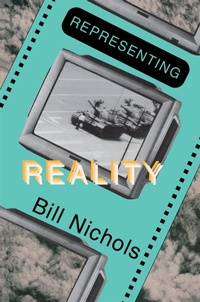
Representing Reality
Issues and Concepts in Documentary
Published on 22. February 1992
336 pages
978-0-253-01337-8 (ISBN)
Description

". . . a valuable and important book . . ." - The Year's Work in Critical and Cultural Theory
"Representing Reality is the first book to offer a conceptual overview of documentary filmmaking practice. It addresses numerous social issues and how they are presented to the viewer by means of style, rhetoric, and narrative technique. The volume poses questions about the relationship of the documentary tradition to power, the body, authority, knowledge, and our experience of history. This study advances the pioneering work of Nichols's earlier book, Ideology and the Image."
"[Nichols] has written a road-block of a book which reconfigures the debate on the documentary at a new level of sophistication and complexity which can only be ignored at the risk of ignoring the whole area of documentary film." - Sight and Sound
" . . . the most important book on documentary film yet published." - Canadian Journal of Film Studies
"Representing Reality is the first book to offer a conceptual overview of documentary filmmaking practice. It addresses numerous social issues and how they are presented to the viewer by means of style, rhetoric, and narrative technique. The volume poses questions about the relationship of the documentary tradition to power, the body, authority, knowledge, and our experience of history. This study advances the pioneering work of Nichols's earlier book, Ideology and the Image."
"[Nichols] has written a road-block of a book which reconfigures the debate on the documentary at a new level of sophistication and complexity which can only be ignored at the risk of ignoring the whole area of documentary film." - Sight and Sound
" . . . the most important book on documentary film yet published." - Canadian Journal of Film Studies
More details
Language
English
Place of publication
Bloomington, IN
United States
Target group
Professional and scholarly
Product notice
Reflowable
File size
2,58 MB
ISBN-13
978-0-253-01337-8 (9780253013378)
Copyright in bibliographic data and cover images is held by Nielsen Book Services Limited or by the publishers or by their respective licensors: all rights reserved.
Schweitzer Classification
Other editions
Additional editions
Book
02/1992
Indiana University Press
€18.50
Shipment within 10-20 days

Book
12/1991
Indiana University Press
€40.80
Article exhausted; check different version
Person
Bill Nichols
Content
- Cover
- Title Page
- Copyright
- Dedication
- Contents
- Preface
- Acknowledgments
- Part I. Axes of Orientation
- I. The Domain of Documentary
- II. Documentary Modes of Representation
- III. Axiographics: Ethical Space in Documentary Flim
- Part II. Documentary: A Fiction (Un)Like any Other
- IV. Telling Stories with Evidence and Arguments
- V. Sticking to Reality: Rhetoric and What Exceeds It
- VI. The Fact of Realism and the Fiction of Objectivity
- Part III. Documentary Representation and the Historical World
- VII. Pornography, Ethnography, and the Discourses of Power
- VIII. Representing the Body: Questions of Meaning and Magnitude
- Note
- Filmography
- Distributors
- Index
- About the Author
