

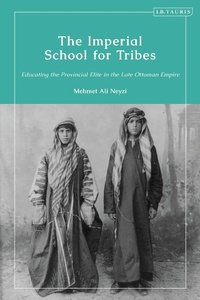
The Imperial School for Tribes
Educating the Provincial Elite in the Late Ottoman Empire
1st Edition
Published on 6. April 2023
240 pages
978-0-7556-4976-1 (ISBN)
Description

Founded in the waning years of the Ottoman Empire, the Imperial School for Tribes (Asiret Mektebi) was an initiative by Sultan Abdulhamid II to bring the sons of prominent Arab tribal leaders to Istanbul for a world-class education and transform them into loyal Ottoman future military and governmental leaders.
Utilizing a plethora of new documents recently made available in the Ottoman archives as well as Ottoman newspaper collections in Istanbul and Beirut, this is the first book to shed light on the School for Tribes. It provides a detailed analysis of the origins and families of the over 500 graduates of the school, as well as the recruitment and placement processes developed by the administration. The further careers and allegiances of the graduates are examined, allowing us to better understand relations between Turks and Arabs both during the last years of the Empire as well as in the following decades. The book shows that many graduates who became prominent leaders in their newly formed countries, including Abdulmuhsin al-Sadoun (Prime Minister of Iraq), Omar Mansour and Orhan Kologlu (Prime Ministers of Cyrenaica-Libya), and Ramadan al-Shallash (Lebanon) availed of their Ottoman training and preserved their imperial loyalties even as rifts that occurred between the Republic of Turkey and the Arab states widened.
Utilizing a plethora of new documents recently made available in the Ottoman archives as well as Ottoman newspaper collections in Istanbul and Beirut, this is the first book to shed light on the School for Tribes. It provides a detailed analysis of the origins and families of the over 500 graduates of the school, as well as the recruitment and placement processes developed by the administration. The further careers and allegiances of the graduates are examined, allowing us to better understand relations between Turks and Arabs both during the last years of the Empire as well as in the following decades. The book shows that many graduates who became prominent leaders in their newly formed countries, including Abdulmuhsin al-Sadoun (Prime Minister of Iraq), Omar Mansour and Orhan Kologlu (Prime Ministers of Cyrenaica-Libya), and Ramadan al-Shallash (Lebanon) availed of their Ottoman training and preserved their imperial loyalties even as rifts that occurred between the Republic of Turkey and the Arab states widened.
Reviews / Votes
The book provides a gratifying reading experience. It offers astute insights into the career paths of the graduates. * Turcica * Neyzi's fine study uncovers an important but rarely-studied subject in Modern Middle East history. It brings together the imperial and local/tribal in the example of Abdulhamid's School for Tribes and using hitherto-unused primary sources. A must-read. * M. Talha Cicek, Assistant Professor, Istanbul Medeniyet University, Turkey * An exhaustive study of a short-lived yet venerable Ottoman educational institution and its notable alumni, who hailed from the margins of the empire and rose to prominence during the empire-to-nation transition in the Middle East. * Hasan Kayali, Professor, University of California, San Diego * This book offers a unique perspective on nineteenth century Ottoman efforts at modernization and reforms designed to keep the empire together. One ambitious project was a boarding school in Istanbul for the sons of the tribal leaders. In this well-written book, Neyzi skillfully examines the school and its legacy through the lives and careers of its Arab graduates. * Bogazici University, Turkey * In charting the history of Sultan Abdulhamid's Asiret Mektebi, Mehmet Ali Neyzi's superbly researched book makes a pivotal contribution to our understanding of state-building in the Late Ottoman Empire. It casts new light on the tribal politics of the Hamidian era and deftly links the 'Imperial School for the Tribes' to the history of the 'Last Ottoman Generation' in Libya and the Fertile Crescent, documenting the role of its most prominent graduates in the complex history of anti-colonial resistance and imperial collaboration that accompanied the shift to a European dominated state system. * Tariq Tell, American University of Beirut *More details
Edition
1. Auflage
Language
English
Place of publication
United Kingdom
Publishing group
Bloomsbury Publishing PLC
Target group
College/higher education
Professional and scholarly
ISBN-13
978-0-7556-4976-1 (9780755649761)
Copyright in bibliographic data and cover images is held by Nielsen Book Services Limited or by the publishers or by their respective licensors: all rights reserved.
Schweitzer Classification
Other editions
Additional editions
Mehmet Ali Neyzi
The Imperial School for Tribes
Educating the Provincial Elite in the Late Ottoman Empire
Book
10/2024
I.B. Tauris
€55.89
Shipment within 10-20 days
Person
Mehmet Ali Neyzi holds a PhD in Middle Eastern history from the American University of Beirut, Lebanon. A graduate of Princeton University, USA, prior to academia he pursued a successful business career and was CEO of several large companies.
Content
Introduction
Chapter 1 - The Asiret Mektebi : A Chronology
Chapter 2 - Recruitment and Placement
The Inauguration
Quotas Vs Actual Enrollment
Greater Syria
Hijaz and Yemen
Libya
Iraq
Kurds, Albanians and Javanese
A New Breed of Soldiers and Bureaucrats
Chapter 3 - Educators and Curriculum
Directors of the School
Curriculum
Chapter 4 - Lifestories - Greater Syria
The No-Man's-Land of Deir Ez-Zor
Ramadan Shallash, National Hero or Collaborator?
The Hawran Druze
Fahd al-Atrash and His Family
The Merhebis of Akkar
Chapter 5 - Lifestories - Libya
The Memoirs of a Graduate - Omar Mansour
"Arap Kaymakam" - Orhan Kologlu
The Sons of Sheikh Zafir and Other Libyan Students
Chapter 6 - Lifestories - Iraq
The Saadun Family of Muntafiq
The Prime Minister Who Committed Suicide - Abdulmuhsin Saadun
Conclusion
Chapter 1 - The Asiret Mektebi : A Chronology
Chapter 2 - Recruitment and Placement
The Inauguration
Quotas Vs Actual Enrollment
Greater Syria
Hijaz and Yemen
Libya
Iraq
Kurds, Albanians and Javanese
A New Breed of Soldiers and Bureaucrats
Chapter 3 - Educators and Curriculum
Directors of the School
Curriculum
Chapter 4 - Lifestories - Greater Syria
The No-Man's-Land of Deir Ez-Zor
Ramadan Shallash, National Hero or Collaborator?
The Hawran Druze
Fahd al-Atrash and His Family
The Merhebis of Akkar
Chapter 5 - Lifestories - Libya
The Memoirs of a Graduate - Omar Mansour
"Arap Kaymakam" - Orhan Kologlu
The Sons of Sheikh Zafir and Other Libyan Students
Chapter 6 - Lifestories - Iraq
The Saadun Family of Muntafiq
The Prime Minister Who Committed Suicide - Abdulmuhsin Saadun
Conclusion
