

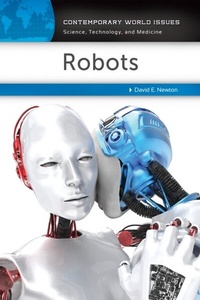
Robots
A Reference Handbook
1st Edition
Published on 7. September 2018
360 pages
978-1-4408-5862-8 (ISBN)
Available for download
Description

Robots: A Reference Handbook differs from most other books on robotics in the variety of resources that it provides to readers of all ages.
Robots: A Reference Handbook teaches readers about a wide variety of robots. It opens with a history of robotics, dating to ancient Greece and Rome, at which time an impressive array of automata were invented for entertainment, religious, and instructional purposes. It follows the development of automata and robots in ancient China and the Islamic world, through to Western Civilization in the present day.
Subsequent chapters describe the wide array of applications to which robots are put today and discuss the technical, social, political, ethical, and economic issues created by their increasing use. Additionally, a number of essays by interested individuals highlight various aspects of robotics development. The remaining chapters of the book provide resources that will assist readers in learning more about the topic of robotics.
Robots: A Reference Handbook teaches readers about a wide variety of robots. It opens with a history of robotics, dating to ancient Greece and Rome, at which time an impressive array of automata were invented for entertainment, religious, and instructional purposes. It follows the development of automata and robots in ancient China and the Islamic world, through to Western Civilization in the present day.
Subsequent chapters describe the wide array of applications to which robots are put today and discuss the technical, social, political, ethical, and economic issues created by their increasing use. Additionally, a number of essays by interested individuals highlight various aspects of robotics development. The remaining chapters of the book provide resources that will assist readers in learning more about the topic of robotics.
More details
Series
Language
English
Place of publication
United States
Publishing group
Bloomsbury Publishing Plc
Target group
Children/juvenile
Interest Age: From 8 to 12 years
Illustrations
7 bw illus
ISBN-13
978-1-4408-5862-8 (9781440858628)
Copyright in bibliographic data and cover images is held by Nielsen Book Services Limited or by the publishers or by their respective licensors: all rights reserved.
Schweitzer Classification
Other editions
Additional editions
Person
David E. Newton holds a BA in chemistry, an MA in education from the University of Michigan, and an EdD in science education from Harvard University.
Content
Preface,
1 History and Background,
The Precursors: Automata,
How Do Automata Work?,
The Transfer of Knowledge: Islam to Europe,
Why Automata?,
Toward the Golden Age of Automata,
Automata in the Modern World,
From Automata to Robots,
The Birth of the Modern Robot,
Evolution of the Robot,
Industrial Robots,
Humanoid Robots,
Humanoid Robots in Literature and the Arts,
Types of Robots,
Conclusion,
References,
2 Problems, Controversies, and Solutions,
A Robotic Threat to the Human Species?,
Naysayers and Doubting Thomases,
Robots and a Jobless Future,
Disruptive Technologies,
Income in a Jobless Future,
Social Benefits in a Jobless Future,
Education and Leisure in a Jobless Future,
Moral Robots,
Robots at Work Today,
Agriculture,
Business and Finance,
Education,
Comfort Robots,
Health Care,
Military Applications,
Space Research,
Learning about Robots,
Conclusion,
References,
3 Perspectives,
Where Are All the Robots? by Richard Hooper,
Engaging Students through Robotics by David E. Johnson,
Robotics: A Potential Human Adjunct Needed for the Improvement of Global Health Care and Research Development by Samuel C. Okpechi,
How My Life Has Been Changed by Robots by Sierra Repp,
Will We Accept Care Robots in Our Homes in the Near-Future? by Shalaleh Rismani,
Social Robots for Individuals with Autism by Anjali A. Sarkar,
I-C-MARS Project Built by Native American Students for Native American Schools and STEM Programs by Nader Vadiee,
Chatbots and Human Conversation by Erin Zimmerman,
4 Profiles,
Isaac Asimov (1920-1992),
Association for the Advancement of Artificial Intelligence,
Nick Boström (1973-),
Rodney Brooks (1954-),
George Devol (1912-2011),
Joseph Engelberger (1925-2015),
Future of Humanity Institute,
Future of Life Institute,
Heron of Alexandria (ca. 10-70 CE),
IEEE Robotics & Automation Society,
Institute for Ethics and Emerging Technologies,
International Federation of Robotics,
Hiroshi Ishiguro (1963-),
Al-Jazari (1136-1206),
Ray Kurzweil (1948-),
Leonardo da Vinci (1452-1519),
Machine Intelligence Research Institute,
Marvin Minsky (1927-2016),
Martin Rees (1942-),
Robotics Industries Association,
Robotics Institute at Carnegie Mellon University,
Victor Scheinman (1942-2016),
Alan Turing (1912-1954),
Jacques de Vaucanson (1709-1782),
5 Data and Documents,
Data,
Table 5.1. Estimated Yearly Shipments of Multipurpose Industrial Robots in Selected Countries,
Table 5.2. Estimated Worldwide Annual Supply of Industrial Robots,
Table 5.3. Worldwide Estimated Operational Stock of Industrial Robots,
Table 5.4. Use of Robots by Various Industries,
Table 5.5. Distribution of Robots among Various Countries and Regions,
Documents,
Guidelines for Robotic Safety (1999),
Efficacy of Robotic Surgery (2013),
Idaho Drone Law (2013),
Robotically Assisted Surgery (2015),
Florida Law on Driverless Vehicles (2016),
Draft Report (on Robotics) of the European Parliament (2016),
National Robotics Initiative (2011/2016),
Preparing for the Future of Artificial Intelligence (2016),
Regulatory Robot (CPSC) (2016),
Virginia Robot Delivery Laws (2017),
Criminal Robots (2017),
Taylor v. Intuitive Surgical, Inc. (2017),
Amazon Motion to Quash a Search Warrant (2017),
Conclusion,
6 Resources,
Books,
Articles,
Reports,
Internet,
7 Chronology,
Glossary,
Index,
About the Author,
1 History and Background,
The Precursors: Automata,
How Do Automata Work?,
The Transfer of Knowledge: Islam to Europe,
Why Automata?,
Toward the Golden Age of Automata,
Automata in the Modern World,
From Automata to Robots,
The Birth of the Modern Robot,
Evolution of the Robot,
Industrial Robots,
Humanoid Robots,
Humanoid Robots in Literature and the Arts,
Types of Robots,
Conclusion,
References,
2 Problems, Controversies, and Solutions,
A Robotic Threat to the Human Species?,
Naysayers and Doubting Thomases,
Robots and a Jobless Future,
Disruptive Technologies,
Income in a Jobless Future,
Social Benefits in a Jobless Future,
Education and Leisure in a Jobless Future,
Moral Robots,
Robots at Work Today,
Agriculture,
Business and Finance,
Education,
Comfort Robots,
Health Care,
Military Applications,
Space Research,
Learning about Robots,
Conclusion,
References,
3 Perspectives,
Where Are All the Robots? by Richard Hooper,
Engaging Students through Robotics by David E. Johnson,
Robotics: A Potential Human Adjunct Needed for the Improvement of Global Health Care and Research Development by Samuel C. Okpechi,
How My Life Has Been Changed by Robots by Sierra Repp,
Will We Accept Care Robots in Our Homes in the Near-Future? by Shalaleh Rismani,
Social Robots for Individuals with Autism by Anjali A. Sarkar,
I-C-MARS Project Built by Native American Students for Native American Schools and STEM Programs by Nader Vadiee,
Chatbots and Human Conversation by Erin Zimmerman,
4 Profiles,
Isaac Asimov (1920-1992),
Association for the Advancement of Artificial Intelligence,
Nick Boström (1973-),
Rodney Brooks (1954-),
George Devol (1912-2011),
Joseph Engelberger (1925-2015),
Future of Humanity Institute,
Future of Life Institute,
Heron of Alexandria (ca. 10-70 CE),
IEEE Robotics & Automation Society,
Institute for Ethics and Emerging Technologies,
International Federation of Robotics,
Hiroshi Ishiguro (1963-),
Al-Jazari (1136-1206),
Ray Kurzweil (1948-),
Leonardo da Vinci (1452-1519),
Machine Intelligence Research Institute,
Marvin Minsky (1927-2016),
Martin Rees (1942-),
Robotics Industries Association,
Robotics Institute at Carnegie Mellon University,
Victor Scheinman (1942-2016),
Alan Turing (1912-1954),
Jacques de Vaucanson (1709-1782),
5 Data and Documents,
Data,
Table 5.1. Estimated Yearly Shipments of Multipurpose Industrial Robots in Selected Countries,
Table 5.2. Estimated Worldwide Annual Supply of Industrial Robots,
Table 5.3. Worldwide Estimated Operational Stock of Industrial Robots,
Table 5.4. Use of Robots by Various Industries,
Table 5.5. Distribution of Robots among Various Countries and Regions,
Documents,
Guidelines for Robotic Safety (1999),
Efficacy of Robotic Surgery (2013),
Idaho Drone Law (2013),
Robotically Assisted Surgery (2015),
Florida Law on Driverless Vehicles (2016),
Draft Report (on Robotics) of the European Parliament (2016),
National Robotics Initiative (2011/2016),
Preparing for the Future of Artificial Intelligence (2016),
Regulatory Robot (CPSC) (2016),
Virginia Robot Delivery Laws (2017),
Criminal Robots (2017),
Taylor v. Intuitive Surgical, Inc. (2017),
Amazon Motion to Quash a Search Warrant (2017),
Conclusion,
6 Resources,
Books,
Articles,
Reports,
Internet,
7 Chronology,
Glossary,
Index,
About the Author,

